Food Truck and Catering Inventory Management: The Operator's Guide
Food truck and catering inventory management is its own challenge: tiny storage, event-driven demand. Here is how to track stock, forecast, and cut waste.
You packed for a 150-person festival and sold out by 2pm. Or you prepped for a wedding and drove home with three pans of untouched chicken that cost you real money. Either way, the lesson is the same: on a truck or at a catering event, you cannot just run to the walk-in for more, and you cannot afford to haul back what you over-bought.
Food truck and catering inventory management is its own discipline, with constraints a fixed-location restaurant never deals with: tiny storage, demand that swings event to event, and a cost-per-event that lives or dies on getting the numbers right. This guide covers how to track stock, forecast for events, cut spoilage, and decide when a spreadsheet stops cutting it.
Why food truck and catering inventory is different
A restaurant has a steady-ish daily rhythm and room to store a cushion. Mobile and catering operations have neither. Storage is measured in coolers and milk crates, not walk-ins. Demand is lumpy: a quiet Tuesday, then a 200-guest Saturday. And every event is its own little business with its own food cost to hit.
That combination means over-ordering is expensive (you are hauling and storing what you do not need) and under-ordering is worse (you cannot restock mid-service and you lose sales you already won). The margin for error is thin, which is exactly why a system helps.
What is food truck inventory management?
Food truck inventory management is the practice of tracking what stock you carry, what you use per service or event, and what you need to restock, all sized for a mobile operation with limited storage and variable demand. It blends classic inventory control with event-based forecasting, so you pack enough to sell out without driving home a cooler of waste.
Done well, it answers two questions before every shift: what do I bring, and what did this event actually cost me?
The core practices that keep you stocked and lean
A handful of habits do most of the work. None of them require fancy tools to start, though tools make them easier.
Set par levels for a small space
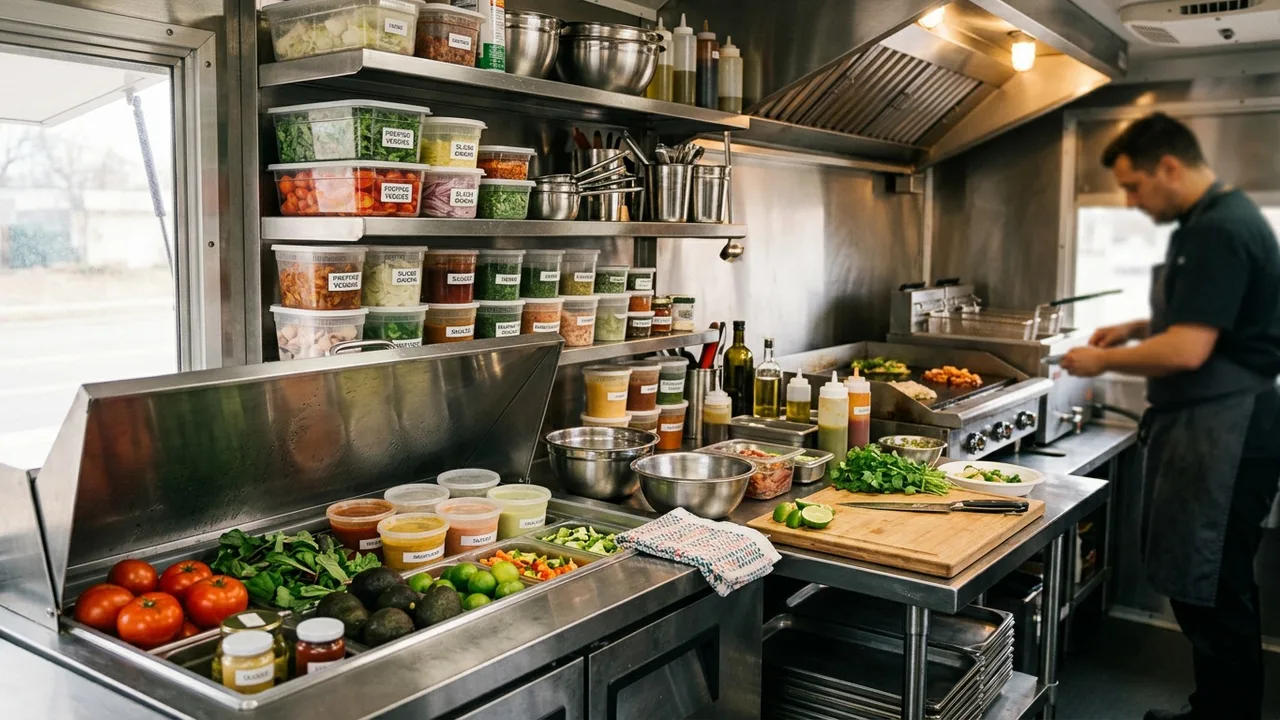
A par level is the minimum quantity you want on hand for a given service. For a truck, build pars around your top sellers and your storage limits, so you carry enough of the items that move and skip dead weight. Pars turn restocking from guesswork into a quick check: count, compare to par, reorder the gap.
Forecast from the event, not a hunch
For catering, your forecast starts with the confirmed headcount and the menu, multiplied by your recipes, plus a buffer. A common approach is to plan food for 10 to 15 percent above the final count to absorb bigger appetites and last-minute additions (Renaissance Catering and FSM.How, secondary data). For trucks, lean on history: what did you sell at a similar event, in similar weather, at a similar location? Past usage is the best predictor you have. Guest counts also love to move, so pair this with a plan for handling catering last-minute changes.
Rotate with FIFO and watch spoilage
First in, first out is non-negotiable when your fridge is a cooler and your product rides around in the heat. Label and date everything, use the oldest first, and track what you throw away. Waste is a cost like any other, and on thin food-truck margins (often around 6 percent net) it is one you feel immediately.
Track cost per event, not just per month
Restaurants think in weekly and monthly food cost. Caterers and trucks should think per event. Tally the food cost of each event against what the client paid (or what you took at the window) and you learn which gigs, menus, and locations actually make money. That is the same per-event discipline behind catering event profitability, and inventory is where it starts.
Software vs spreadsheets for mobile operations
A spreadsheet can work when you are small and running one or two services a week. It breaks down as you add events, menus, and vendors, because you are now re-entering everything by hand and your counts drift. Software earns its place when the manual tracking starts costing you more time and waste than it saves you in subscription fees. Our guide on how to choose restaurant inventory management software walks through what to look for, and restaurant inventory software, explained covers the basics.
How Edesia handles inventory for caterers and trucks
This is the gap Edesia is built for. Edesia is an AI chief of staff for caterers and food trucks that runs inventory as part of the whole operation: live stock, vendors and purchase orders, demand forecasting, and lot tracking, with a direct sync to your Square catalog and reordering through Instacart.
The difference from a restaurant inventory tool is that it lives next to the work you actually spend your day on, answering leads across SMS, calls, Instagram DMs, and email, and booking events. So the same system that captures the wedding inquiry also helps you forecast and source the food for it. You can see how it fits your operation, and weigh the broader payoff in catering business automation benefits.
Frequently asked questions
How do food trucks manage inventory?
With par levels sized for limited storage, event or service-based forecasting from past sales, strict FIFO rotation to limit spoilage, and quick restocks between services. Many operators graduate from spreadsheets to software as their event volume grows.
What is the best inventory system for a food truck?
One that is mobile-friendly, handles forecasting, and fits a small operation without enterprise overhead. For trucks and caterers that also book events, Edesia covers inventory plus lead capture and booking in one place, with a Square catalog sync.
How do caterers forecast inventory for an event?
Start from the confirmed guest count and the menu, multiply by your recipes, and add a buffer, often planning food for about 10 to 15 percent above the final count. Tracking actual usage per event sharpens the next forecast.
Conclusion
Inventory on a truck or at a catering event is a tightrope: pack too little and you leave money at the window, pack too much and you haul home waste you already paid for. The operators who walk it well are not lucky, they have a system: clear pars, event-based forecasting, strict rotation, and a per-event view of cost.
Start with the habits, add software when the manual work outgrows a spreadsheet, and tie your food cost to specific events. Do that, and you will stop guessing what to bring and start knowing, event after event.
Keep more of what your kitchen earns
Edesia helps you track inventory, reduce waste, compare suppliers, and plan purchases. Catering orders and customer replies are included, too.