Restaurant Inventory Software: What It Is and How It Works
Restaurant inventory software tracks stock, cost, and waste in real time. Learn what it is, how it works, and whether your kitchen has outgrown spreadsheets.
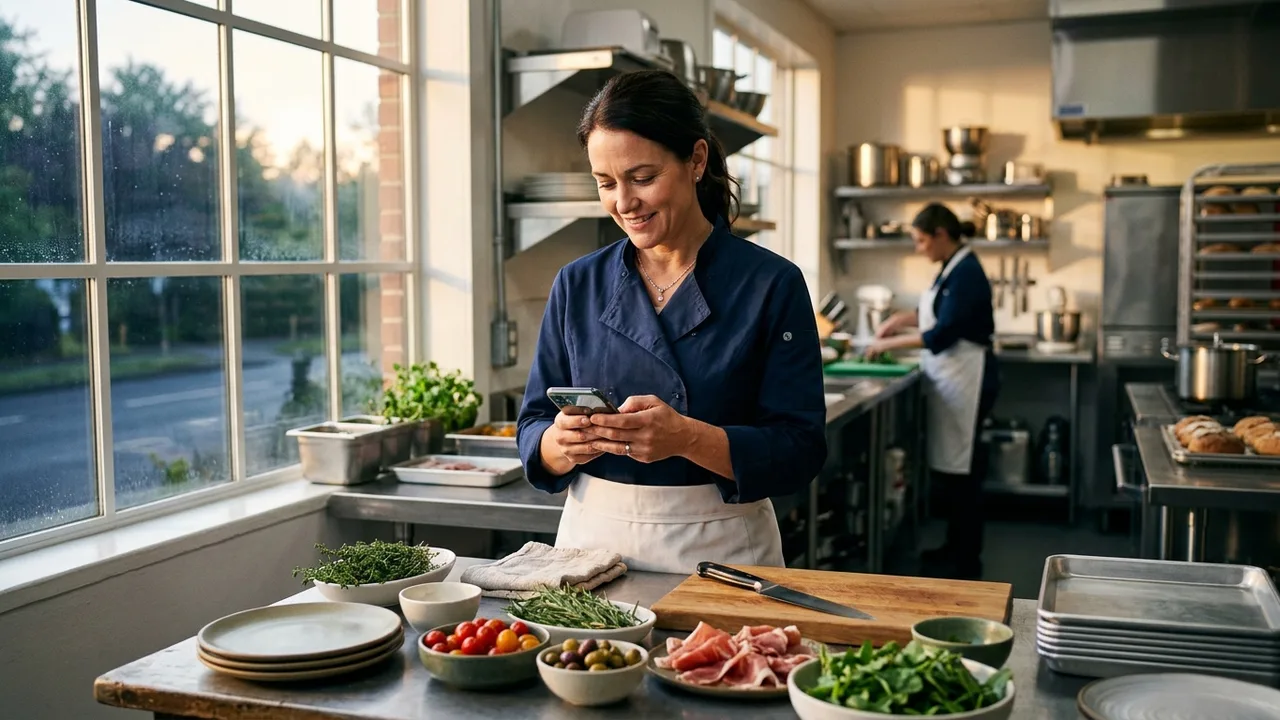
It is 11pm. Service is done, the crew is gone, and you are standing in the walk-in with a clipboard, counting cans of San Marzano tomatoes for the third time because the number never matches what the spreadsheet says. Your food cost crept up again this month and you cannot explain why. Somewhere between the deliveries, the prep, the comps, and the waste, money is leaking, and you are counting it by hand at midnight.
Restaurant inventory software exists to end that midnight ritual. It is one of the highest-leverage tools a kitchen can adopt, because food is usually the second biggest cost after labor, and it is the one you can actually control week to week. Let us break down what restaurant inventory software is, how it works, and how to tell when your clipboard has finally let you down for the last time.
What is restaurant inventory software?
Restaurant inventory software is a digital system that tracks the food, beverages, and supplies a kitchen has on hand, what it costs, and how fast it moves. It replaces spreadsheets and paper counts with real-time stock levels, automatic depletion as items sell, vendor and order management, and reporting that shows exactly where your food cost is going.
In plain terms, it is the difference between guessing what you have and knowing it. And in a business where a few points of food cost decide whether you are profitable, knowing beats guessing every time.
How restaurant inventory software works
Most systems follow the same loop. You enter your items and recipes once, with their costs and units. As you receive deliveries, stock goes up. As you sell dishes, the software depletes the ingredients behind each menu item (often pulling sales straight from your POS, so a sold burger automatically subtracts a bun, a patty, and a slice of cheese).
You still count physically on a schedule, usually weekly, but now you count against a live expected number instead of a blank sheet. The gap between what the system expected and what you actually counted is your variance, and that gap is where waste, over-portioning, and theft hide. Catching it is the whole point.
What restaurant inventory software does
The good systems share a core set of jobs. Here is what to expect.
Real-time stock tracking
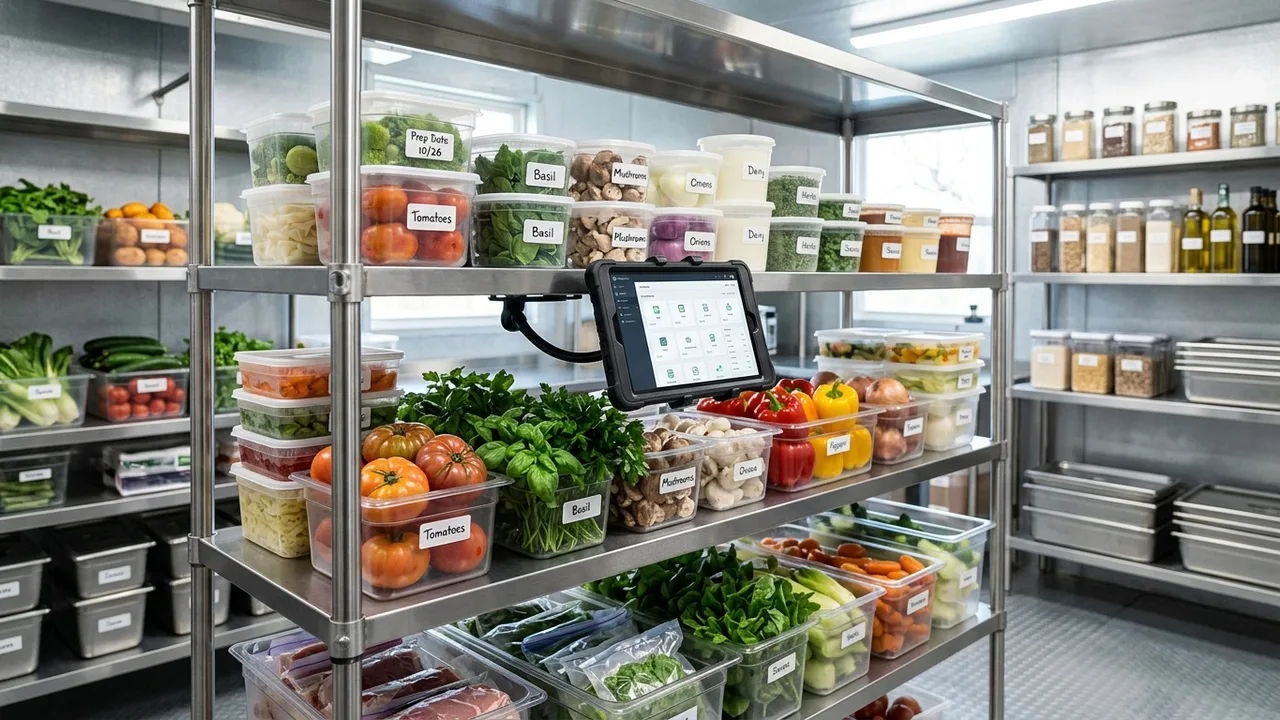
Live counts of every item, updated as you receive and sell, so you always know what is on hand without walking the walk-in. Many tools let staff count on a phone, which turns a two-hour clipboard session into a quick walk-through.
Vendor and purchase order management
Store your suppliers, build purchase orders from what you are low on, and track what you actually paid. When prices drift (and they always do), you see it instead of absorbing it. Some systems flag price changes automatically so a quiet 12 percent jump on chicken does not slip past you.
Recipe and menu costing
Tie each menu item to its ingredients and the software calculates its exact plate cost, then your margin. When an ingredient price moves, you instantly see which dishes just got less profitable. This is the feature that turns inventory from a chore into a pricing tool.
Waste, variance, and forecasting
Track theoretical food cost (what you should have used based on sales) against actual food cost (what you really used), and the difference points straight at your leaks. Better systems also forecast what to order based on past usage and upcoming demand, so you stop over-ordering perishables that end up in the bin.
Why it matters: the cost of flying blind
Food typically runs 28 to 35 percent of revenue (Harvest and Galley Solutions, secondary data), so even small inefficiencies hit hard. Manual tracking makes them worse: human data entry averages around a 1 percent error rate even in calm conditions (Conexiom and Panko research, secondary data), and a kitchen at the end of a double is not calm.
The hidden costs add up fast. Over-ordering perishables you never use. Over-portioning that quietly inflates plate cost. Spoilage from poor rotation. Theft you cannot see because you cannot measure. Inventory software does not eliminate these, but it makes them visible, and you cannot fix what you cannot see. The same logic drives catering event profitability, where food cost is the lever that decides whether an event actually made money.
Do you need it? Signs you've outgrown spreadsheets
A few tells. Your counts never match and you have stopped trusting them. You run out of staples mid-service, or you find forgotten product gone bad in the back. You cannot say what your food cost was last week without a calculator and an afternoon. You are reordering from memory. Or you are simply spending hours on counts that a phone could do in minutes.
If two or more of those sound familiar, you have outgrown the clipboard. For caterers and food trucks specifically, an AI chief of staff like Edesia runs inventory alongside the rest of your operation: live stock, vendors and purchase orders, demand forecasting, and a direct sync with your Square catalog, so the counting takes care of itself while you cook. If you are comparing options, start with how to choose restaurant inventory management software and our roundup of the best restaurant inventory management software.
Frequently asked questions
How many restaurants use inventory management software?
Adoption is rising quickly, and most larger and multi-unit operations now run dedicated software. A large share of independent restaurants and small operators, however, still rely on spreadsheets or paper counts, so there is significant room to gain an edge by adopting it.
What is restaurant inventory software?
It is a digital system that tracks the food, beverages, and supplies a kitchen has on hand, what they cost, and how fast they move. It replaces manual counts with real-time stock levels, vendor and order management, recipe costing, and food-cost reporting.
Is restaurant inventory software worth it for a small operation?
Usually yes. Because food runs roughly 28 to 35 percent of revenue, even small reductions in waste and over-ordering pay for the software quickly. Small operators also feel the time savings most, since counts that took hours can take minutes.
Conclusion
Restaurant inventory software is not about adding technology for its own sake. It is about turning the most controllable cost in your business from a midnight guessing game into a number you actually manage.
Track stock in real time, tie it to your recipes and your POS, watch your variance, and order from data instead of memory. Do that, and the food cost that used to creep up on you becomes one more thing you run, instead of one more thing that runs you.
Keep more of what your kitchen earns
Edesia helps you track inventory, reduce waste, compare suppliers, and plan purchases. Catering orders and customer replies are included, too.