Winter Cocktail Party Catering: How Commercial Kitchens Build High Margin Small Bites Menus, Batch Stations, and Bar Operations
Learn how commercial kitchens engineer profitable winter cocktail party catering menus, calculate passed small bite yields, and streamline batch bar prep.
Photo by Kelly Jean on Unsplash.
Winter brings a sharp increase in corporate mixers, client appreciation receptions, and seasonal cocktail parties. For commercial kitchens and independent restaurants expanding into catering, these events represent substantial revenue. Organizers love the lively atmosphere of passed hors d'oeuvres, while guests appreciate tasting diverse flavors without sitting down for a formal dinner.
Beneath the glamour of sparkling glassware and silver trays, cocktail parties present unique operational traps. Miniature food requires intensive manual labor. If your kitchen team spends four hours individually assembling delicate tartlets that disappear in forty seconds, your labor margin evaporates. Furthermore, guests consuming alcohol without a heavy meal require careful pacing, precise quantity calculations, and reliable temperature stability for food circulating on service trays.
Navigating winter cocktail party catering profitably requires deliberate operational systems. By engineering menus around shared ingredient foundations, structuring high speed batch assembly lines, implementing strict holding protocols, and standardizing batch bar mixers, commercial kitchens can protect gross margins above seventy percent while delivering memorable hospitality.
Engineering Small Bites for Margin, Speed, and Stability
The most profitable cocktail party menus start with strict kitchen engineering rather than aesthetic whims. In a busy commercial catering kitchen, every passed appetizer must satisfy three nonnegotiable criteria: food cost under twenty two percent, rapid assembly speed, and temperature stability under ambient room conditions.
Begin by calculating portion requirements based on event timing and format. A standard cocktail reception lasting two hours prior to dinner requires five to seven pieces per guest. An extended evening cocktail party that replaces dinner requires ten to fourteen pieces per guest distributed across savory bites, substantial proteins, and miniature desserts. Overestimating leads to costly food waste, while underestimating leaves guests hungry and hosts dissatisfied.
To keep labor manageable, balance menu formats across three kitchen production categories:
-
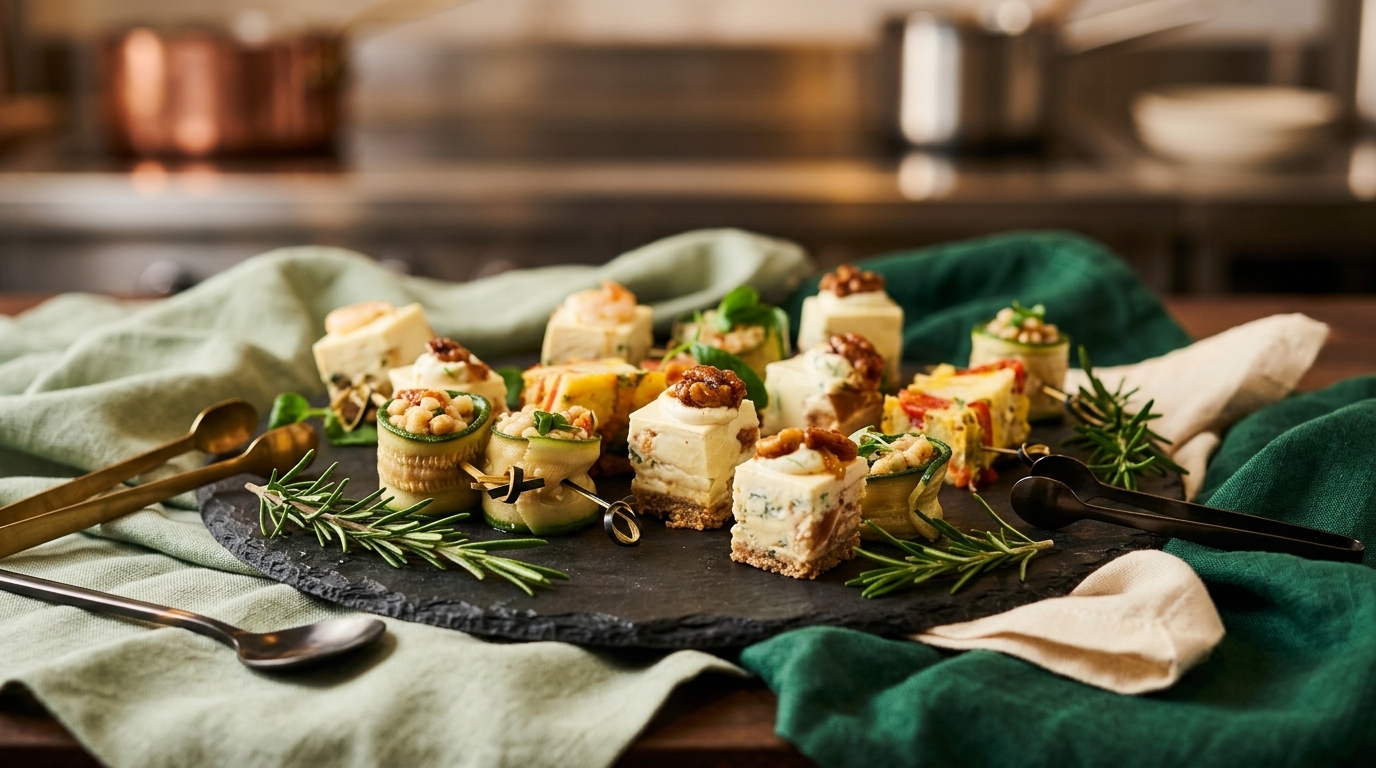
Chilled foundations that can be assembled hours in advance. Examples include whipped goat cheese crostini with winter fig jam, savory tart shells filled with cold smoked trout mousse, and skewered seasonal vegetable pinwheels. These items require zero reheating at the venue and hold quality on display platters.
-
Batch baked warm bites that finish simultaneously on sheet pans. Avoid items that need delicate stovetop pan frying during service. Instead, focus on puff pastry pinwheels with caramelized onions and gruyere, braised beef short rib empanadas, and spiced lamb meatballs. These can be prepped, frozen or chilled, and baked in convection ovens in timed fifteen minute rotations.
-
Live assembly bite stations. Rather than having staff run back and forth plating intricate items, design interactive stations such as a carving board with house cured meats and artisanal breads, or a warm polenta bar served in miniature ceramic cups. These create visual theater for guests while shifting repetitive plating work away from the hot line.
Cross utilization is the secret to controlling food costs across cocktail party menus. If your kitchen preps a batch of braised short ribs for a seated dinner client, reserve trimmings and braising jus to create rich croquettes or slider fillings for cocktail receptions. Similarly, seasonal root vegetables roasted for winter side dishes can be pureed into velvety bases for canape spoons. For deeper strategies on scaling shared foundation batches across multiple catering clients, review our holiday party catering guide.
High Speed Batch Assembly and Mise en Place Routines
Labor represents the largest variable expense in cocktail party catering. When kitchen staff assemble bite sized appetizers one by one with squeeze bottles and tweezers, production slows to a crawl. High volume commercial kitchens overcome this bottleneck through assembly line staging and dedicated tooling.
Structure your prep stations using linear flow principles. Place sheet pans lined with parchment on the operator side, prepped bases in the center, fillings in portioned pastry bags, and garnishes on the right. Using disposable pastry piping bags rather than spoons increases portion speed by more than three hundred percent while ensuring exact gram level consistency across hundreds of pieces.
Standardize garnish applications to eliminate delicate tweezers work during rush hours. Instead of placing micro herbs individually on each canape, use wide shaker vessels for toasted seeds, coarse sea salt, or herb dusts. A single controlled sweep across an entire sheet pan of eighty crostini takes five seconds compared to several minutes of manual placement.
For warm passed items, master the par baking protocol. Items wrapped in phyllo or puff pastry should be par baked to eighty percent doneness during morning prep, rapidly cooled according to food safety guidelines, and held in walk in storage. At the venue, a rapid five minute flash in a hot convection oven brings the pastry to golden crispness while heating the core filling above one hundred sixty five degrees Fahrenheit. To maintain strict daily records of scrap rates and prep yields across these high volume batches, integrate our daily restaurant waste log routine into your kitchen closing checklist.
Service Temperature Holding and Safe Tray Circulation
Maintaining food safety and sensory quality during tray service requires rigorous protocols. Hot items cool rapidly once placed on silver passing trays, while cold items can sweat or lose texture in warm, crowded reception rooms.
Follow the twenty minute circulation rule. Passed trays should never remain on the floor longer than twenty minutes. Train front of house service staff to carry smaller platters containing twelve to sixteen pieces rather than massive trays piled high with forty items. Smaller platters ensure that every bite delivered to a guest is hot, fresh, and visually pristine. When a tray empties or reaches the twenty minute threshold, service staff must return it to the staging area for sanitization and replenishment.
Temperature management begins in the staging kitchen. For hot passed appetizers, maintain hot holding cabinets at one hundred forty five degrees Fahrenheit or higher. Heat ceramic or slate serving platters in warming drawers before arranging food. For chilled appetizers, store presentation platters in the walk in cooler until moments before service, and utilize chilled marble slabs or hidden food safe ice packs beneath decorative linen liners for delicate seafood items.
Allergen communication must be seamless between kitchen and service staff. Label each passing tray with clear markers identifying gluten, dairy, nut, or shellfish presence. Train servers to articulate ingredient profiles concisely when approaching guests. Having two universally accessible options such as vegan skewers and gluten free tartlets ensures that dietary restrictions do not interrupt event flow.
Batch Beverage Programs and Mocktail Profit Drivers
Beverage sales often generate the highest gross profit margins of any winter catering package, frequently exceeding eighty percent. However, open bar setups can quickly hemorrhage money if liquor pours are unmetered or custom cocktails require elaborate individual shaking.
Commercial kitchens and caterers should guide clients toward curated batch cocktail programs. By featuring two signature winter cocktails alongside wine and beer, your bar staff can serve hundreds of guests swiftly without long queues. Consider seasonal flavor profiles that align with kitchen prep:
-
Winter spiced bourbon punch utilizing scratch infused cinnamon, clove, and orange peel syrups produced directly in the commercial kitchen.
-
Cranberry rosemary gin fizz featuring house reduced tart cranberry puree and aromatic rosemary sprig garnishes.
Do not overlook premium non alcoholic options. Modern event hosts increasingly demand sophisticated zero proof mocktails for corporate wellness and inclusive gatherings. A sparkling pear and ginger shrub or a smoked apple cider spritz commands eight to twelve dollars per serving with ingredient costs below one dollar fifty. Producing signature syrups and shrubs in the commercial kitchen allows you to monetize kitchen prep capacity while delivering exceptional value to clients.
Frequently asked questions
How many passed appetizers should a caterer plan per person for a winter cocktail party?
For a standard two hour reception before dinner, plan five to seven pieces per guest. For an extended evening event where small bites replace dinner, plan ten to fourteen pieces per guest across savory proteins, vegetables, and miniature desserts.
What is the most effective way to keep hot passed appetizers warm during tray service?
Use the twenty minute tray circulation rule. Pass smaller trays of twelve to sixteen pieces directly from hot holding cabinets rather than overloading large platters. Prewarm ceramic or metal platters before plating to retain thermal energy.
How can a commercial kitchen reduce labor on delicate passed canapes?
Utilize pastry piping bags for savory mousses and purees to speed up portioning by three hundred percent. Replace individual tweezer garnishes with wide shakers for herb dusts and toasted seeds across entire sheet pans.
Which small bite menu items hold best for drop off cocktail catering?
Chilled and room temperature items hold best without venue heating equipment. Consider savory cheese tartlets, cured meat skewers, seasonal vegetable pinwheels, and miniature grain cups dressed in vinaigrettes.
What beverage margins can a caterer expect from batch winter cocktails?
Standard batch cocktail programs achieve gross profit margins between seventy five and eighty five percent. Prebatching seasonal signature drinks speeds up service lines and prevents over pouring.
Conclusion
Winter cocktail party catering offers commercial kitchens and restaurants an exceptional opportunity to capture high margin revenue during the busiest entertainment months of the year. Success depends on moving away from labor heavy, individual assembly toward engineered menus with shared ingredient foundations, efficient pastry bag staging, disciplined tray circulation, and standardized batch beverage programs.
Modern catering operations leverage kitchen software like Edesia to convert complex cocktail party menus into precise ingredient purchasing lists, calculate real time portion food costs, and prevent costly over prep. By mastering these operational systems, your kitchen can deliver flawless winter hospitality that delights clients and consistently protects your bottom line.
Keep more of what your kitchen earns
Edesia helps you track inventory, reduce waste, compare suppliers, and plan purchases. Catering orders and customer replies are included, too.