Autumn Buffet Catering: Station Flow, Hot Holding Systems, and Batch Replenishment for Commercial Kitchens
Master autumn buffet catering with proven station flow, safe hot holding protocols, batch replenishment schedules, and menu engineering for commercial kitchens.
Photo by Saile Ilyas on Unsplash.
Autumn is one of the most profitable yet operationally demanding seasons for commercial catering. From corporate harvest luncheons to large holiday galas, the buffet format remains the primary choice for feeding large gatherings efficiently. Yet many kitchen operators discover that an unengineered buffet line quickly erodes profits through sluggish line flow, uneven portioning, temperature drops, and excessive leftover waste. When guests wait twenty minutes in line, food sits in chafing dishes until sauces separate and vegetables turn soft.
Operating a successful autumn buffet requires viewing the buffet table not as a decorative display, but as an active production system. Every decision, from table sequencing and pan depth to back of house replenishment schedules, directly influences guest satisfaction, food safety compliance, and kitchen margins. By applying structured kitchen systems, commercial caterers can serve piping hot seasonal menus smoothly while keeping overall food costs well below thirty percent.
Engineering the Buffet Line for Traffic Flow and Margin Defense
The physical arrangement of a buffet line dictates both service speed and the distribution of plate costs. A standard single sided buffet line efficiently serves approximately fifty to seventy five guests. Once an event exceeds eighty guests, kitchen operators should configure double sided access or establish two identical stations. Splitting traffic prevents long lines that cause hot dishes to sit uncovered under flickering chafing fuel.
Table sequencing also functions as your primary defense against plate cost inflation. Place dinner plates at the very beginning of the table, but position flatware and rolled napkins at the very end or on dining tables. When guests carry cutlery and napkins while trying to serve themselves, their hands are occupied, slowing down service and increasing the likelihood of spills.
Immediately following the plates, place high volume, cost effective starches and hearty autumn grain salads. Filling the first third of the guest plate with roasted root vegetables, wild rice pilaf, or autumn squash risotto leaves less physical surface area for costly animal proteins. Position primary carved meats or expensive entrees at the final station, ideally staffed by a kitchen team member who plates standard portions with consistent hospitality. Calibrating serving utensils is equally crucial. Using four ounce spoodles for side dishes and designated portion tongs for proteins prevents overserving without leaving guests feeling shortchanged.
Hot Holding Science: Safe Temperatures Without Quality Degradation
Maintaining hot holding safety while preserving culinary quality is a constant challenge during fall catering. Health regulations require hot food to remain at or above 135 degrees Fahrenheit. However, prolonged exposure to uncontrolled heat sources can quickly ruin delicate seasonal preparations. Cream based braises break into oily layers, carved turkey breast dries out, and roasted brussels sprouts lose their crisp edges and turn unappealingly gray.
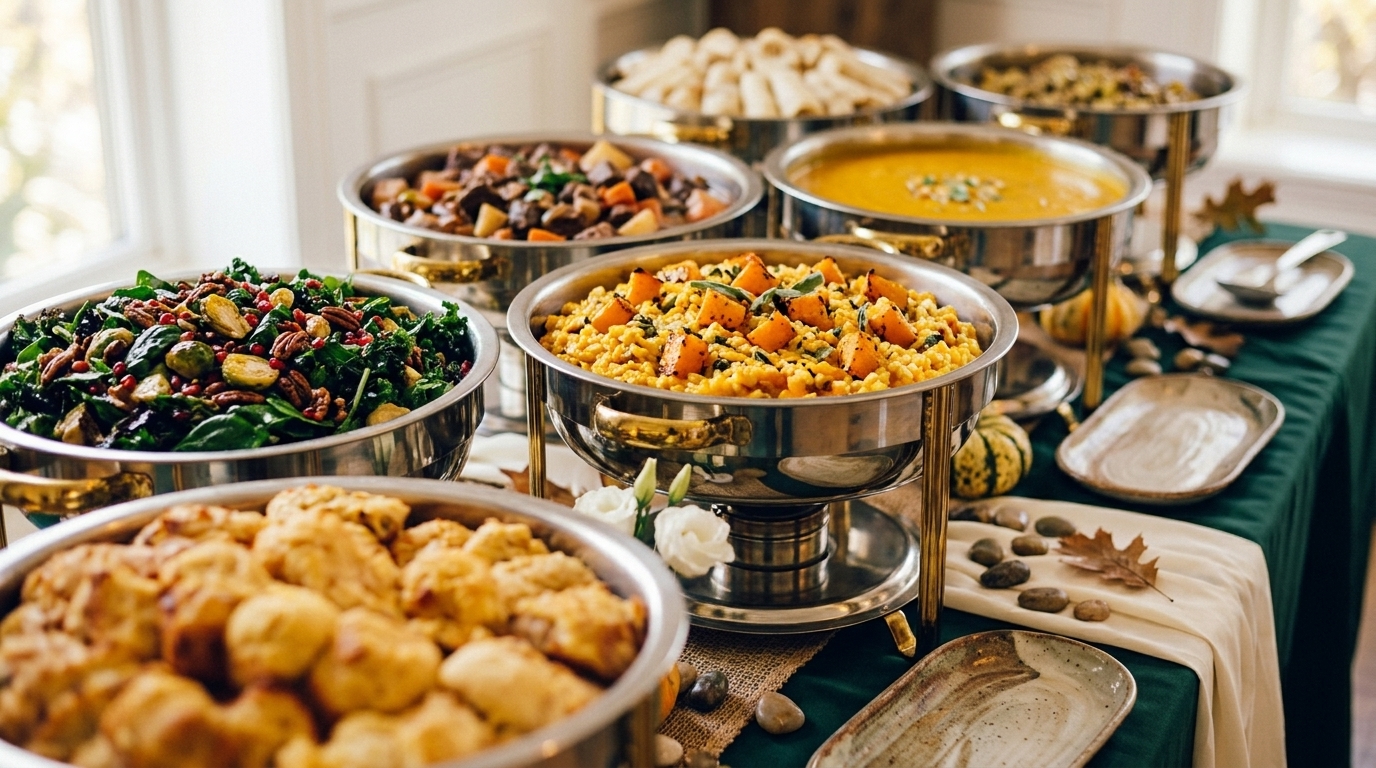
To maintain consistent temperature without scorching, always ensure chafing water pans are filled with at least one inch of boiling water before lighting fuel canisters. Lighting sternos under dry pans creates hot spots that burn pan bottoms while leaving the surface lukewarm. For venues with reliable electrical hookups, consider using commercial electric or induction warmers, which eliminate open flames and offer precise digital temperature regulation.
Keep chafing dish lids closed whenever the buffet line pauses between guest waves. Lids retain essential moisture and keep heat circulating around the food. Designate a lead runner or banquet captain to take internal temperature readings with a calibrated probe thermometer every thirty minutes, recording results directly on a digital clipboard or paper holding log. If an item dips below 140 degrees Fahrenheit, it must be rotated out immediately and reheated rapidly to 165 degrees Fahrenheit in the kitchen before returning to service.
The Runner and Replenishment Cadence: The Shallow Pan Strategy
One of the most widespread operational mistakes in buffet catering is setting out deep, four inch full size hotel pans packed to the brim. While deep pans reduce trips to the kitchen, they create substantial operational problems. The bottom layer of food overcooks, the top layer chills, and large displays look sloppy after only a few guests have served themselves.
Top catering teams use the shallow pan strategy. By utilizing two inch shallow pans or dividing chafers into half size inserts, food turns over rapidly, ensuring guests receive freshly prepared batches rather than items that have stewed for over an hour. Shallow pans also maintain visual abundance with significantly less food exposed to air at any given moment.
Establish a clear replenishment trigger with your front of house service staff. The floor team should alert the kitchen runner when any chafing dish reaches one third capacity. This lead time gives cooks sufficient opportunity to bring hot pans from the staging ovens or insulated Cambro carriers to the buffet line before an item runs completely empty. Toward the final thirty minutes of service, downsize to quarter pans or individual platters. This deliberate taper prevents your kitchen from throwing away entire full size pans of untouched food when service concludes.
Cross Utilizing Autumn Prep for High Margin Sides and Soups
Controlling food costs during peak autumn volume requires deliberate prep synergy across your entire catering menu. A commercial kitchen should never prep an ingredient for just one specific dish. For example, butternut squash purchased in bulk can be diced and roasted for autumn grain bowls, pureed with caramelized onions and sage for a velvety fall soup, and used as a garnish for harvest platters.
Similarly, trimmings from carving station proteins like cider glazed pork loin or roasted turkey should be collected immediately for scratch stock production. Rich house stocks provide the flavor foundation for seasonal pan gravies, braising liquids, and hearty chowders, driving ingredient yields near one hundred percent. To explore proven menu engineering techniques for cold weather dishes, review our guide on comfort food menu engineering for commercial kitchens.
Every menu item should be documented in a standardized recipe costing sheet that reflects accurate purchasing prices and usable yields. Small variations in butcher yield or wholesale vegetable pricing can quietly erode your margins if left unchecked. You can calculate your exact dish margins using our free restaurant food cost calculator or read our breakdown on how to work out the food cost percentage of a dish to keep recipe costs under control.
End of Event Reconciliation and Inventory Tracking
The work of managing a profitable autumn buffet does not end when the last guest leaves the dining room. Accurate post service reconciliation is where commercial caterers find their greatest efficiency gains. When breakdown begins, have the kitchen crew separate untouched food held safely in back of house hot boxes from food displayed on the open buffet line.
Document the weight or pan count of all leftover items. If a pan of roasted sweet potatoes returns untouched event after event, your prep pars are consistently out of sync with actual guest consumption. Logging these numbers allows you to adjust future production sheets and avoid purchasing excess inventory that eventually gets discarded. For a practical framework on tracking kitchen discards daily, read our guide on how to set up a daily restaurant waste log routine.
Modern catering operations rely on integrated software systems to connect customer inquiries, menu prep sheets, and ingredient purchasing into a unified workflow. Edesia helps commercial kitchens turn catering orders into accurate shopping lists, monitor stock levels before ordering from suppliers, and automate communication across email and phone. Streamlining these administrative tasks ensures your culinary team can focus on executing exceptional service and protecting your bottom line.
Frequently asked questions
How many guests can a single buffet line handle before causing delays?
A standard single sided buffet line can comfortably serve fifty to seventy five guests without excessive waiting. When guest counts surpass eighty, set up double sided access or two separate buffet stations to maintain swift service and prevent food from cooling on the table.
Why do professional caterers prefer shallow half size pans over deep full size pans?
Shallow two inch pans and half size inserts keep food fresher, prevent bottom scorching, and present an abundant appearance with smaller batch sizes. They allow faster inventory turnover so guests always receive hot, freshly replenished dishes rather than food that has sat for an hour.
How do you prevent roasted autumn vegetables from becoming mushy in chafing dishes?
Roast root vegetables slightly al dente in the prep kitchen, leaving room for carryover cooking during holding. Use shallow perforated pans where appropriate to let excess condensation drain, and avoid overcrowding the pan or drowning vegetables in heavy sauces before service.
Where should flatware and napkins be placed on a buffet table?
Always place cutlery and napkins at the very end of the buffet line or pre set them on the dining tables. Forcing guests to balance knives, forks, and napkins while serving hot food slows down the line, increases plate drops, and creates unnecessary congestion.
Conclusion
A profitable autumn buffet is the result of disciplined kitchen systems, thoughtful traffic engineering, and strict temperature control. When you calibrate serving vessels, implement shallow pan replenishment routines, and cross utilize seasonal prep across your menu, you create an exceptional dining experience for guests while defending your profit margins. Take time this week to review your station flow, audit your holding temperatures, and tighten prep sheet pars ahead of the busy holiday catering season.
Keep more of what your kitchen earns
Edesia helps you track inventory, reduce waste, compare suppliers, and plan purchases. Catering orders and customer replies are included, too.