Thanksgiving Appetizers for Commercial Catering: High Margin Small Bites, Grazing Platters, and Make Ahead Production Systems
Learn how commercial caterers engineer high margin Thanksgiving appetizers, build make ahead grazing boards, and streamline holiday drop off prep.
Photo by We The Creators on Unsplash.
When clients plan their Thanksgiving catering orders, the conversation almost always begins with roasted poultry and traditional trimmings. Yet experienced operators know that the real profit leverage often hides in the cocktail hour. In the weeks leading into late November, event hosts face a universal bottleneck: home ovens are entirely occupied by large roasts, casseroles, and pies. Hosts desperately need pre dinner food that requires zero kitchen intervention, looks abundant, and keeps hungry family members or corporate attendees content while the main course rests.
Official Pinterest trend research for late October 2026 reveals that searches for thanksgiving appetizers ideas have climbed six hundred percent month over month, reaching peak seasonal search interest. For commercial kitchens, catering companies, and commissary teams, this spike represents an ideal opportunity to capture high margin revenue. Small bites and ambient grazing platters carry favorable food cost margins, often between eighteen and twenty four percent, when properly engineered. They utilize cross utilization staples from your holiday prep, require minimal last minute assembly, and free your hot holding cabinets for heavier banquet pans. This operational guide details how commercial kitchens design, portion, cost, and package Thanksgiving appetizer menus that maximize kitchen efficiency and delight holiday hosts.
Menu Engineering and Cross Utilization for Autumn Small Bites
The most profitable catering menus do not introduce dozens of specialty ingredients. Instead, they leverage existing holiday walk in inventory across multiple preparations. When your prep line is already roasting butternut squash, reducing cranberries, toasting pecans, and par cooking brioche for stuffing, those exact components should anchor your appetizer offerings.
Consider a balanced three tier appetizer selection designed for production speed and ingredient overlap:
-
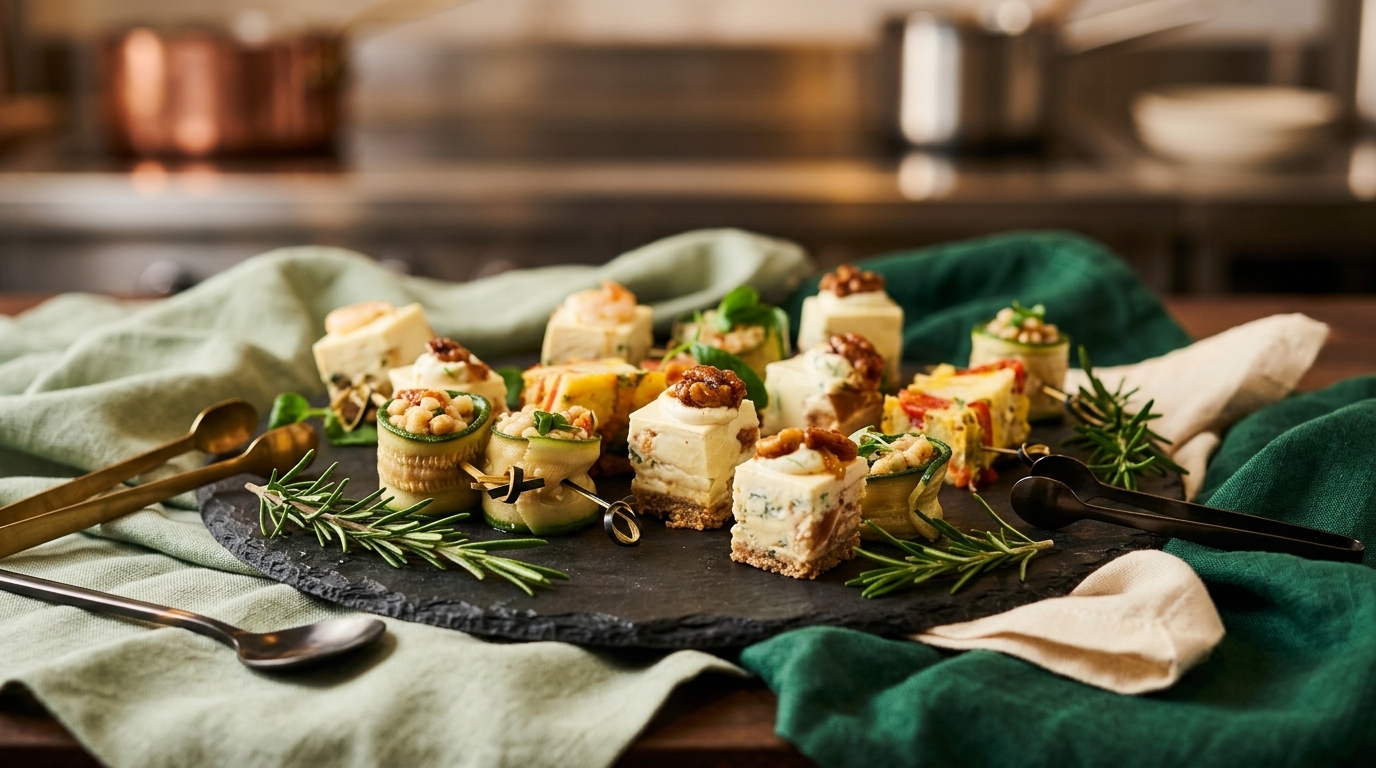
Whipped Goat Cheese and Cranberry Crostini: Baguette rounds toasted during downtime, topped with a seasoned goat cheese spread, house spiced cranberry compote, and fresh thyme. This item reuses your core Thanksgiving cranberry sauce base and bakery trimmings while delivering an estimated twenty percent food cost.
-
Butternut Squash, Caramelized Onion, and Sage Tartlets: Crisp puff pastry shells filled with roasted autumn squash cubes, slow caramelized onions, and crumbled feta. The squash comes directly from your side dish batch roasting schedule, minimizing dedicated labor.
-
Spiced Turkey Sausage and Wild Mushroom Skewers: Mini savory meatballs or glazed sausage bites served warm or ambient with a maple Dijon dipping sauce. This item captures savory roast poultry aromatics in a single bite without demanding oven space during final service.
By standardizing on four anchor flavor profiles, tart fruit, creamy dairy, roasted root vegetables, and earthy herbs, your culinary team prepares dozens of platters with minimal prep station fragmentation. For a deeper look at ingredient portion costing across holiday dishes, review our operational breakdown on how to calculate the food cost percentage of a dish or test your plate margins with the free restaurant food cost calculator.
Building Profitable Ambient Grazing Boards That Travel Well
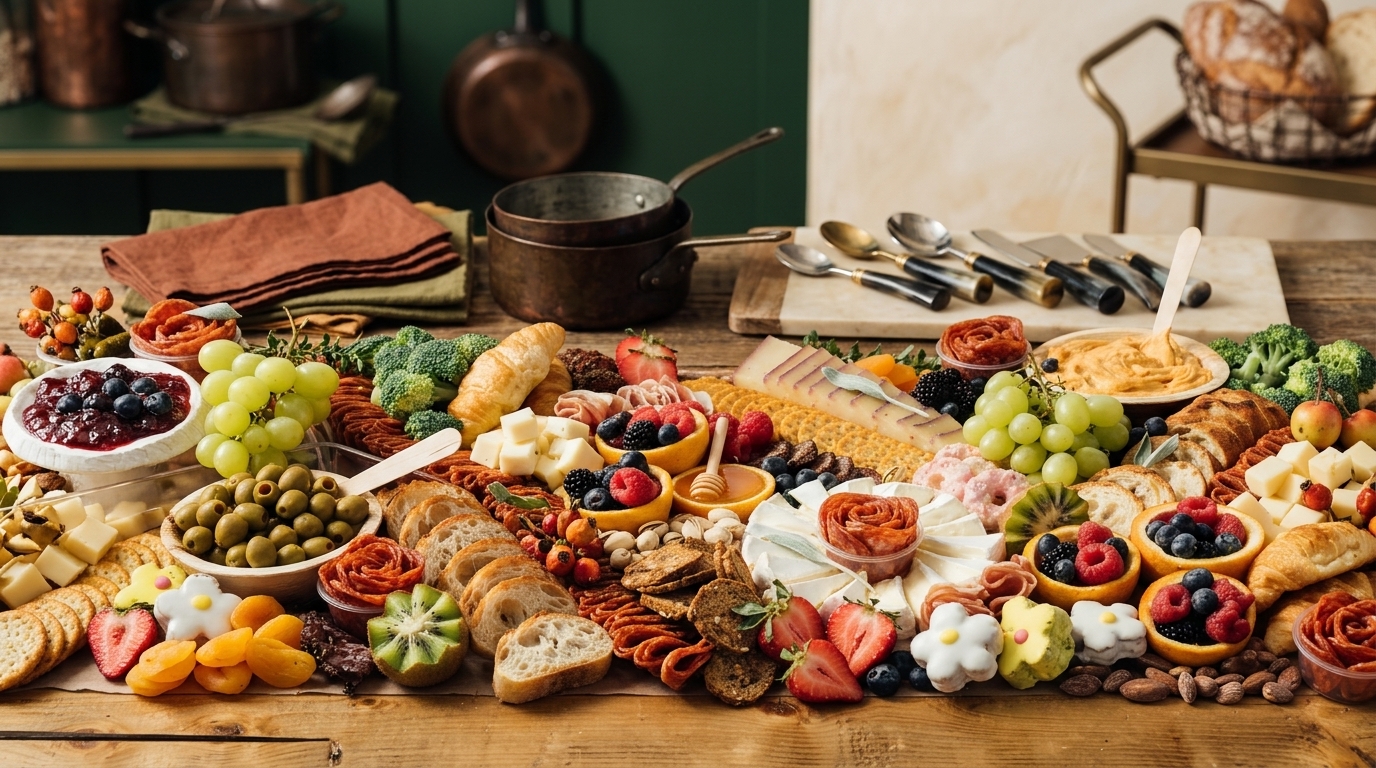
Ambient temperature grazing platters and charcuterie displays are a caterer's strongest ally during peak holiday volume. Because they require no reheating at the event venue, they eliminate client confusion and bypass crowded residential kitchen ranges. However, building boards that hold visual appeal after a forty five minute transit requires deliberate structural engineering.
First, control moisture migration. Soft cheeses, pickled vegetables, and wet dips should always reside in dedicated ceramic, compostable, or glass ramekins rather than resting directly against crackers, crostini, or sliced baguettes. Moisture transfer rapidly turns crisp baked goods soggy, ruining the guest experience.
Second, establish clear portion guidelines. For cocktail style pre dinner gatherings lasting ninety minutes before a full Thanksgiving meal, plan on four to six total appetizer bites per guest. On a communal grazing board, this translates to approximately two ounces of curated artisan cheeses, one and a half ounces of cured meats, one ounce of spiced nuts or dried fruits, and three to four artisanal crackers per person. Overportioning grazing boards wastes expensive charcuterie margins, while underportioning leaves platters looking picked over.
Third, engineer the visual landscape. Arrange dense elements like cheese blocks and charcuterie roses first to anchor the board geometry. Fill secondary zones with seasonal fruit such as concord grapes, sliced persimmons, and pomegranate arils. Finally, pack micro gaps with toasted pumpkin seeds, pecans, and fresh rosemary sprigs. Tight packing prevents ingredient shifting during van transport and creates an immediate impression of harvest abundance.
Batch Production, Par Baking, and Cold Chain Safety
Holiday catering volume can quickly overwhelm kitchen prep tables if batch assembly workflows lack structure. The key to maintaining order accuracy and ticket velocity is separating base component production from final garnish assembly.
Schedule dough cutting, pastry shell par baking, and cold spread blending forty eight to seventy two hours ahead of peak dispatch dates. Baked tart shells and crostini crisps store exceptionally well in airtight cambro containers with food grade desiccant packets at room temperature. Compound cheese spreads, spiced glazes, and cranberry reductions hold safely under refrigeration at thirty eight degrees Fahrenheit or below.
For warm passed hors d'oeuvres, utilize a blast chiller or ice bath protocol immediately following initial cook cycles. Rapidly bringing cooked items from one hundred thirty five degrees Fahrenheit down to forty degrees within standard commercial kitchen safety windows preserves delicate textures and prevents bacterial growth. Learn more about systematic prep safety in our guide to commercial kitchen soup batch production and margin controls.
When packaging drop off items for client reheating, provide clear color coded instructions printed on heavy waterproof card stock. Specify exact oven temperatures, recommend sheet pan parchment liners, and state precise heating durations, typically eight to ten minutes at three hundred fifty degrees Fahrenheit, so home hosts cannot dry out delicate pastry items.
Packaging, Transit Logistics, and Client Drop Off Systems
Even the most meticulously crafted small bites will disappoint clients if packaging collapses or ingredients slide during transit. Standard cardboard bakery boxes absorb grease and buckle when stacked. Professional catering operations invest in rigid kraft catering platters with clear locking lids that showcase the visual presentation while securing individual items.
For delicate canapes, use textured silicone liners or food safe ribbed paper underneath to create friction against slick platter surfaces. When transporting multiple tiered platters, pack them inside insulated delivery carriers fitted with cold gel packs for ambient and cold items. If you operate your own fleet or partner with local drivers, standardize your crate dimensions so drivers can safely stack up to four platters without lid deflection.
To protect client relationships, establish firm preorder deadlines and deposit requirements at least two weeks before Thanksgiving week. Collect a fifty percent deposit upon contract signing to lock in ingredient purchase orders with your suppliers. Require remaining balances and final guest count confirmations seven business days before delivery. For additional operational techniques on structuring holiday catering packages, explore our companion guides on Thanksgiving food ideas for commercial catering and Thanksgiving catering sides packages.
Frequently asked questions
How many appetizer pieces should a caterer budget per guest for Thanksgiving?
For a pre dinner Thanksgiving cocktail reception lasting one to two hours before a heavy family style or buffet meal, budget four to six pieces per guest. For standalone cocktail parties without a full dinner following, budget ten to twelve pieces per guest spread across savory, ambient, and warm categories.
What are the best Thanksgiving appetizers that require zero reheating?
Ambient charcuterie and artisanal cheese grazing platters, whipped goat cheese or butternut squash crostini, savory herb shortbreads, and skewered seasonal fruits with cured meats require zero oven time at the venue, making them effortless for holiday hosts.
What food cost percentage should commercial kitchens target on holiday appetizers?
Commercial kitchens should target an overall food cost percentage between eighteen and twenty four percent on holiday appetizers. High margin items like crostini, grain tarts, and roasted root vegetable bites help balance higher cost ingredients like prosciutto, artisan cheeses, and nuts.
How can caterers prevent grazing board crackers from getting soggy during delivery?
Always package crackers, crostini, and flatbreads in separate sealed bags or dry compartmentalized inserts rather than placing them directly against cheeses, dips, or cured meats on the platter. Instruct the client or service staff to arrange crackers immediately prior to presentation.
Conclusion
Thanksgiving appetizers provide commercial caterers and independent restaurants with high margin revenue that balances heavy holiday kitchen workloads. By engineering small bite menus around shared seasonal prep staples, assembling ambient grazing platters that require zero venue reheating, and implementing rigorous packaging protocols, your kitchen can deliver exceptional guest experiences while protecting healthy food costs. As holiday inquiries accelerate, streamlining your purchasing and catering operations ensures your business captures maximum profit during the busiest season of the year.
Spend less. Run a better kitchen. Visit Edesia to turn your seasonal catering menus into automated supplier shopping lists, track kitchen scrap and prep waste, and manage corporate and private event quotes across email, text, and phone with zero administrative friction.
Keep more of what your kitchen earns
Edesia helps you track inventory, reduce waste, compare suppliers, and plan purchases. Catering orders and customer replies are included, too.