Fall Soup Menu Engineering: Batch Production, Food Cost Controls, and Cooling Safety for Commercial Kitchens
Master fall soup menu engineering. Learn commercial kitchen batch prep systems, vegetable stock yield control, cooling safety protocols, and food cost margins.
Photo by Ruth Georgiev on Unsplash. Modified with AI as an illustrative image.
Autumn brings an immediate surge in consumer craving for warm, comforting bowls. Pinterest search data reveals that search volume for fall soup spikes by four hundred percent between late August and early October, making seasonal soups one of the most reliable traffic drivers for restaurant dining rooms and catering menus. For culinary operators, however, turning soup popularity into consistent bankable profit requires disciplined kitchen systems. A pot of soup can become either a high margin profit center or a hidden labor sink hole that drains walk in cooler space and spoils before service.
When commercial kitchens engineer seasonal soups with intention, the financial upside is substantial. Soups allow culinary teams to achieve food cost percentages below fifteen percent, make full use of seasonal produce trim, and prepare large volumes during quiet morning prep hours. Achieving those margins while protecting food safety requires clear batch production workflows, structured cooling routines, and automated purchasing controls. Here is how professional kitchens build, cost, and execute an exceptional autumn soup program.
Menu Engineering and Margin Architecture for Autumn Soups
The financial power of a seasonal soup program lies in its contribution margin. While an entree steak or seafood plate may run a food cost between twenty eight and thirty five percent, a well crafted autumn soup frequently operates between twelve and eighteen percent food cost. In a commercial setting, soup serves two key commercial functions: an add on appetizer that lifts average ticket size, and a high margin component for lunch combos, event menus, and catering packages.
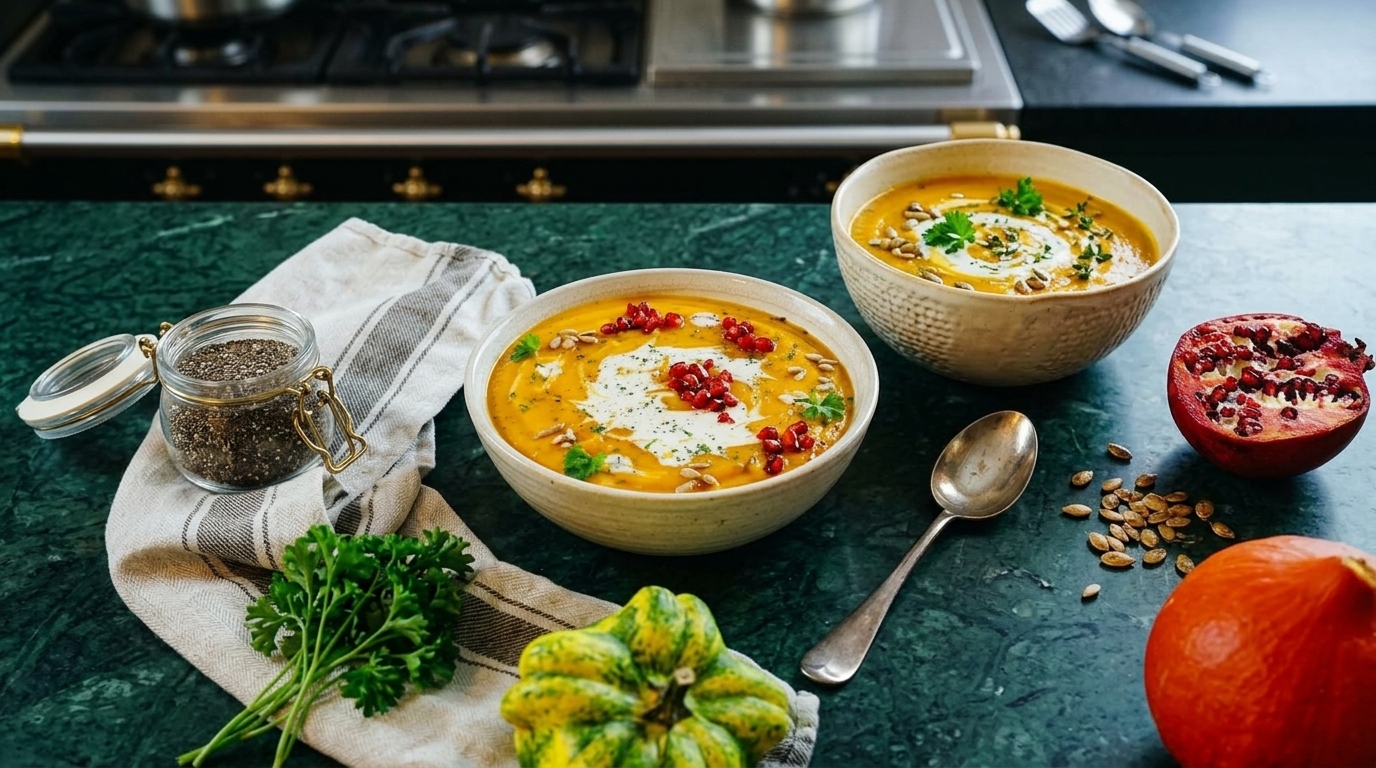
To maximize margin without sacrificing guest perception, build your autumn soup menu around dense, locally available seasonal produce. Butternut squash, acorn squash, pie pumpkins, sweet potatoes, parsnips, and leeks are abundant and cost effective during the fall harvest. Pair these economical foundation ingredients with high impact finishing garnishes. A velvety roasted butternut squash soup costs pennies per ounce to produce, yet guests gladly pay premium menu pricing when it arrives garnished with spiced pepitas, a drizzle of pomegranate molasses, micro greens, and cold pressed herb oil. The guest perceives craftsmanship and indulgence, while your kitchen preserves a healthy gross margin.
When designing soup offerings, limit your daily selection to two distinct profiles: one silky pureed vegan or dairy free option, such as curried roasted carrot and ginger, and one hearty rustic option, such as slow simmered white bean with smoked pork shank and Tuscan kale. This balance satisfies diverse dietary restrictions without cluttering your prep line or overburdening hot holding equipment. Connecting your ingredient needs to structured restaurant inventory management ensures your walk in cooler stays organized without over ordering perishable produce.
Scratch Stock Yields and Vegetable Scrap Utilization
The secret to exceptional soup flavor and rock bottom food costs is a disciplined stock production system. Purchasing pre packaged commercial stocks or bases adds unnecessary ingredient expense, increases sodium levels, and produces a flat, generic flavor profile. By contrast, making foundation stocks in house transforms culinary trim that would otherwise end up in the compost bin into liquid culinary gold.
Establish a dedicated stock prep routine at your prep stations. Place clean food grade cambros at vegetable prep tables for aromatic trimmings, including onion skins, leek greens, celery ends, carrot peelings, mushroom stems, and herb stems. Avoid bitter or sulfurous scraps such as cabbage, broccoli, or turnip tops. When paired with poultry bones or roasted beef knuckles from your butcher prep, these vegetable scraps yield deeply flavorful, gelatin rich stocks at virtually zero incremental ingredient cost.
Tracking these yields is critical for accurate menu costing. If your prep cook simmers twenty quarts of water with ten pounds of bones and aromatics for six hours, the finished strained yield might measure fourteen quarts due to evaporation and absorption. You must cost your soup recipes based on the true net yield rather than the starting raw volume. Implementing a daily restaurant waste log routine helps kitchen supervisors track scrap utilization, monitor stock yields, and identify whether prep cooks are discarding usable produce trim prematurely.
Commercial Batch Production and Two Stage Cooling Safety
Scaling soup from a five quart home recipe to a forty quart commercial steam kettle requires precise cooking mechanics and strict sanitation controls. Pureed autumn vegetable soups thicken substantially as starches gelatinize and moisture evaporates during cooking. Always account for viscosity changes by holding back a portion of your cooking liquid before blending, adjusting consistency only after the batch is fully emulsified. Commercial immersion blenders streamline this process directly inside the kettle, saving labor hours and eliminating the spill hazard of transferring scalding hot liquids into countertop blenders.
Food safety during the cooling phase is where commercial kitchens face their greatest operational risk. Because soups are dense and retain thermal energy, improper cooling creates an ideal breeding ground for spore forming pathogens such as Clostridium perfringens and Bacillus cereus. Under the Food and Drug Administration Food Code standard, time and temperature control for safety foods must cool from one hundred thirty five degrees Fahrenheit down to seventy degrees within two hours, and from seventy degrees down to forty one degrees or lower within an additional four hours.
Never place a deep stockpot of steaming soup directly into a walk in refrigerator. The ambient air cannot penetrate the dense core quickly enough, and the massive heat load will warm surrounding inventory. Instead, follow strict commercial cooling protocols:
- Divide large batches into shallow stainless steel hotel pans no deeper than two inches. Shallow pans maximize surface area and accelerate heat dissipation.
- Utilize sanitized stainless steel cooling wands filled with ice. Submerge the ice wand into the soup and stir every fifteen minutes to circulate heat out from the core.
- Prepare an ice water bath in a clean prep sink, resting the soup container inside while stirring continuously until the temperature drops below seventy degrees Fahrenheit.
- Once the soup reaches seventy degrees within the initial two hour window, transfer the covered and labeled pans to the walk in cooler, leaving space between pans for cold air circulation until the product reaches forty one degrees or below.
Station Holding, Reheating, and Portion Control Workflows
Even the most carefully prepped soup can suffer quality degradation if hot holding and portion controls are neglected on the service line. Soups containing dairy, coconut milk, or delicate purees can separate, scorch on the bottom of hot wells, or lose vibrant color if held at excessively high temperatures throughout an eight hour shift.
Reheat chilled soup batches rapidly on direct heat, bringing the soup to a rolling boil above one hundred sixty five degrees Fahrenheit for at least fifteen seconds before transferring it into preheated steam table wells. Set holding wells to maintain a minimum internal product temperature of one hundred thirty five degrees Fahrenheit. To prevent scorching and skin formation, keep soup wells covered with notched lids, stir thoroughly at least twice per hour, and replenish evaporation loss with hot stock rather than plain tap water.
Portion consistency directly protects your food cost margins. A prep cook or line cook using an unmeasured ladle can easily over portion an eight ounce cup by two ounces. That single twenty five percent overage across sixty daily orders quietly erodes your margin by hundreds of dollars each week. Standardize your line setup with color coded, portion control ladles: a green ladle for four ounce appetizer cups, and an orange ladle for eight ounce entree bowls. Train your team to level each scoop rather than mounding garnishes. When catering large events, calculating exact per guest quantities with catering event profitability guidelines prevents over production and guarantees predictable revenue.
Streamlining Autumn Ingredient Sourcing and Kitchen Purchasing
Managing an autumn soup program alongside a busy restaurant or catering schedule requires proactive supplier coordination. Seasonal crops like hard squashes, heirloom carrots, and root vegetables experience price shifts as harvests peak and taper. If your kitchen relies on manual dry erase boards or scattered paper order sheets, purchasing managers frequently over buy bulk squash that rots in dry storage or under order vital cream and butter before busy weekend services.
Modern commercial kitchen software bridges this gap by automatically converting weekly soup projections into accurate supplier purchasing orders. By calculating current inventory levels against upcoming catering bookings and forecasted dining room covers, culinary operators order precisely what their kitchen needs to execute batch production without excess spoilage.
Edesia helps independent restaurants, caterers, and food businesses eliminate kitchen purchasing headaches. The platform turns your seasonal recipes and event orders into consolidated shopping lists, monitors ingredient par levels in real time, and finds the best supplier prices across your local vendors. Whether you are batch cooking autumn squash soup for a two hundred person corporate luncheon or running daily soup specials on your restaurant line, Edesia keeps your food costs low and your inventory lean.
Frequently asked questions
What is the ideal food cost percentage for seasonal restaurant soups?
A properly engineered autumn soup should achieve a food cost between twelve and eighteen percent. Because vegetable foundations like butternut squash, potatoes, and root vegetables are economical in autumn, operators can maintain healthy gross profit margins while pricing bowls attractively.
How long can scratch made soup be safely held in a commercial walk in cooler?
According to Food and Drug Administration guidelines, properly cooled and covered soup stored below forty one degrees Fahrenheit should be consumed or discarded within seven days of the preparation date. Clearly label every container with the item name, prep date, and discard date.
Can pureed vegetable soups be frozen for future catering events?
Pureed vegetable soups made with root vegetables, beans, and vegetable stocks freeze exceptionally well for up to three months. However, soups containing heavy cream or milk can separate when thawed. For best results, freeze the pureed vegetable base without dairy, then stir in cream, coconut milk, or butter after reheating on the service day.
How does Edesia support restaurant soup and batch prep management?
Edesia turns seasonal recipes into exact ingredient purchasing lists, tracks walk in inventory par levels, and connects with local suppliers to secure competitive wholesale pricing. This eliminates over ordering, reduces food waste, and keeps your kitchen margins predictable throughout the busy autumn season.
Conclusion
Autumn soup specials offer restaurants and caterers an unbeatable combination of guest appeal, kitchen efficiency, and exceptional profitability. By pairing seasonal produce with disciplined batch production, zero waste stock recovery, and certified cooling protocols, operators can delight seasonal diners while capturing significant contribution margins. Elevate your culinary operations this season by standardizing your soup recipes, equipping your cooks with proper cooling and portioning tools, and automating your purchasing workflows with Edesia.
Keep more of what your kitchen earns
Edesia helps you track inventory, reduce waste, compare suppliers, and plan purchases. Catering orders and customer replies are included, too.