What Is Catering Order Accuracy Improvement?
Catering order accuracy improvement means getting every order right, every time. Learn what it is, why it matters, and how to cut costly errors.
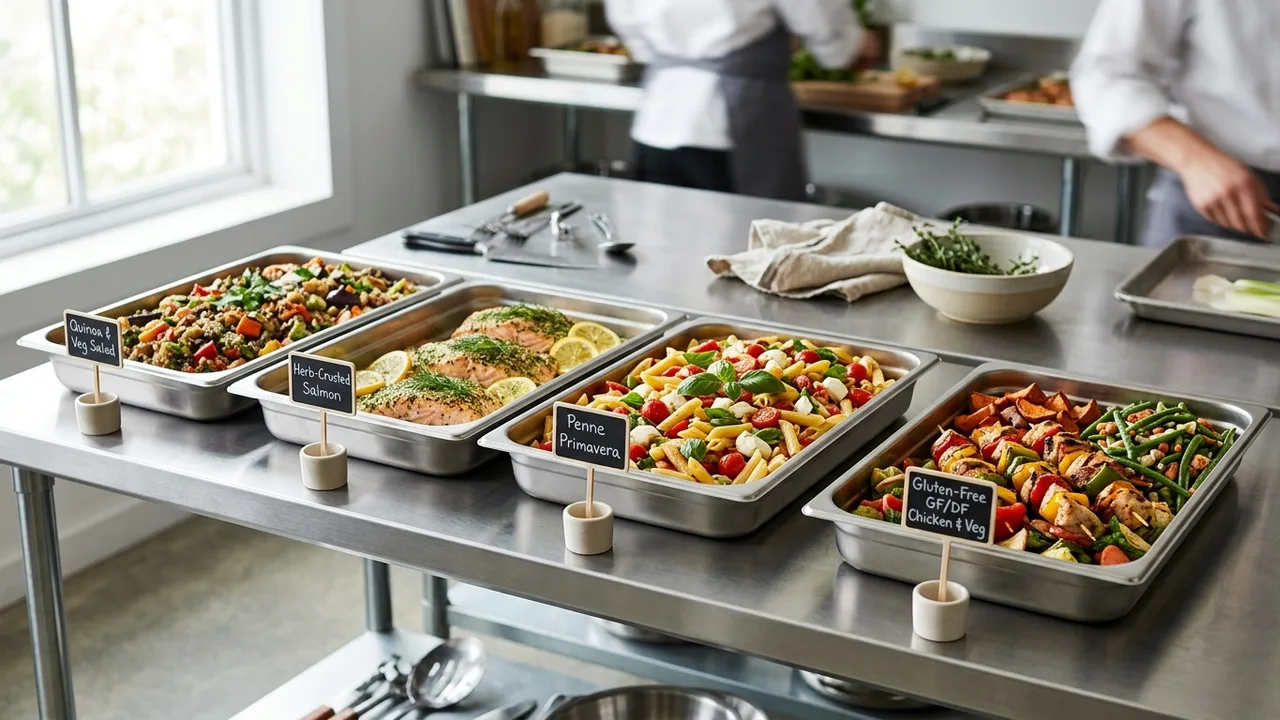
Two hundred guests. A corporate lunch you fought hard to win. The room fills, the trays come out, and the planner pulls you aside with the question every caterer dreads: "Where are the vegan meals? We confirmed twelve." You did not forget them on purpose. The detail just got lost somewhere between a text, a phone call, and a sticky note on the walk-in.
That sinking moment is what catering order accuracy improvement is built to prevent. It sounds like a dry operations term, but it is really about protecting your reputation at the exact moment it is most exposed. Let us define it, show why even a small error rate is expensive, and walk through how to fix it for good.
Catering order accuracy improvement, defined
Catering order accuracy improvement is the ongoing work of getting every order right, every time, by reducing the errors that creep in between the client and the plate. It covers correct items, correct counts, correct dietary needs, and correct timing, tracked as a measurable rate you can watch and raise.
In plain terms, it is the discipline of making sure what the client asked for is exactly what shows up. Not most of it. All of it.
How to calculate your order accuracy rate
The formula is simple. Divide the number of correctly fulfilled orders by the total number of orders, then multiply by 100.
So if you ran 50 events last month and 3 had an error (a wrong count, a missing dietary tray, a late drop), that is 47 correct out of 50, or 94 percent accuracy. Tracking this number month over month turns a vague worry into a target you can actually move. Even very strong fulfillment operations run around 96 to 98 percent (NetSuite), which tells you a 2 to 4 percent miss rate tends to persist without good systems (NetSuite).
Why order accuracy matters for caterers
Because the cost of getting it wrong is bigger and broader than the comped food. It hits your margin, your safety record, and your reviews all at once.
The real cost of a wrong order
Errors are expensive even when they seem small. Industry estimates put the cost of an order error at roughly $30, and a 20-table restaurant running a 5 percent error rate loses about $9,000 a month (Checkmate, ATUMIO, and MENU TIGER, secondary data).
For caterers, the stakes are higher per event, because you cannot remake a missing entree for 30 people on the spot. The error is visible to the whole room.
Allergies and dietary needs raise the stakes
A wrong side dish is embarrassing. A missed nut allergy is dangerous. Dietary accuracy is not a nice-to-have, it is a safety obligation, and it is precisely the kind of detail that gets garbled when it travels by word of mouth across three people. Capturing allergy and dietary notes in writing, attached to the order, is one of the highest-value accuracy moves you can make.
Reviews and repeat business
One visible mistake at a 200-person event can outweigh a year of flawless ones in the client's memory, and in their review. A Circuit survey of more than 1,000 customers, reported by Restaurant Business, found nine out of 10 had a food or grocery delivery go awry, and the fallout was real: 52 percent asked for a refund, 47 percent reordered from the same place, but four in 10 ordered from somewhere else next time. Accuracy is retention.
Common causes of catering order errors
Errors are not random. They cluster around a few predictable failure points.
Manual re-keying and handwritten notes
Every time an order is copied by hand, from a call to a notepad to a kitchen ticket, you roll the dice. Human data entry averages around a 1 percent error rate even in calm, forgiving conditions (Conexiom and Panko research, secondary data), and a catering kitchen at 5pm is neither calm nor forgiving. Fewer manual hops means fewer mistakes.
Miscommunication across channels
When details arrive by phone, text, and email and live in different places, the full picture exists nowhere. 86 percent of operators have hit a menu mismatch between their POS and digital menus (Upserve via Checkmate), and 28 percent of staff attribute mistakes to inventory management (Toast via Checkmate, secondary data). Scattered information is how the vegan count goes missing. This is the same root cause behind why caterers miss client bookings.
Last-minute changes that never reach the kitchen
The client texts "actually, make it 15 vegetarian" two days out. You see it, you mean to update the order, and it never makes it onto the kitchen's sheet. Last-minute changes are a top source of errors precisely because they arrive in the chaos of the final stretch. Our guide on handling catering last-minute changes covers how to capture them safely, and a solid catering run-of-show keeps everyone on the same page.
How to improve catering order accuracy
Three moves do most of the work. First, cut the manual hops: capture orders and changes once, digitally, instead of re-copying them. Second, centralize communication so every detail (counts, dietary notes, timing) lives in one record the kitchen actually reads. Third, confirm the final order in writing with the client before the event.
A simple pre-service accuracy check catches most of what slips through. Before anything leaves the kitchen, run down five questions: Is the total count right? Are all dietary and allergy trays accounted for and labeled? Does the menu match the final confirmation, not an earlier version? Are the serving times correct? Has every last-minute change made it onto this sheet? Two minutes with that list has saved more events than any fancy system.
Software makes all three easier. An AI chief of staff like Edesia captures every order detail and every mid-week change in one place, across calls, texts, DMs, and email, so nothing is lost between the client and the line. That single source of truth is the difference between a confident pre-service brief and the vegan-tray panic. It also delivers one of the clearest catering business automation benefits: fewer costly mistakes.
Frequently asked questions
What is a good order accuracy rate?
Around 96 to 98 percent is strong, and even high-performing operations rarely exceed that without solid systems. Because every error carries real cost, the goal is continuous improvement rather than a single magic number.
How do you calculate order accuracy?
Divide the number of correctly fulfilled orders by the total number of orders, then multiply by 100. Tracking that percentage month over month turns a vague worry into a target you can actually move.
What is the most common cause of catering order errors?
Manual re-keying and miscommunication, especially when details arrive across phone, text, and email and live in different places. Late changes that never reach the kitchen are another frequent culprit.
Conclusion
Order accuracy is not about being a perfectionist. It is about respecting that, at a catering event, you usually get one shot in front of a full room, and the detail you drop is the detail everyone sees.
Measure your accuracy rate, find the failure points (manual re-keying, scattered channels, late changes), and put systems in place so the right order reaches the kitchen every time. Your margin, your reviews, and your blood pressure will all thank you.
Keep more of what your kitchen earns
Edesia helps you track inventory, reduce waste, compare suppliers, and plan purchases. Catering orders and customer replies are included, too.