Christmas Party Food Ideas for Commercial Catering: High Margin Stations, Make Ahead Batching, and Hot Holding Logistics
Discover how commercial kitchens turn Christmas party food demand into high margin holiday catering revenue with batch prep systems, grazing stations, and hot holding.
Photo by Jed Owen on Unsplash.
Every November, commercial kitchens face the same high stakes operational shift. Inquiries for holiday events flood inboxes, corporate planners scramble for dates, and culinary teams debate how to satisfy festive expectations without breaking kitchen capacity. Pinterest search data reveals that interest in christmas party food ideas climbs 200 percent as November begins. For independent restaurants and professional caterers, that search volume represents immediate booking opportunities.
Capturing profitable holiday revenue requires more than festive garnishes. Success depends on disciplined menu engineering, realistic batch prep schedules, and rock solid temperature controls. Holiday gatherings often take place in unconventional venues, from corporate lobbies to crowded event lofts with minimal kitchen infrastructure. If your menu depends on delicate last minute plating or demands every square inch of your oven racks at 6:00 PM, service breaks down. By designing Christmas party menus around high margin food stations, ambient grazing displays, and resilient hot holding dishes, commercial kitchens can deliver exceptional guest experiences while protecting their bottom line.
Engineering High Margin Holiday Menus Around Shared Foundation Ingredients
The foundation of profitable holiday catering lies in strict ingredient cross utilization. A common pitfall during peak event season is expanding your ordering catalog with specialty items that appear in only one dish. This ties up working capital in seasonal inventory and causes expensive food waste when guest counts fluctuate.
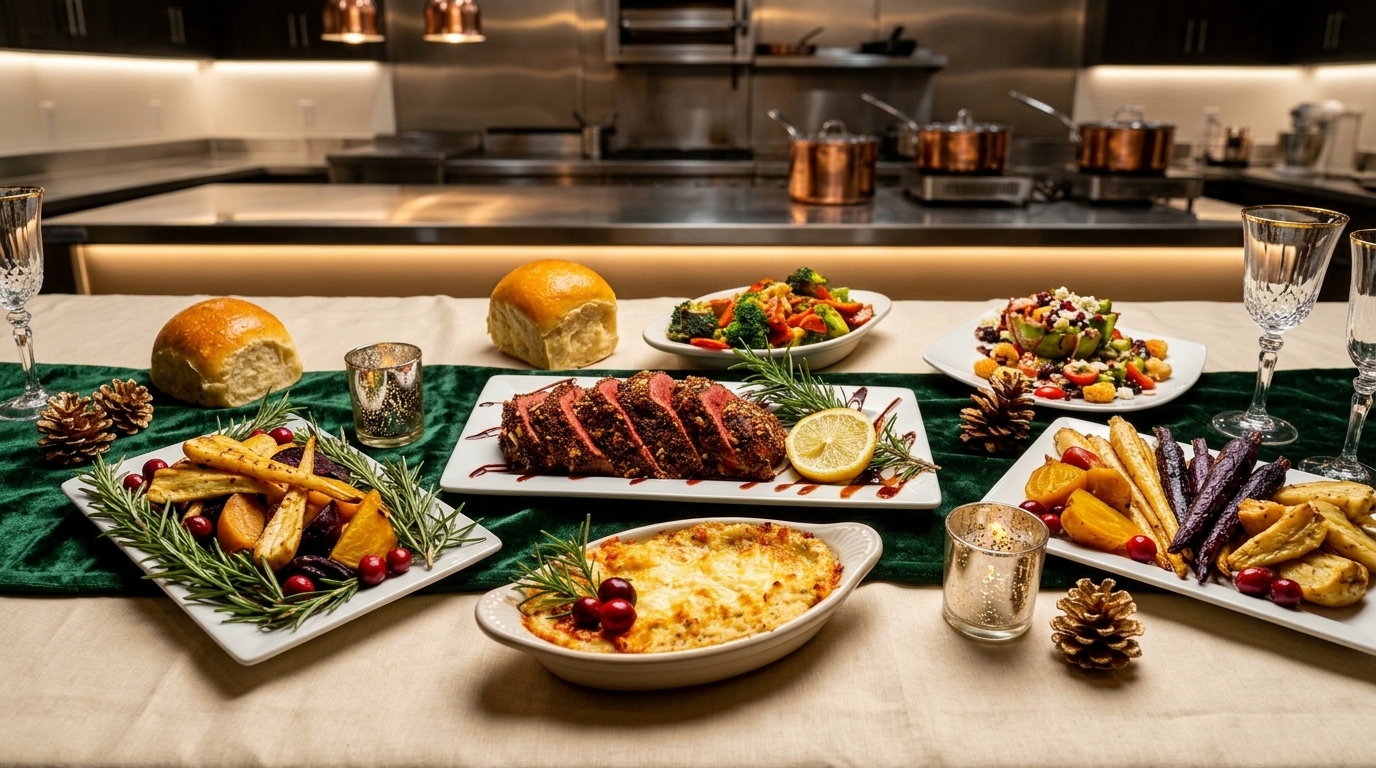
Instead, build your Christmas party food offerings around four or five versatile foundation ingredients that can be purchased in bulk at competitive supplier tiers. For instance, a whole herb crusted beef tenderloin or carved porchetta roast can anchor your premium holiday buffet. Meanwhile, rich braised winter greens, potato gratin dauphinois, and honey glazed root vegetables serve as high margin accompaniments that share preparation techniques and prep space.
When costing each menu item, calculate accurate plate costs by accounting for usable yield after butchery and roasting shrinkage. To keep target food costs between 22 and 26 percent across the package, balance higher cost protein centerpieces with high margin carbohydrate and vegetable foundations. Operators who want to verify plate margins can use the restaurant food cost calculator to check portion economics before finalizing event contracts.
The Three Tier Station Model for High Volume Holiday Gatherings
Managing crowd flow and service speed during a December corporate party requires an operational layout that prevents bottlenecks. Relying entirely on a single traditional buffet line creates long queues and forces your staff into chaotic pan replenishment under guest scrutiny. Implementing a three tier station model divides traffic and keeps kitchen ticket flow steady.
-
Ambient and Room Temperature Grazing Displays Position large ambient grazing stations near event entrances. Featuring artisanal cheeses, cured meats, spiced nuts, dried winter fruits, rosemary focaccia, and house chutneys, these displays provide instant satisfaction as guests arrive. They require zero onsite heating and zero electrical connections, taking pressure off limited venue circuits.
-
Cold Staged Hors d Oeuvres and Raw Bars Passed canapes and chilled seafood platters are prepped completely during morning walk in shifts and held in portable cold storage. Passed bites like smoked salmon blinis, cranberry goat cheese crostini, and chilled shrimp cocktail keep guests circulating throughout the venue while buying time for the hot kitchen.
-
Dedicated Hot Holding and Carving Stations Consolidate hot food into focused action stations. An attended carving station for roasted meats paired with hot holding chafers for roasted vegetables and gratin keeps food piping hot without scorching. Operators can explore our detailed operational framework on autumn buffet catering station flow to fine tune dual sided replenishment during peak guest arrivals.
Production Scheduling and Walk In Staging to Eliminate Kitchen Bottlenecks
During December, commercial kitchens often juggle daytime restaurant covers alongside multiple off premise holiday banquets. When oven capacity becomes the primary constraint, kitchen teams miss delivery windows and compromise food quality. Preventing this crunch requires staging production across a disciplined three day schedule.
Two days before the event, complete all heavy vegetable prep, scratch stocks, spice rubs, and foundation sauces. Simmer rich demi glace, blanch hearty brassicas, and slice root vegetables. Because foundation sauces and compound butters hold stably under refrigeration, this work can be completed during slower prep windows.
The day prior to service, assemble all baked items that benefit from resting. Layer potato gratins, assemble savory holiday tarts, and braise tough cuts of meat. Par baking dishes in advance allows you to complete final reheating in brief fifteen minute windows on the event day rather than tying up convection ovens for two hours.
On event day, reserve oven decks strictly for primary protein roasting, hot holding regeneration, and crisping fresh breads. Assign one team member as the dedicated staging lead responsible for labeling cambros, checking hot box temperatures, and verifying transport manifests before vehicles leave the loading dock. For additional workflow strategies that protect staff energy during holiday rushes, review our guide on small caterer workflow efficiency.
Transport Safety, Hot Holding Logistics, and Onsite Service Recovery
Off premise catering success hinges on what happens between the kitchen door and the guest plate. Winter weather introduces rapid heat loss during transit, making rigorous temperature logging essential for food safety and flavor preservation.
Use preheated insulated hot boxes to transport roasted meats, braises, and sides. Preheat your electric or thermal carriers thirty minutes before loading by cycling them on or placing shallow pans of boiling water inside. Never transport food in open pans covered only in foil. Seal all hotel pans with tight fitting lids and plastic wrap to lock in moisture and heat. Verify that all hot foods register at 165 degrees Fahrenheit at packing and remain above 140 degrees Fahrenheit throughout transit and display.
Equip your onsite event kit with emergency recovery supplies. Pack extra chafing fuel cans, butane lighters, an instant read digital probe thermometer, extra ladles, clean service towels, and squeeze bottles of warm finishing jus. If a venue oven fails to reach temperature or electrical breakers trip under heavy chafing loads, having backup canned heat and preheated thermal carriers protects the entire service.
Connecting Event Preorders to Smart Supplier Purchasing and Waste Tracking
The holiday catering rush can generate substantial top line sales while quietly eroding net profitability if purchasing and waste controls slip. Buying specialty ingredients based on rough estimates leads to overstocked walk in shelves and spoiled product in early January.
To safeguard holiday cash flow, establish firm preorder deadlines and guest count cutoffs in your event contracts. Require a signed agreement and fifty percent deposit upon booking, with final guest tallies and menu choices locked ten business days prior to the event date. This window gives your kitchen the exact headcounts needed to calculate precise purchase quantities.
Translate confirmed guest counts directly into aggregated ingredient shopping lists. Instead of calculating butter, cream, and tenderloin for each party individually, consolidate weekly event volume to hit vendor case minimums and negotiate volume pricing tiers. After service, log all unserved surplus through a structured kitchen discard review. Tracking scrap patterns highlights prep overproduction and portion creep, helping you adjust prep pars for the next weekend. Learn how to install a simple daily tracking system with our restaurant waste log routine guide.
Frequently asked questions
What are the most profitable Christmas party food ideas for catering?
The most profitable Christmas party food ideas combine affordable, high yield foundations with premium visual garnishes. Room temperature grazing boards, artisanal bread stations, potato gratin dauphinois, roasted winter squash, and braised meat small bites offer high contribution margins. Pairing an efficient carving station with high margin starch and vegetable sides keeps food costs below 24 percent.
How do commercial caterers keep Christmas party food hot at venues without kitchens?
Caterers rely on preheated insulated hot boxes, thermal carriers, and wind resistant chafing dishes fueled by high performance canned heat. Hot items are packed at 165 degrees Fahrenheit in sealed pans to retain moisture. Transport carriers are kept closed until immediately before service to ensure food remains safely above 140 degrees Fahrenheit throughout the event.
How far in advance should commercial kitchens prep for holiday catering events?
Professional kitchens use a three day rolling production schedule. Vegetable peeling, stocks, and sauces are prepped 48 hours prior. Casseroles, gratins, and meat braises are assembled and rested 24 hours prior. Event day is reserved strictly for protein roasting, hot holding regeneration, and fresh bread baking.
How do you calculate portion sizes for Christmas party cocktail food?
For a two hour cocktail reception before dinner, plan for 6 to 8 bite sized pieces per guest. For a heavy evening cocktail party replacing dinner, plan for 12 to 15 pieces per guest, balancing cold ambient grazing items with hearty hot protein bites and warm carb foundations.
Conclusion
Executing a profitable Christmas party catering season requires balancing festive creativity with disciplined operational execution. When you engineer holiday menus around versatile bulk ingredients, implement divided service stations, and adhere to strict batch production schedules, your kitchen delivers flawless events without overwhelming staff or oven capacity.
Edesia helps commercial kitchens and independent caterers streamline the entire holiday event lifecycle. From turning inbound inquiries into confirmed bookings to generating automated ingredient shopping lists and tracking kitchen food waste, Edesia keeps your food costs and labor under control. Discover how easy holiday kitchen management can be by visiting Edesia today.
Keep more of what your kitchen earns
Edesia helps you track inventory, reduce waste, compare suppliers, and plan purchases. Catering orders and customer replies are included, too.