Thanksgiving Dinner Packages for Commercial Catering: Heat and Serve Production, Cold Staging, and Pickup Window Logistics
Learn how commercial kitchens engineer profitable heat and serve Thanksgiving dinner packages, manage cold staging, and schedule curbside pickup windows.
Photo by Megan Watson on Unsplash.
Commercial kitchens face a unique operational dilemma every November. Guest demand for complete holiday meals peaks, yet cooking hot meals for simultaneous Thanksgiving Day delivery overwhelms oven capacity, kitchen staffing, and driver logistics. The operators who generate the highest profit margins during Thanksgiving do not attempt hot catering on holiday morning. Instead, they engineer chilled heat and serve dinner packages that customers order weeks in advance, pick up on Tuesday or Wednesday, and finish at home with clear instructions.
Transitioning from hot delivery to chilled family feast packages transforms holiday kitchen economics. It enables culinary teams to spread production over four days, simplifies inventory purchasing, eliminates delivery vehicle bottlenecks, and secures upfront cash flow through deposit rules. This operational guide details how independent restaurants, caterers, and commissary kitchens engineer standardized Thanksgiving dinner packages, manage walk in refrigeration staging, select moisture retaining packaging, and execute friction free customer pickup windows.
1. Menu Engineering for Chilled Heat and Serve Feast Packages
The foundation of a profitable holiday dinner package is designing menu components that maintain exceptional quality after chilling and residential reheating. Residential ovens have uneven hot spots, lower heat recovery, and limited rack space compared to commercial combi ovens. Every item included in your Thanksgiving package must reheat reliably at three hundred and fifty degrees without drying out or separating.
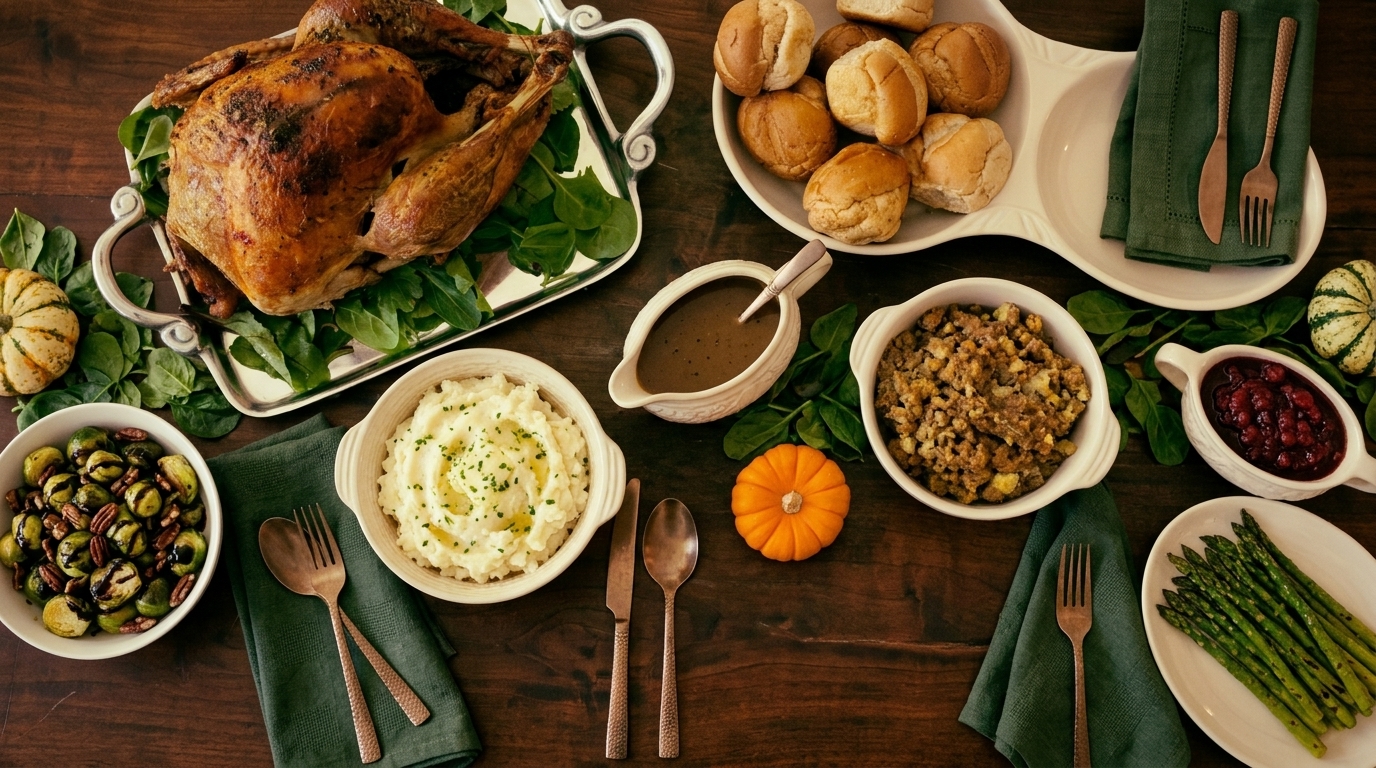
Build your core package around two protein options, three classic starches and vegetables, one scratch gravy, one tart condiment, and dinner rolls. For turkey, roasting whole birds on Thanksgiving morning creates an oven bottleneck and produces dry breast meat by the time the customer reheats the dish. Instead, separate breasts from thighs during prep. Roast turkey breasts to an internal temperature of one hundred and sixty degrees, rest thoroughly, slice across the grain, and shingle neatly into oven ready foil pans over a shallow pool of fortified turkey stock. Confit or slow braise turkey thighs and drumsticks separately, which protects moisture and allows guests to enjoy rich dark meat without carving hassles.
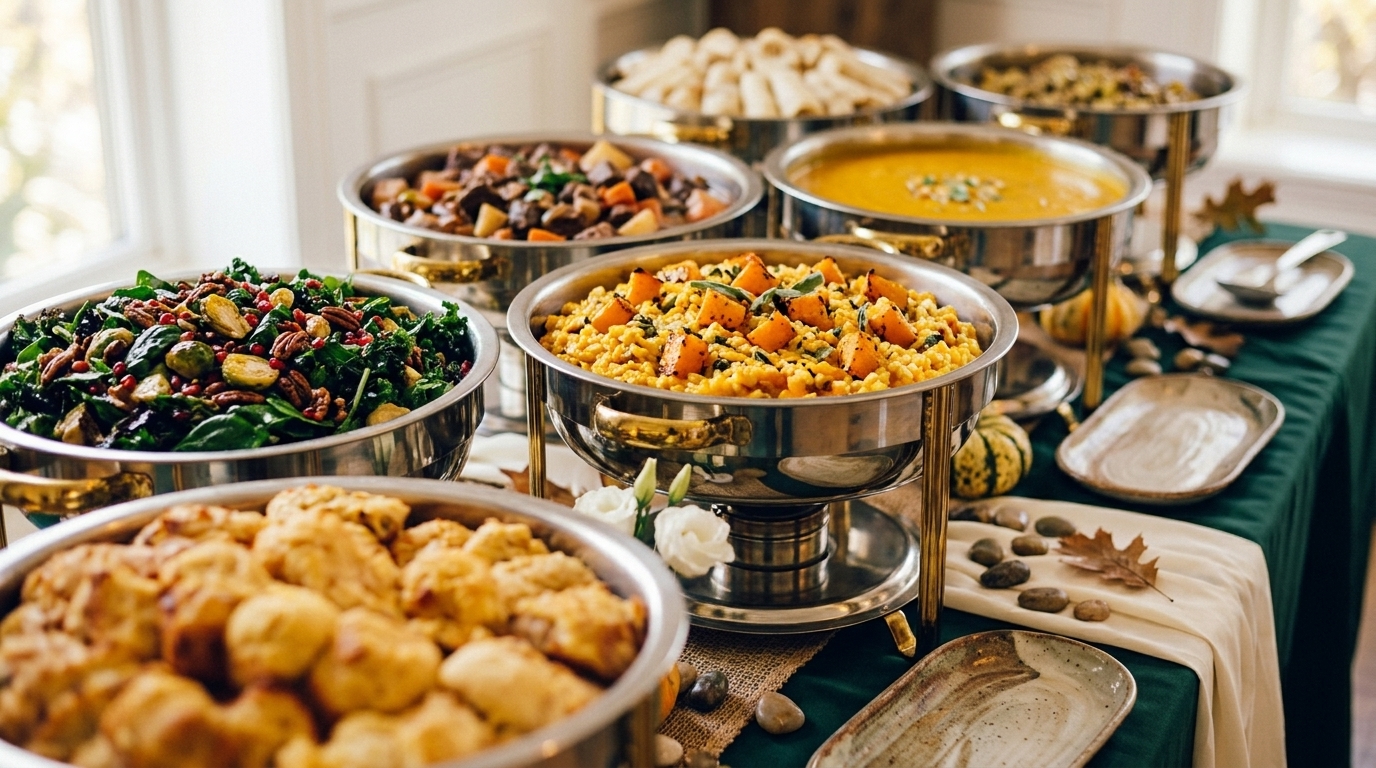
Starches and sides require precise moisture management. Traditional mashed potatoes made with butter, heavy cream, and milk reheat beautifully if sealed tightly with foil to trap steam. Green bean casseroles or roasted fall vegetables should be blanched and par cooked to eighty percent doneness so residential baking finishes the vegetable without turning it mushy. For stuffing, bake the dressing in hotel pans until golden, cool rapidly, and portion into ovenable containers with a splash of warm herb broth included in a separate container. Pair these items with our previous advice in the Thanksgiving catering sides guide and Thanksgiving food ideas overview.
2. Staggered Batch Production and Walk In Refrigeration Staging
Fulfilling hundreds of multi course Thanksgiving dinners in a commercial kitchen requires strict batch scheduling. Attempting to cook and pack orders simultaneously leads to temperature abuse, missing items, and kitchen chaos. Successful kitchens divide Thanksgiving week into four structured operational phases.
On Sunday and Monday, kitchen staff prepare foundation elements: simmer rich roast turkey stock, make scratch cranberry orange relish, bake cornbread or croutons for stuffing, and prepare pie crusts. Cranberry sauce and compound herb butters can be portioned into deli containers up to five days ahead without flavor degradation.
On Tuesday, shift the team to heavy protein cooking, starch batching, and vegetable blanching. All cooked items must follow two stage cooling standards: cooling from one hundred and thirty five degrees to seventy degrees within two hours, and from seventy degrees to forty one degrees within four additional hours. Use shallow hotel pans, ice wands, or blast chillers to ensure food safety compliance. For teams auditing daily food safety, our guide on setting up a daily restaurant waste log routine highlights how temperature tracking prevents costly ingredient spoilage.
On Wednesday, dedicate morning hours to assembly line boxing. Organize walk in shelving into numerical grid zones corresponding to order pickup windows. Every dinner package must be assembled inside a rigid, insulated catering box labeled with the customer name, order number, package size, and complete contents list. Prepack cold condiments, dinner rolls, and printed reheating instructions into the box first, followed by chilled entree and side pans. Staging fully assembled orders in advance keeps walk in doors closed and prevents frantic searching during guest arrival.
3. Packaging Selection, Moisture Retention, and Reheating Instructions
Packaging serves as both your transport container and the customer cooking vessel. Choosing poor packaging leads to spills in guest vehicles, crushed baked goods, and dried out entrees. Standardize around heavy gauge aluminum containers with crimp on dome lids or oven safe lined paperboard trays.
Heavy gauge aluminum half pans and third pans allow home cooks to transfer dishes straight from the refrigerator to their oven without dirtying extra cookware. Ensure all lids include clear labels indicating oven safety. Clear plastic dome lids must always be removed before baking, while foil lids should remain crimped during the first twenty minutes of reheating to lock in steam before being removed to crisp the top layer.
Include a professionally designed, single page reheating roadmap in every box. Never expect holiday hosts to guess cooking times or oven temperatures. Organize the guide by time and oven temperature:
- Universal oven preheat instructions set to three hundred and fifty degrees Fahrenheit.
- Dish by dish timeline listing approximate cook times, whether lids should stay on or off, and required internal temperatures.
- Simple stovetop instructions for warming gravy and soup in small saucepans.
- Plating suggestions and garnish tips that help hosts present an impressive family feast.
Clear instructions protect your culinary reputation. When customers achieve restaurant quality results in their own dining room, they return for December holiday catering and corporate events throughout the coming year.
4. Pickup Logistics, Curbside Flow, and Preorder Cutoffs
The final obstacle in Thanksgiving package fulfillment is guest distribution. Having two hundred clients arrive at your dining room between two o clock and four o clock on Wednesday afternoon causes street gridlock, delayed handoffs, and customer frustration. Smooth pickup logistics require strict preorder boundaries and scheduled pickup slots.
Establish a firm preorder cutoff date at least eight days prior to Thanksgiving. This cutoff date allows your kitchen management to lock down supplier orders, calculate exact poultry poundage, and avoid speculative purchasing. Require full prepayment at the time of booking to eliminate unpaid no shows and guarantee working capital before purchasing bulk ingredients. If you need to fine tune your recipe costing before pricing holiday packages, review our walkthrough on how to work out the food cost percentage of a dish.
During ordering, require guests to select a specific thirty minute pickup window on Wednesday or Thursday morning. Cap each thirty minute window based on your kitchen staging space and parking capacity, typically fifteen to twenty five pickups per slot. On pickup day, designate separate stations:
- Staging desk: Greeters check in guests using their digital order confirmation and radio runner staff.
- Runner lane: Runners retrieve the verified, labeled box from the designated walk in shelf zone.
- Vehicle load station: Staff transfer packages directly to the customer vehicle trunk, confirming pie and roll boxes are secure.
Offering dedicated curbside pickup prevents front of house congestion and provides an effortless guest experience that differentiates your catering business from traditional grocery store deli counters.
Frequently asked questions
Why should commercial kitchens choose chilled heat and serve packages over hot delivery for Thanksgiving?
Hot delivery on Thanksgiving Day creates immense operational pressure, vehicle bottlenecks, and risk of food dropping into the temperature danger zone during transit. Chilled heat and serve packages allow commercial kitchens to prep and package orders during the days leading up to the holiday, freeing up kitchen capacity while giving customers flexibility to dine whenever they choose.
How many days in advance can a commercial kitchen prepare Thanksgiving catering packages?
Foundation items such as turkey stock, cranberry relish, and baked croutons can be prepared three to four days in advance. Proteins, blanched vegetables, and potato purees should be cooked, rapidly chilled, and portioned forty eight to twenty four hours before customer pickup to ensure peak freshness and food safety.
What is the recommended deposit policy for holiday feast preorders?
Commercial kitchens should require one hundred percent prepayment or a minimum fifty percent nonrefundable deposit at the time of preorder, with full payment collected at least seven days before pickup. This policy secures operating cash flow and prevents inventory loss from unpaid cancellations.
How do you prevent reheated turkey breast from drying out in home ovens?
Slice turkey breast against the grain and arrange the slices in shallow foil pans over a light layer of seasoned poultry stock or compound herb butter. Instruct guests to keep the foil lid tightly crimped during the first twenty minutes of reheating so steam gently warms the meat without evaporation.
Conclusion
Engineering a chilled heat and serve Thanksgiving dinner package enables commercial kitchens to capture lucrative holiday revenue without compromising operational sanity. By designing dishes optimized for residential reheating, scheduling structured prep across Thanksgiving week, and running appointment based pickup windows, restaurants and caterers maximize kitchen throughput and protect profit margins.
Managing hundreds of holiday catering orders, custom side swaps, and ingredient shopping lists can stretch kitchen management to its limits. Edesia software simplifies holiday catering operations by converting complex preorder volumes into precise supplier shopping lists, tracking inventory, and automating customer communication across email, phone, and text. Discover how Edesia can streamline your commercial kitchen by exploring edesia.catering.
Keep more of what your kitchen earns
Edesia helps you track inventory, reduce waste, compare suppliers, and plan purchases. Catering orders and customer replies are included, too.