Crostini Appetizers for Commercial Catering: Moisture Barrier Systems, Batch Toasting Yields, and High Margin Platter Logistics
Master crostini appetizer catering. Learn batch toasting yields, fat barrier moisture controls, and high margin assembly workflows for cocktail events.
Photo by Margherita Turrin on Unsplash.
Cocktail party season places intense pressure on commercial prep lines, and few items appear on event proposals as frequently as crostini. These single bite toasted bread appetizers promise exceptional financial returns for catering operators. A basic French baguette costs commercial kitchens less than three dollars wholesale and yields dozens of elegant bases. When paired with disciplined toppings, crostini regularly generate gross margins between seventy five and eighty five percent.
Yet despite their attractive spreadsheet economics, crostini remain an operational hazard during peak service. Kitchens constantly battle three frustrating pitfalls: soft rubbery bread resulting from trapped humidity during storage, ruined soggy crusts caused by wet toppings migrating through the crumb during transport, and chaotic assembly station bottlenecks when banquet attendants attempt to spoon delicate garnishes onto hundreds of fragile pieces minutes before service.
Eliminating these failures requires treating crostini as an engineered catering system rather than casual kitchen prep. By standardizing baguette cutting yields, deploying professional moisture barriers made of whipped dairy fats, and organizing high speed piping line workflows, caterers can deliver immaculate crunch and elevated presentation across hundreds of guest covers without sacrificing prep efficiency.
Baguette Slicing Yields and Convection Toasting Protocols
Achieving consistent plate presentation and accurate portion costing begins with strict bread prep standards. Commercial caterers should source classic French baguettes with a tight internal crumb rather than open crumb ciabatta or sourdough. Open crumb breads contain large air pockets that allow toppings and oil to drip straight through to guest fingers or banquet linens.
A standard commercial baguette measuring twenty four inches yields between thirty two and thirty six usable slices when cut at a thirty degree bias at three eighths of an inch thickness. Slicing on a bias increases surface area for garnishes while keeping the mouthful comfortable for standing guests holding a cocktail beverage. End heels must never be sent to the appetizer station. Instead, collect heel ends in designated cambro containers to grind into seasoned breadcrumbs for meatballs or binder prep.
Toasting logistics require careful oven deck management. Arrange thirty five to forty slices per standard full sheet pan. Avoid brushing olive oil by hand with pastry brushes, which oversaturates bread unevenly and wastes expensive extra virgin oil. Use an atomized culinary oil sprayer to mist both sides of the bread lightly, applying approximately two grams of oil per slice.
Bake in a convection oven preheated to 375 degrees Fahrenheit with the fan set to low speed. High convection fans blow lightweight bread slices across the sheet pan. Bake for nine to eleven minutes until the bread reaches an internal moisture content below five percent, showing pale golden edges and a crisp center. Complete dehydration is essential. If the bread core retains residual moisture, it turns rubbery once cooled and sealed in storage containers. Allow the toasted crostini to cool completely on elevated wire racks for twenty minutes before transferring them into airtight polycarbonate food boxes lined with parchment paper. Stored in dry ambient conditions, dehydrated crostini maintain peak crispness for up to forty eight hours.
The Fat Barrier Technique: Stopping Sogginess in Transit
The single greatest complaint about catered crostini is a soggy crust. When acidic tomato juices, fig jams, pickled vegetables, or fruit compotes sit directly on toasted bread, water molecules quickly penetrate the open starch granules through capillary action. Within twenty minutes, crisp toasted bread degrades into mush.
Commercial caterers prevent this breakdown by applying an impermeable fat barrier across the entire surface of the toasted bread before any wet ingredient is added. Lipids are naturally hydrophobic and repel water, creating a protective shield that locks out moisture and preserves crunch for hours.
The most versatile fat barrier is seasoned whipped ricotta or mascarpone. Whisk whole milk ricotta with ten percent heavy cream, fine sea salt, cracked black pepper, and fresh lemon zest in a commercial planetary mixer until silky and pipeable. Other highly effective fat barriers include herbed goat cheese beaten with olive oil, compound butter softened with roasted garlic confit, and olive tapenade bound with extra virgin olive oil.
The application technique is critical. The fat barrier must coat the toasted surface from edge to edge without leaving exposed crumb holes where moisture can seep through. For maximum speed and consistency, kitchen staff should use disposable pastry piping bags fitted with medium star or round tips rather than table knives or offset spatulas. Piping applies an exact twelve to fifteen gram portion in one second, establishing a pristine barrier that protects bread texture while elevating visual presentation. For drop off catering orders, apply the fat barrier directly on site or maintain cold holding below forty one degrees Fahrenheit to keep the dairy fat firm and water repellent.
High Margin Flavor Architecture and Walk In Cross Utilization
Catering profitability depends on cross utilizing premium raw ingredients across multiple menu packages. Developing crostini recipes around items already purchased for hot entrees, grazing tables, and banquet salads eliminates dedicated inventory risk and drives food costs down to fifteen to twenty percent.
Three high margin crostini flavor builds demonstrate this operational efficiency:
-
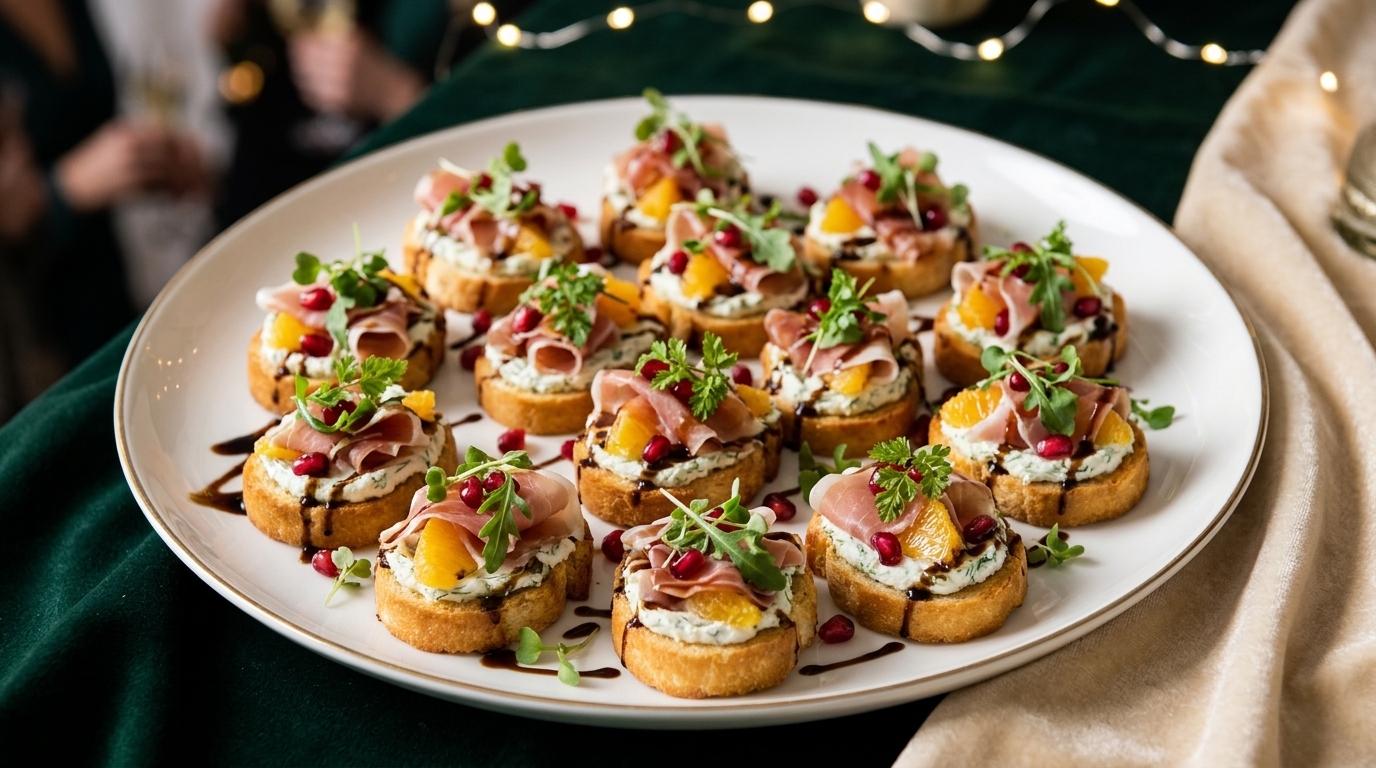
Whipped Ricotta with Shaved Prosciutto, Citrus, and Herb Honey. Utilize bulk ricotta whipped with lemon oil as the lipid base. Top each round with seven grams of thinly ribboned prosciutto di Parma, a fresh orange segment left over from bar prep or salad stations, and a drop of rosemary infused honey. The combination of creamy fat, savory cured pork, bright citrus acid, and floral sweetness creates an exceptional cocktail bite. Food cost per piece averages twenty eight cents, while catering packages regularly command two dollars seventy five cents per piece.
-
Roasted Wild Mushroom Duxelles with Thyme Confit Cream. Repurpose trim and stems from banquet cremini, shiitake, and oyster mushrooms. Finely mince the mushrooms in a food processor and saute with shallots, thyme, and unsalted butter until all moisture evaporates. Mount with a splash of Madeira wine and white truffle oil. Pipe a base of roasted garlic cream cheese, top with fifteen grams of warm or room temperature duxelles, and garnish with fresh chervil. Food cost averages twenty two cents per piece.
-
Shaved Beef Tenderloin with Horseradish Creme Fraiche and Pickled Shallot. Use roasted tenderloin tail cuts trimmed during center cut filet mignon banquet fabrication. Slice chilled beef paper thin across the grain on a commercial deli slicer. Pipe a five gram dot of sharp horseradish creme fraiche onto the crostini, fold eight grams of shaved beef over the top, and crown with a house pickled shallot ring and micro arugula. Food cost averages forty two cents per piece, supporting premium menu pricing above three dollars fifty cents per piece.
By managing ingredient portion weights strictly on prep sheets, kitchen managers maintain predictable margins while offering clients restaurant quality hors d oeuvres.
Assembly Line Staging and Drop Off Logistics
The final barrier to profitable crostini catering is assembly speed. Attempting to build delicate appetizers during active cocktail service causes server gridlock and inconsistent plating. Commercial operations should organize disciplined assembly line stations that maximize throughput while safeguarding food safety.
Set up a linear assembly table with two kitchen team members facing a row of half sheet pans lined with silicone baking mats. Team member one operates the piping bag, dispensing uniform fat barrier rosettes across thirty six crostini in forty five seconds. Team member two follows immediately behind, placing the sliced protein or vegetable topping using culinary tweezers or gloved hands, followed by delicate microgreens or glaze drizzles. Standardizing this two person choreography allows a kitchen to produce four hundred finished crostini in less than twenty five minutes.
For full service catered events, assemble crostini in thirty minute batch waves during the cocktail hour. Never allow assembled crostini to sit on service trays for longer than forty five minutes, even with a robust fat barrier. Passed trays should be loaded with fifteen to twenty pieces per tray to ensure swift distribution while appetizers remain at peak crispness.
For drop off catering where service staff are not present, offering fully assembled crostini carries significant quality risks during transport. Successful caterers offer clients two operational solutions. The first is a turnkey assembly kit: crisp crostini packed in airtight boxes, savory spreads portioned in sealed piping bags, and toppings staged in chilled deli containers, complete with simple visual instructions for the host. The second solution is assembling platters thirty minutes prior to scheduled drop off, staging them on heavy catering platters wrapped securely in dome lids, and instructing the client to present the platters immediately upon arrival.
Tracking these ingredient batches, delivery schedules, and prep labor hours across busy holiday weekends requires connected kitchen software. Digital tools like Edesia help commercial caterers convert event menus into exact ingredient shopping lists, calculate precise food cost percentages, and track prep tasks so that every holiday catering order delivers maximum profit. You can also explore our catering menu planning guide and our guide on how to calculate food cost percentage to refine your kitchen margins.
Frequently asked questions
How far in advance can commercial kitchens toast crostini bread?
Dehydrated crostini can be toasted up to forty eight hours in advance when baked to under five percent core moisture and stored in airtight polycarbonate food containers with parchment paper at room temperature. Avoid refrigerating plain toasted crostini because cooler humidity softens the crust.
What is the best way to keep drop off catering crostini from getting soggy?
The most dependable strategy for drop off catering is providing a deconstructed kit. Pack toasted crostini in an airtight box, savory spreads in disposable piping bags, and toppings in chilled deli cups. If pre assembly is required, apply a continuous layer of whipped cheese or compound butter as a moisture barrier and assemble no more than thirty minutes before scheduled client delivery.
How many crostini should caterers plan per guest for a cocktail party?
For a two hour cocktail reception where crostini are part of a broader appetizer menu, caterers should budget two to three crostini per guest. If crostini are the primary passed hors d oeuvre before a seated dinner, plan one to two pieces per guest to prevent overeating and food waste.
Conclusion
Crostini appetizers demonstrate how kitchen systems transform humble bakery items into standout catering revenue. When commercial kitchens standardise baguette toasting yields, apply fat barriers that defeat humidity and moisture migration, and run disciplined assembly lines, they eliminate the stress of cocktail party service.
Operators do not have to settle for soggy bread, wasted ingredient trims, or frantic last minute plating. By treating hors d oeuvres production with the same operational rigor as center of the plate banquet proteins, your team protects food quality, delights event guests, and secures gross margins above seventy five percent throughout the holiday season.
Try it on your own menu
Use the restaurant food cost & variance calculator to run your numbers in your browser. No signup required, and your data stays on your device.