Hot Chocolate Bar Catering: How Commercial Kitchens Build High Margin Beverage Stations, Batch Syrups, and Winter Event Logistics
Learn how commercial caterers engineer high margin hot chocolate bars, master safe hot holding logistics, batch specialty syrups, and maximize winter event profits.
Photo by Sixteen Miles Out on Unsplash.
When temperatures drop across the country, corporate event planners and private hosts look for interactive beverage stations that feel celebratory, comforting, and visually impressive. Recent search trends on Pinterest show consumer and planner interest in hot chocolate bars jumping by 200 percent month over month, with weekly query volume climbing steadily as holiday planning accelerates. For independent restaurants and commercial caterers, this demand represents one of the most profitable service formats on a seasonal calendar. Unlike hot buffets that tie up combi ovens and require extensive line cooks, a well engineered hot chocolate bar requires zero kitchen oven capacity, assembles rapidly on site, and reliably achieves gross profit margins between 75 and 85 percent.
Operating a profitable specialty beverage station involves more than setting out powdered cocoa and paper cups. High volume service presents genuine logistical traps. Dairy products scorch easily when held improperly in electric urns, warm milk can drop below safe temperature zones during cold transit, and unmonitored topping bowls invite guest over portioning that quietly erodes food cost margins. By standardizing scratch syrup formulas, establishing clear equipment protocols for transport and holding, and designing structured station layouts, commercial kitchen operators can deliver a premium guest experience while safeguarding prep labor and profitability.
At Edesia, we work with caterers and commercial kitchens to streamline purchasing, track portion yields, and protect bottom line profitability across peak seasonal volumes. Here is how your kitchen can engineer, batch, transport, and price a high margin hot chocolate bar program this winter.
Menu Engineering and Margin Analysis for Specialty Beverage Stations
Specialty beverage stations are margin multipliers for commercial caterers. In traditional holiday catering, protein heavy buffet lines and passed hors d oeuvre platters often generate food costs between 28 and 34 percent due to volatile meat prices and prep intensive labor. In contrast, hot chocolate stations rely on bulk commodities such as whole milk, oat milk, premium Dutch processed cocoa, granulated sugar, and dark chocolate batons. When batched efficiently in a commercial commissary, the base ingredient cost for an eight ounce serving of rich, European style drinking chocolate hovers between 75 cents and 1 dollar and 10 cents, depending on dairy choices and cocoa butter percentages.
To maximize revenue, structure your hot chocolate offering as a tiered package rather than a flat add on.
-
The Classic Commissary Tier: Rich whole milk hot cocoa base prepared with bittersweet chocolate callets and Dutch cocoa, paired with mini marshmallows, whipped cream, chocolate curls, and cinnamon dust. Base food cost averages 85 cents per guest, sold at 6 to 7 dollars per person.
-
The Artisan Winter Craft Tier: Two base options featuring classic whole milk hot chocolate and a rich oat milk dark chocolate, accompanied by three scratch made syrups such as vanilla bean salted caramel, crushed peppermint, and toasted cardamom. Toppings expand to include handmade marshmallow squares, crushed spiced speculoos cookies, and toasted coconut flakes. Base food cost averages 1 dollar and 45 cents per guest, sold at 9 to 11 dollars per person.
-
The Spiked Evening Lounge Tier: For licensed operators providing full beverage catering, pairing the artisan chocolate base with cordials such as Irish cream, bourbon cream, peppermint schnapps, and spiced rum. This format pushes revenue per guest to 14 to 18 dollars while keeping beverage cost under 22 percent.
Operators should calculate portion costs down to the gram, including biodegradable cups, hot beverage sleeves, wooden stirrers, and paper napkins. If you need to verify recipe portion costs against supplier invoices, use our free Restaurant Food Cost Calculator to lock in your margin targets before releasing event proposals.
Commissary Batch Production and Scratch Syrup Systems
Producing high quality hot chocolate in large batches requires a repeatable kitchen procedure that prevents separation, burning, and fat congealing. Never attempt to mix raw cocoa powder directly into large volumes of cold milk in a kettle. Doing so creates clumps that float on the surface and lead to inconsistent flavor and chalky mouthfeel.
Follow a two step slurry and emulsion workflow in the commissary:
First, prepare an intense chocolate ganache base. In a tilt skillet or steam jacketed kettle over gentle heat, melt sixty percent dark chocolate couverture with heavy cream, Dutch processed cocoa powder, and simple syrup until completely smooth and glossy. Add a pinch of sea salt and pure vanilla extract. This rich foundation can be cooled rapidly in shallow hotel pans, stored in the walk in cooler for up to five days, and portioned out by weight.
Second, rehydrate and temper with dairy on event day. Combine the ganache base with fresh milk or plant based milk at a standardized four to one ratio, whisking gently over medium heat until the mixture reaches 165 degrees Fahrenheit. This emulsion holds together without separating or forming an unpleasant surface skin.
House made flavored syrups give your catering company a distinct culinary edge while commanding higher package pricing at negligible cost:
-
Salted Vanilla Bean Caramel Syrup: Caramelize granulated sugar to a rich amber, deglaze with warm cream and butter, and finish with flaky Maldon salt and scraped vanilla beans. The cost per two ounce portion is approximately 18 cents.
-
Crushed Peppermint Candy Syrup: Infuse equal parts water and sugar with real crushed peppermint and natural mint extract, creating an ambient syrup that flows smoothly from squeeze bottles without crystallizing. Cost per portion is under 10 cents.
-
Spiced Mexican Cinnamon Mocha Syrup: Simmer piloncillo sugar or brown sugar with Mexican canela sticks, star anise, and ancho chili powder. This introduces warmth and complex aroma without requiring dairy modification.
Cross utilize these syrup bases across your winter dessert menu and cocktail catering prep to minimize inventory SKU sprawl and prevent prep station waste. For additional winter menu ideas, review our operational guide on Winter Cocktail Party Catering.
Hot Holding Equipment, Transport Logistics, and Temperature Safety
Maintaining hot dairy safely during transit and extended service is the single greatest technical challenge of beverage catering. Dairy based liquids are classified as time and temperature control for safety foods. Health inspection codes mandate that hot dairy must be held continuously at or above 135 degrees Fahrenheit, while flavor quality dictates that chocolate milk should not exceed 165 degrees Fahrenheit to avoid scorching, sulfur off flavors, and protein curdling.
-
Transport Logistics: For drop off catering or remote venues without commercial kitchens, transport hot cocoa in heavily insulated beverage carriers, such as five gallon or ten gallon Cambro Camtainers. Always preheat the container by filling it with piping hot water for fifteen minutes, draining completely, and then immediately filling it with chocolate batched at 175 degrees Fahrenheit. In a sealed, commercial grade carrier, the liquid temperature will drop less than three degrees Fahrenheit per hour, arriving well within the safe service window.
-
On Site Holding Urns: When serving on site, use double wall insulated dispensers or water jacketed beverage urns rather than direct contact dry heating urns. Dry heating elements create localized hot spots at the base of the tank, causing dairy sugars to burn into a black crust that ruins entire batches. If your team must use standard chafer urns, ensure water pans are kept at a steady simmer and stir the beverage every fifteen minutes to prevent fat separation.
-
Dairy Free and Allergen Segregation: Plant based milks such as oat milk and almond milk must always be batched in separate cookware, transported in dedicated labeled dispensers, and served from separate spigots. Gluten and dairy cross contact must be managed strictly, particularly with toppings like crushed speculoos cookies or wheat based sprinkles. Clear acrylic signage identifying ingredients and allergens reassures guests and minimizes line congestion.
Review our breakdown on Corporate Event Catering Costs to see how proper equipment selection and transit scheduling safeguard your operating margins.
Station Flow, Visual Merchandising, and Portion Control Systems
The layout of your hot chocolate station directly influences both guest satisfaction and food waste. When guests encounter a disorganized table, they linger, spill toppings, and create long lines that frustrate event coordinators. Furthermore, unmonitored topping bowls can quickly lead to guests heaping half a cup of expensive artisan chocolate shavings or toasted nuts, driving your portion costs above projections.
Design your table with a strict linear assembly flow from left to right:
-
Cup and Sleeve Dispensing Station: Place compostable eight ounce or ten ounce double wall cups and cardboard sleeves at the beginning of the table. Standardizing on an eight ounce cup rather than twelve or sixteen ounces automatically anchors portion size and limits dairy consumption while still providing a rich, satisfying beverage experience.
-
Hot Beverage Dispenser: Position the insulated urn immediately following the cups. For high volume corporate mixers, dedicate one trained catering staff member to operate the spigot. Staff service increases speed from three guests per minute to ten guests per minute while eliminating sticky spigot spills and scald hazards.
-
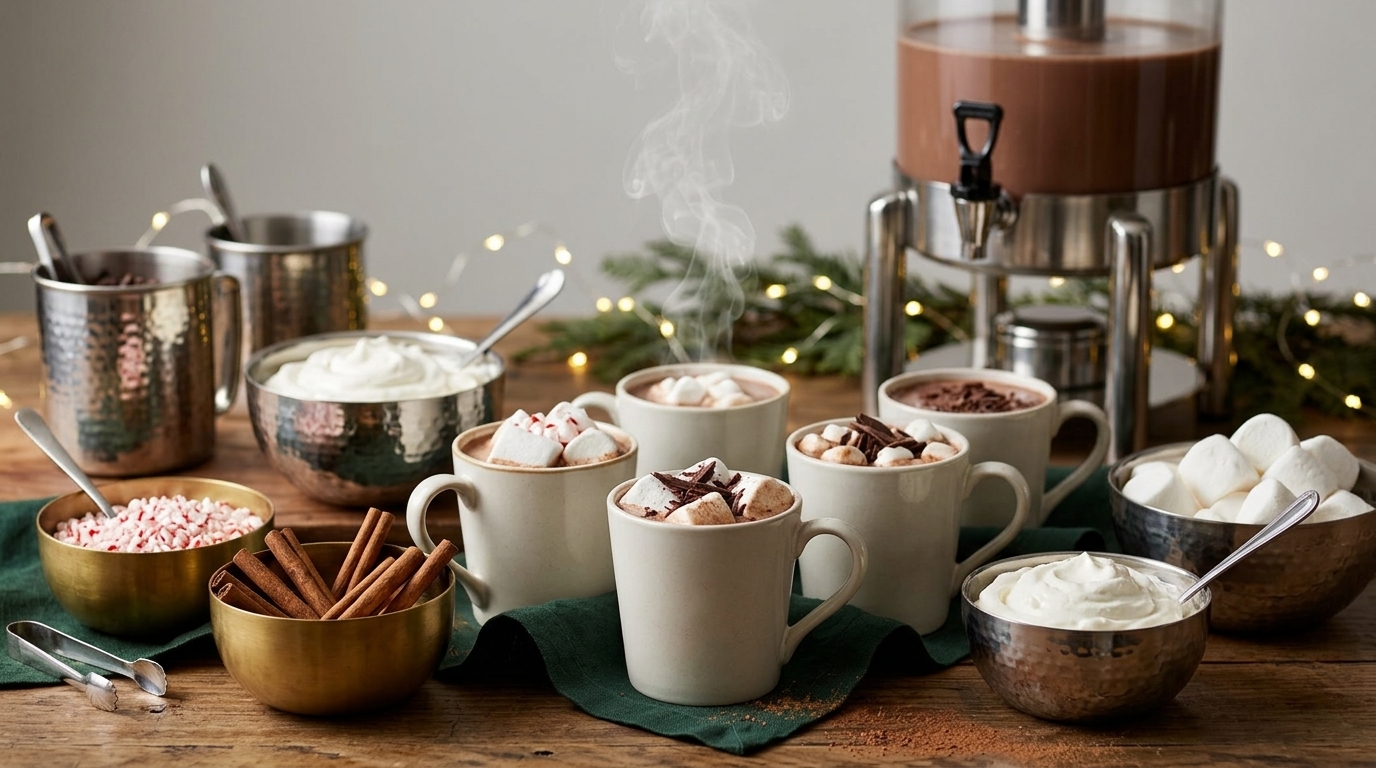
Elevated Tiered Topping Bar: Arrange toppings in ceramic or hammered metal ramekins set on elevated risers. Use portion control stainless steel spoons, tongs, and mini ladles sized to exact recipe specs, such as one tablespoon scoops for chocolate curls and candy pieces. Providing small serving utensils subtly guides guests to take balanced portions rather than overflowing scoops.
-
Flavor Pump and Dusting Finish: Place syrup squeeze bottles and cocoa shakers at the far end of the station, accompanied by compostable wooden stirrers and cocktail napkins. Placing stirrers and napkins at the end naturally moves guests away from the beverage urn and clears the queue for the next attendee.
Consistently monitoring discard pans and topping refills after events allows your team to tighten purchasing pars for subsequent bookings. For practical methods to track and reduce kitchen scrap, see our guide on How to Work Out Food Cost Percentage of a Dish.
Frequently asked questions
What is the ideal hot chocolate serving temperature for catering events?
Hot chocolate should be served between 150 and 160 degrees Fahrenheit for immediate drinking comfort. It must never drop below 135 degrees Fahrenheit during holding to comply with food safety standards for dairy.
How much hot chocolate should a caterer prepare per person?
For standard daytime corporate events or dessert stations, plan for one eight ounce cup per guest, with a five percent buffer. For evening outdoor winter markets or holiday parties where alcohol is not served, increase production to one and a half servings per attendee.
How do commercial kitchens prevent milk from curdling or burning in urns?
Use water jacketed dispensers or preheated insulated beverage carriers instead of dry electric element urns. Keep holding temperatures below 165 degrees Fahrenheit, and stir the liquid periodically to distribute heat and prevent fat separation.
Conclusion
Offering an interactive hot chocolate bar allows restaurants and caterers to capture surging winter holiday demand without straining kitchen prep lines or tying up oven capacity. By replacing powdered mixes with scratch ganache bases, controlling portion costs with smart station ergonomics, and adhering to strict temperature holding standards, food business operators can deliver a memorable guest experience that yields 80 percent gross margins.
At Edesia, we give commercial kitchens, caterers, and food businesses the digital tools needed to turn custom event menus into accurate ingredient orders, track ingredient yields from vendor to plate, and manage customer catering inquiries seamlessly across email, text, and phone. Schedule a verified demo with our team today at edesia.catering to see how our software helps you protect margins and run a smoother kitchen this holiday season.
Try it on your own menu
Use the menu item contribution calculator to run your numbers in your browser. No signup required, and your data stays on your device.