Buffet Set Up for Commercial Catering: Station Flow, Thermal Management, and Food Cost Control
Master commercial catering buffet set up with proven layout strategies, temperature holding protocols, chafer replenishment systems, and portion margin controls.
Photo by Pia Kamp on Unsplash.
A crowded buffet line is one of the most visible indicators of banquet success, yet it is also where caterers lose the most profit and operational control. When guests wait twenty minutes for a cold chafing dish, dinner timing collapses across the entire event. Worse, when guests reach the carving board or protein pans first, they pile expensive beef tenderloin or salmon onto their plates, leaving the kitchen scrambling to replenish high value items while pans of roasted potatoes and winter vegetables return half untouched.
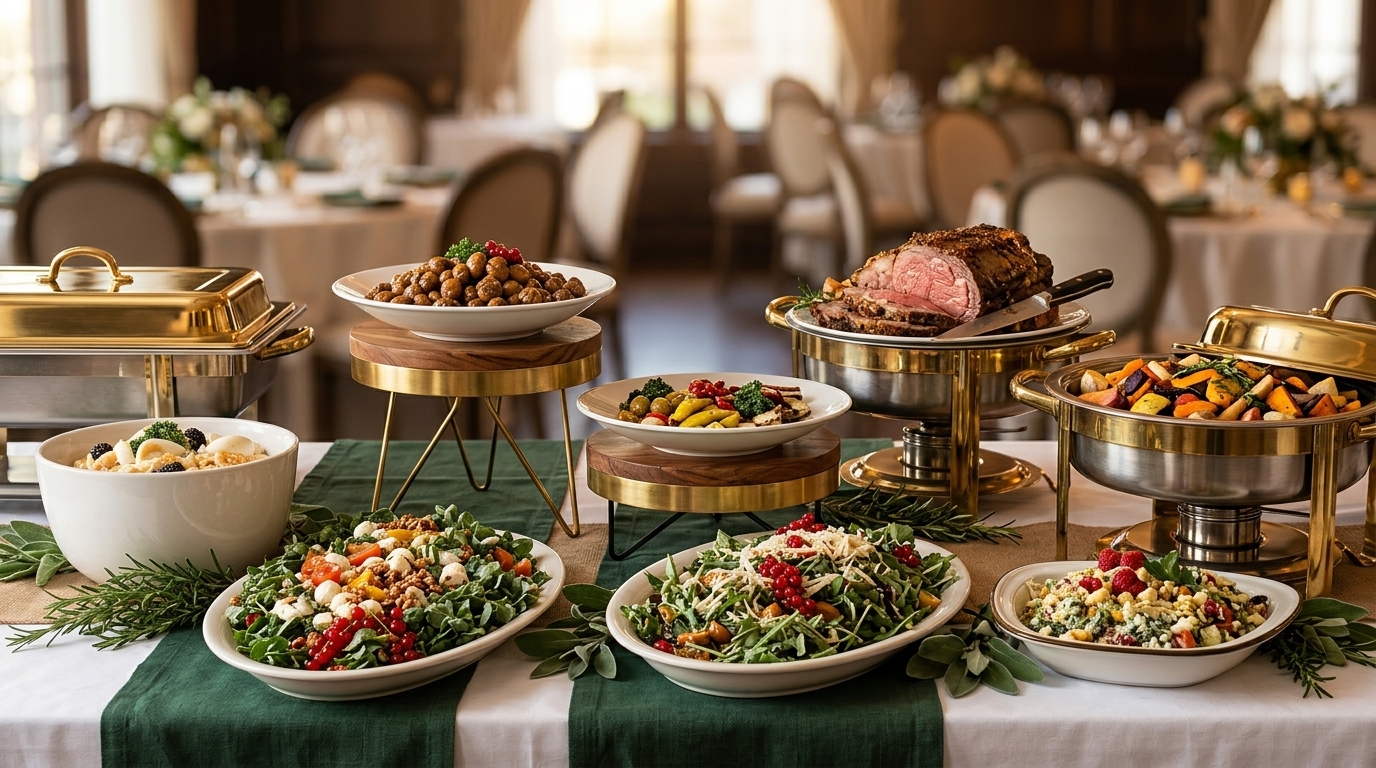
Operating an exceptional catering buffet requires treating the table not as a decorative display, but as an engineered service system. Every detail matters, from the direction of traffic flow to the exact depth of hotel pans and the placement of serving tongs. With corporate holiday parties and winter banquets surging across the country, kitchen operators must master layout geometry, thermal holding safety, and smart food sequencing to deliver hot, fresh meals while protecting target food margins under twenty eight percent.
Station Layout Engineering: Eliminating Line Bottlenecks
The physical geometry of your buffet tables dictates throughput speed and guest satisfaction. A single sided buffet table against a wall processes approximately sixty to seventy guests in thirty minutes. If you have an event with one hundred and fifty attendees, a single line creates a twenty minute delay for the last table called.
To double service velocity without expanding kitchen labor, pull the buffet table away from the wall to create a two sided island station. Two sided stations allow guests to approach from both sides simultaneously, doubling throughput to one hundred and twenty guests in twenty minutes. Ensure the table width is at least forty inches, or push two thirty inch banquet tables back to back, so guests reaching across from opposite sides do not collide or tangle tongs.
For events exceeding two hundred guests, split the room into duplicate modular pods rather than one continuous line. Placing two identical eighty guest buffet stations on opposite sides of the banquet hall spreads the room density evenly. Place bread, beverage stations, and dessert displays on separate perimeter tables entirely. When beverages and salads are separated from hot entrees, guests step away from the primary line immediately after filling their plates, preventing bottlenecks at the chafing dishes.
Menu Item Sequencing to Defend Plate Margins
The order in which food items appear on a buffet directly influences guest portioning and kitchen food cost. Hungry guests load their plates with the first three items they encounter. If prime rib, roasted salmon, or braised short ribs sit at the head of the buffet line, guests fill seventy percent of their plate capacity with expensive animal proteins.
To maintain healthy plate margins between twenty two and twenty six percent, follow a strict behavioral sequencing order:
-
Dinner plates and warm artisan rolls with butter rosettes. Plates must always be placed at the beginning of the line, never stacked at guest dining tables. Keep bread and butter adjacent to the plates so guests take roll portions while their plates are completely empty.
-
Complex carbohydrates and bulk starches. Position seasoned roasted fingerling potatoes, wild rice pilaf, polenta cakes, or baked pasta immediately after the bread. These cost effective items fill the base of the plate and carry strong guest perceived value.
-
Roasted seasonal vegetables. Place winter root vegetables, roasted Brussels sprouts, or braised greens in the middle of the station.
-
Center of plate proteins. Place high value meats, poultry, and seafood at the very end of the line. By the time guests arrive at the carved meats or chafers containing proteins, their plates are already sixty percent full of starches and vegetables. Naturally, guests take standard three to four ounce protein portions rather than six to eight ounce heaps.
-
Silverware and napkins. Always position flatware and napkins on a separate station at the end of the line, or roll them on guest dining tables. Forcing guests to carry forks and napkins while balancing a heavy hot plate and reaching for serving tongs slows the entire line down by five to ten seconds per person.
Thermal Management and Safe Hot Holding Logistics
Maintaining proper holding temperatures without drying out delicate sauces or overcooking proteins is the central technical challenge of buffet service. Health codes mandate holding hot foods at or above one hundred and thirty five degrees Fahrenheit. However, commercial kitchens must aim for a target range between one hundred and forty and one hundred and fifty degrees to guarantee compliance while preventing food quality degradation.
Traditional water pan chafers rely on chemical fuel cans that generate intense localized heat spots. To ensure consistent thermal conductivity, always fill the lower water pan with one inch of near boiling water, heated to at least one hundred and eighty degrees before lighting the fuel cans. Never rely on cold water, which can take forty five minutes to reach holding temperature, dragging food down into the danger zone.
For drop off catering and venues without open flame permits, utilize electric chafing warmers or induction holding tables with digital temperature dials. Induction chafers maintain exact water temperatures without scorched pans or volatile fuel odors. For extended banquet events, monitor pan core temperatures every thirty minutes using a sanitized digital probe thermometer, logging the reading on your catering quality sheet.
For items prone to drying, such as sliced roasted chicken breast or lean fish, float the protein in a light veloute, herb reduction, or seasoned broth. The braising liquid retains ambient steam, transfers heat efficiently, and prevents the top layer of meat from crusting under dry banquet air.
Shallow Pan Replenishment and Kitchen Communication
One of the most widespread buffet errors in banquet catering is setting out deep four inch or six inch hotel pans loaded to the brim. A deep pan loaded with thirty portions of pasta or steamed vegetables will overcook at the bottom, cool down at the top, and look sloppy and unappetizing after five guests dig through it.
Instead, enforce a shallow pan rotation standard using two inch and two and a half inch half pans:
-
Visual freshness. Shallow pans hold ten to twelve portions. The food presents higher on the rim, displays vibrant color garnishes, and always looks freshly cooked rather than mass produced.
-
Frequent replenishment. Because half pans empty in eight to ten minutes during peak rushes, kitchen staff replace pans frequently. This guarantees that food on display is never more than fifteen minutes old.
-
Waste reduction. At the close of service, an empty shallow pan represents zero discarded food, whereas a deep six inch pan that is one third full leaves ten untouched portions destined for the compost bin.
Establish a clear kitchen call system between the buffet attendant and the back of house plating team. Enact the half pan rule: when any chafing dish reaches fifty percent capacity, the attendant calls for replenishment. This gives prep cooks three to four minutes to pull a fresh hot pan from the insulated holding cabinet, stage the garnish, and swap the insert seamlessly before the pan sits empty.
Staffing Allocations and Live Station Maintenance
A self service buffet line does not mean an unmonitored line. Without active floor stewardship, chafing dish handles get messy, serving spoons slide into sauces, and sneeze guards gather fingerprints within fifteen minutes.
Allocate one dedicated buffet attendant for every seventy five to one hundred guests. The attendant carries three specific operational responsibilities:
-
Tool hygiene and drip tray wiping. The attendant continuously wipes sauce drips along table skirts, resets serving tongs into clean rests, and replaces messy serving utensils every thirty minutes to avoid allergen cross contact and sticky handles.
-
Portion guidance and carving support. Stationing a staff member behind the carving board or protein pan transforms a chaotic self service grab into an elegant hospitality experience. An attendant plating four ounce portions of roast beef or slicing turkey breast ensures uniform sizing, defends food costs, and elevates the perceived service level.
-
Replenishment coordination. The attendant manages the tempo of line replenishment, quietly pulling depleted inserts from the rear of the table and sliding fresh pans into position without reaching over guests or obstructing traffic flow.
When guest lines finish, the attendant immediately lowers chafing dish lids to conserve moisture and heat, keeping food appetizing for late arrivals and second helpings.
Frequently asked questions
How many guests can one commercial catering buffet table feed?
A standard six foot single sided buffet table comfortably handles seventy five to one hundred guests over thirty to forty minutes. For groups larger than one hundred guests, convert the table into a two sided island station to serve up to one hundred and fifty guests in the same timeframe. Events above two hundred guests require duplicate modular buffet stations set up in separate areas of the room.
What is the best order of food on a catering buffet line?
Place plates first, followed immediately by dinner rolls and butter. Next, stage bulk starches such as potatoes, rice, or pasta, followed by seasonal roasted vegetables. Center of plate proteins, such as carved meats or fish, should sit at the very end of the hot food line. Place flatware and napkins on a separate table at the end so guests can carry their plates easily.
Why should caterers use shallow hotel pans instead of deep pans?
Shallow two inch or two and a half inch pans hold smaller batches of ten to twelve portions, ensuring food stays piping hot and fresh. Deep four inch or six inch pans often scorch at the bottom while cooling at the surface, and they increase end of event waste if attendance falls short of preorders.
How do commercial kitchens keep hot buffet food from drying out?
Ensure chafing water pans are filled with one inch of near boiling water heated to one hundred and eighty degrees before lighting fuel cans. Keep chafing lids closed whenever guests are seated. For lean meats and roasted poultry, hold portions in light seasoned pan broths or reductions that circulate moisture and prevent surface drying.
Conclusion
Mastering commercial catering buffet set up is the difference between an unorganized banquet bottleneck and a high margin, seamless event. By engineering two sided traffic flow, sequencing menu items to protect expensive proteins, and enforcing shallow pan rotation, commercial kitchens deliver hot, vibrant meals while eliminating costly food waste.
Tracking ingredient yields, batch prep schedules, and catering recipes across multi event weekends requires robust software systems. Edesia helps commercial kitchens and caterers manage inventory, automate supplier orders, calculate exact dish costs, and streamline catering prep sheets. Explore our free tools like the Restaurant Food Cost Calculator, read our Catering Menu Planning Guide, and learn how Edesia can help your team spend less and run a better kitchen.
Try it on your own menu
Use the restaurant food cost & variance calculator to run your numbers in your browser. No signup required, and your data stays on your device.