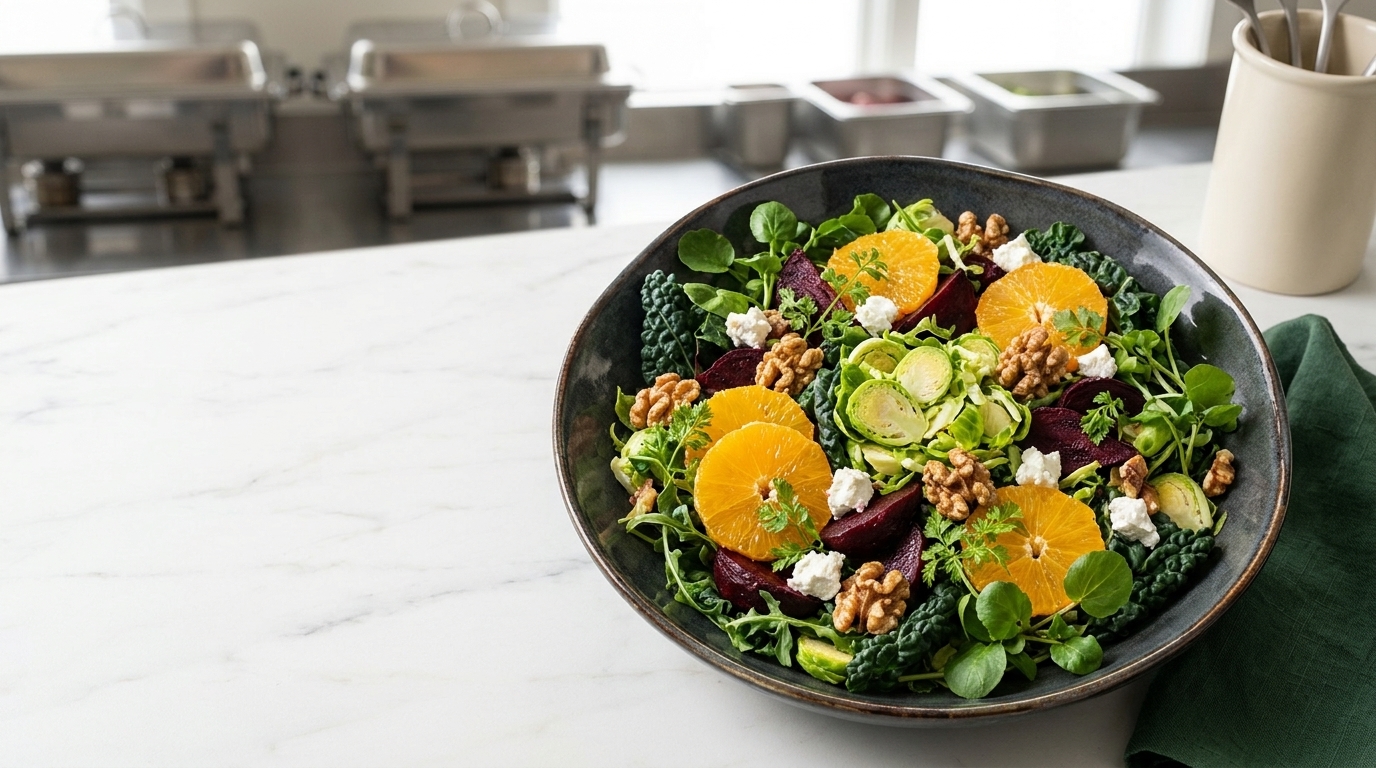
Winter Salad Catering: How Commercial Kitchens Engineer High Margin Seasonal Greens, Master Holding Logistics, and Prevent Waste
Learn how commercial caterers engineer profitable winter salads. Master hearty greens yields, stable emulsified dressings, cold holding logistics, and drop off staging.
Photo by Louis Hansel on Unsplash.
Winter event catering introduces unique operational challenges that summer menus rarely face. When commercial kitchens attempt to serve delicate baby greens or summer mesclun at holiday banquets, corporate luncheons, or drop off parties, the results are frequently disappointing. Fragile leaves collapse under dense seasonal dressings, weep moisture during refrigerated transit, and turn limp inside heated banquet ballrooms.
Fortunately, cold season produce offers commercial kitchens an extraordinary culinary and financial advantage. By shifting salad foundations toward sturdy winter brassicas, bitter greens, and batch roasted root vegetables, operators can build vibrant, texture rich plates that hold their crispness for hours. More importantly, winter produce commands modest commodity pricing while delivering exceptional perceived value on holiday banquet menus. When engineered with disciplined portion weights and stabilized vinaigrettes, commercial winter salads easily achieve 75 to 82 percent gross margins, holding food costs between 12 and 18 percent. This guide breaks down the operational systems needed to source, prep, hold, and transport high margin winter salads at scale.
Selecting Sturdy Winter Bases That Resist Transit Wilting
The primary operational failure in winter salad catering stems from selecting greens with fragile cell walls. Summer lettuces and baby spinach quickly wilt when combined with hearty roasted garnishes or transported in cold storage. In contrast, cold weather crops develop thick cellular matrices and natural sugars to withstand frost, making them resilient workhorses for high volume banquet prep.
Commercial kitchens should anchor their winter salad foundations on four primary greens:
-
Lacinato and Curly Kale: Dense and fibrous, kale tolerates pre washing and spin drying up to 36 hours ahead of service without wilting. Strip central woody ribs and run leaves through a commercial shredder to create uniform ribbons. A brief massage with neutral oil and fine sea salt tenderizes the leaf tissue without initiating water release.
-
Shaved Brussels Sprouts: Raw Brussels sprouts provide exceptional crunch, plate volume, and extended shelf life. Process trimmed heads through a continuous feed food processor fitted with a 2 millimeter slicing disc. Once sliced, Brussels sprouts can sit in sealed lexans with damp paper towels for up to 48 hours without oxidation or moisture loss.
-
Chicories and Bitter Greens: Radicchio, Belgian endive, puntarelle, and frisée introduce striking ruby and pale yellow hues that elevate banquet presentations. Their crisp, slightly bitter profile balances rich holiday proteins such as glazed ham or prime rib. Tear radicchio into bite sized pieces and soak in ice water for 15 minutes before spinning dry to heighten crispness and mute harsh bitterness.
-
Red and Savoy Cabbage: Finely shredded cabbage adds crisp structural bulk at pennies per portion. Savoy cabbage offers crinkled texture and tender bite, while red cabbage contributes rich color. Run shaved red cabbage through a quick rinse in cold water with a splash of white vinegar to set the color and prevent purple dye from bleeding into accompanying light colored greens.
When purchasing raw winter greens, account for trimming waste. Whole head kale carries an average trim loss of 22 to 28 percent from woody stems, while Brussels sprouts average 12 to 15 percent trim loss from tough outer leaves and stem ends. Document these usable yields in your prep station guides to ensure accurate ordering and portion controls. Review our guide on catering menu planning to align purchasing specs directly with expected guest counts.
Component Architecture and Three Tier Cold Staging Logistics
A successful commercial salad program relies on strict separation of components until the final assembly window. Packing fully dressed salads into catering pans hours before an event guarantees soggy leaves and pooled liquid. Commercial caterers should adopt a three bucket staging model that keeps moisture, fat, and crunch isolated across the production chain.
-
Bucket One: The Dry Green Base: Wash, spin dry, and blend your prepped greens. Store blended greens in perforated lexans set inside solid drip pans in the walk in cooler. Maintaining greens at 34 to 38 degrees Fahrenheit prevents condensation build up. Never salt or dress the bulk base during advance prep.
-
Bucket Two: Wet and Roasted Inclusions: Roasted components provide sweetness and visual appeal but release moisture and color. Roast root vegetables like red beets, golden beets, butternut squash, and parsnips in high heat convection ovens at 400 degrees Fahrenheit to caramelize sugars without turning them mushy. Cool roasted vegetables rapidly following safe cooling protocols, and store each variety in separate half pan inserts. Citrus supremes, pomegranate arils, and pickled red onions should also remain in separate shallow inserts drained of excess pickling liquor or free juice until assembly.
-
Bucket Three: Dry Crunchy Elements and Cheeses: Candied pecans, spiced pepitas, toasted hazelnuts, and sourdough croutons must stay completely dry to maintain their textural snap. Store toasted nuts and croutons in airtight cambros with desiccant packs at ambient room temperature, away from prep line humidity. Crumble soft cheeses such as goat cheese, feta, or gorgonzola cold, and keep them chilled in shallow deli containers with parchment dividers to prevent clumping.
For drop off catering orders, pack these three buckets in separate modular containers. Provide the corporate host or private party client with clear assembly guidelines: dress the greens 10 minutes prior to eating, fold in the roasted inclusions, and finish with the crunchy toppings and crumbled cheese across the top surface.
Engineered Emulsions: Formulating Winter Dressings That Hold Without Breaking
Winter salads require assertive dressings with sufficient viscosity to cling to thick brassicas and roasted roots. Standard three to one oil to vinegar vinaigrettes quickly separate into unappealing layers during transit, leaving bottom layers drowned in vinegar while top greens remain dry. Commercial kitchens must formulate winter dressings with reliable culinary emulsifiers to ensure stability during transport and banquet holding.
Incorporate natural culinary binders that complement cold weather flavor profiles:
-
Dijon Mustard and Grain Mustard: Beyond flavor, mustard contains mucilage and phospholipids that form permanent oil in water emulsions. Incorporate Dijon mustard at 4 to 6 percent of total dressing volume.
-
Reduced Apple Cider and Maple Reductions: Simmering fresh apple cider down to a rich syrup concentrates natural pectin and sugars. Combining reduced cider with pure maple syrup provides deep seasonal flavor while increasing the liquid phase viscosity, which physically prevents oil droplets from coalescing.
-
Roasted Garlic Purée and Miso Paste: Blending slow roasted garlic paste or white miso into the acid base provides savory depth and body, producing a velvety suspension without relying on artificial gums or starches.
Follow a standardized production technique: Combine your seasonal acids (cider vinegar, sherry vinegar, fresh orange juice), emulsifiers, salt, and aromatics in a commercial immersion blender pitcher. Blend on high speed for 60 seconds to homogenize the base. With the blender running, stream in a blend of 70 percent neutral oil (canola or grapeseed) and 30 percent extra virgin olive oil. Streaming too fast breaks the emulsion; maintaining a steady trickle produces an opaque, creamy suspension.
Package finished dressings in labeled squeeze bottles for plated banquets or tamper evident wide mouth deli containers for drop off orders. Cold storage increases dressing viscosity, so instruct banquet staff to allow dressings to temper at room temperature for 20 minutes before tossing.
Plate Costing, Margin Math, and Vegetable Trim Cross Utilization
Winter salads offer some of the highest gross margins across commercial catering menus when kitchen managers enforce portion standards. While holiday carving meats and seafood displays run food costs between 28 and 38 percent, a thoughtfully engineered winter salad comfortably operates at 12 to 18 percent food cost.
To protect these margins, establish exact portion weights for prep line cooks:
- Plated Banquet First Course (Target Food Cost: $1.15 to $1.45 per cover):
- Prepped Winter Greens Blend (Kale, Shaved Brussels, Radicchio): 2.5 ounces ($0.38)
- Roasted Butternut Squash Cubes or Beets: 1.25 ounces ($0.28)
- Toasted Spiced Pepitas or Walnuts: 0.5 ounces ($0.32)
- Crumbled Goat Cheese or Shaved Parmesan: 0.5 ounces ($0.30)
- Emulsified Cider Dijon Vinaigrette: 1.0 fluid ounce ($0.17)
- Total Plate Cost: $1.45. Menu Price: $9.50 to $12.00. Gross Margin: 85 to 88 percent.
- Buffet or Drop Off Half Pan (Serves 10 to 12 guests, Target Cost: $12.50 to $15.00):
- Prepped Sturdy Greens: 28 to 32 ounces ($4.20)
- Roasted Seasonal Roots: 14 ounces ($3.10)
- Crunchy Toppings: 6 ounces ($3.80)
- Cheese Garnish: 6 ounces ($3.60)
- Side Dressing Container: 10 fluid ounces ($1.70)
- Total Pan Cost: $16.40. Retail Price: $78.00 to $95.00. Gross Margin: 79 to 82 percent.
Cross utilization is critical to defending these margins. When prepping winter roots and brassicas, collect clean broccoli stalks, cauliflower cores, and cabbage ribs to dice into mirepoix bases for seasonal soups. Roast trimmed beet skins and vegetable trimmings to enrich vegetable stock. Review our breakdown on calculating food cost percentages to verify plate margin accuracy across your entire seasonal catalog, and maintain a daily restaurant waste log routine to catch vegetable prep yield loss before it hurts your bottom line.
Banquet Buffet Staging and Safe Drop Off Logistics
Buffet service and off site deliveries present distinct logistical hurdles for fresh salads. On self service banquet lines, heat rising from neighboring chafing dishes can rapidly wilt fresh produce, while condensation forming on chilled platters creates unappealing pools of water.
Implement these operational standards for event presentation and transport:
-
Buffet Island Isolation: Never place fresh salad displays directly adjacent to hot holding steam tables or carving stations. Radiated heat from canned chafing fuels warms salad platters within minutes. Position salad stations on an independent cold display island, or place a decorative dry riser between hot chafers and cold platters. For large events, review our operational workflows for autumn buffet catering and holiday party catering to optimize guest flow and equipment spacing.
-
Shallow Platter Rotation: Avoid serving cold salads in deep hotel pans where bottom layers get crushed under top weight. Instead, build salads on wide, shallow ceramic or composite platters. Refresh the buffet every 30 to 45 minutes using freshly assembled back up platters from your mobile refrigerated speed racks. Shallow displays ensure guests always encounter crisp, vibrant greens and prevent bottom layers from soaking in dressing runoff.
-
Drop Off Transport and Temperature Control: During transport, pack prepped salad bases and chilled garnishes in insulated cambros fitted with cold chill plates to maintain internal temperatures below 40 degrees Fahrenheit. For vehicle delivery, never stack heavy hot boxes on top of salad carriers. Affix clear, printed handling instructions to every drop off box detailing optimal dressing timing, serving utensil placement, and refrigeration requirements.
Documenting these cold chain workflows gives front of house staff and delivery drivers clear boundaries, preventing costly remakes and ensuring every client experiences the crisp textures engineered in your kitchen.
Frequently asked questions
Why should commercial caterers avoid delicate spring mixes for winter holiday banquets?
Delicate spring mixes break down quickly when exposed to acidic vinaigrettes, warm event rooms, or heavy roasted toppings. Cold weather brassicas such as Tuscan kale, shaved Brussels sprouts, radicchio, and purple cabbage have dense cellular structures that withstand moisture and transport without wilting, allowing kitchens to prep greens hours ahead with zero loss in visual appeal or crisp texture.
What are the standard portion sizes for catering winter salad courses?
Standard banquet side salads require 2.5 to 3.0 ounces of prepped greens per guest, while seated luncheon entrées require 5.0 to 6.0 ounces. Toppings such as roasted roots, citrus supremes, or cheeses should be portioned at 0.75 to 1.25 ounces per component to keep overall food cost percentage strictly between 12 and 18 percent.
How do you prevent winter salad ingredients from turning soggy during delivery?
Package dressings in separate squeeze bottles or sealed deli containers, and store crunchy elements like spiced nuts or croutons in airtight plastic inserts. Only combine the sturdy greens with the dressing and toppings 20 to 30 minutes before guest service. For drop off catering orders, provide labeled separate containers along with printed instructions for the host.
How can commercial kitchens keep vinaigrettes emulsified during cold transport?
Incorporate natural culinary binders such as Dijon mustard, reduced apple cider, maple syrup, or roasted garlic paste at approximately 5 percent of the total batch volume. Blend the acid and emulsifiers thoroughly before streaming in vegetable and olive oils to form a tight, cold stable suspension that will not separate during refrigerated transport.
Conclusion
Engineering seasonal winter salads transforms what is often an afterthought into one of your kitchen's most dependable profit drivers. By replacing fragile greens with cold hardy brassicas, stabilizing vinaigrettes with natural culinary binders, and strictly enforcing separate cold staging until the final moments before service, your catering operation protects plate presentation and gross margins. When prep cooks follow precise portion weights and production teams cross utilize vegetable trim into house stocks and purées, food waste drops and catering profitability climbs.
Edesia helps commercial kitchens turn complex catering menus and high volume event orders into exact ingredient purchasing lists, prevent over prep, track walk in stock in real time, and protect kitchen margins throughout peak winter banquet seasons. Explore how Edesia simplifies catering production, supplier purchasing, and kitchen operations.
Try it on your own menu
Use the menu item contribution calculator to run your numbers in your browser. No signup required, and your data stays on your device.