Holiday Dessert Catering: How Commercial Kitchens Build High Margin Mini Sweet Displays, Control Food Costs, and Prevent Waste
Learn how commercial caterers engineer holiday dessert stations with miniature portion formulas, freezer batching systems, and food cost controls.
Photo by Fotógrafo Samuel Cruz on Unsplash.
Holiday dessert stations represent one of the highest margin opportunities in event catering, yet they frequently create severe operational headaches for commercial kitchens. Event planners and corporate hosts eagerly request lavish dessert spreads to cap off year end banquets, cocktail galas, and festive office celebrations. However, executing traditional plated pastries or uncontrolled bulk cake displays often results in crushed margins, excessive labor on event night, and staggering amounts of plate waste.
When guests reach the final hour of a holiday event, their appetite for a heavy eight ounce slice of cake has vanished, but their desire to sample multiple sweet bites is at its peak. Commercial kitchens that transition from monolithic plated cakes to carefully engineered miniature dessert displays unlock substantial economic and operational advantages. A curated array of petite tartlets, layered dessert shooters, warm winter spice bites, and delicate confections allows caterers to maintain food costs between fourteen and eighteen percent while commanding premium per guest menu pricing.
Protecting profitability on holiday dessert catering requires deliberate menu engineering, multi week freezer production schedules, safe cold chain transit logistics, and streamlined buffet station layouts. By linking dessert prep to existing kitchen inventory and using standardized portion standards, your team can deliver breathtaking holiday displays that delight clients without overwhelming the pastry station.
Portion Economics: Why Miniature Desserts Outperform Plated Cakes
Understanding the math behind dessert consumption is the foundation of a profitable holiday catering program. In traditional seated banquets, caterers often serve a uniform plated dessert, such as chocolate flourless cake or fruit cheesecake. The wholesale food cost of a six to eight ounce plated dessert typically ranges from two dollars and fifty cents to three dollars and seventy five cents per guest. More critically, banquet servers routinely clear plates where more than thirty percent of the portion remains untouched. That represents pure ingredient waste and lost margin.
In contrast, miniature dessert stations operate on controlled unit economics. When guests encounter a display of bite sized sweets, industry consumption averages between two and a half and three pieces per person following a dinner service, or four to five pieces during a standalone cocktail reception. By engineering each miniature piece to weigh between one and one and a half ounces, the combined ingredient cost for three miniature selections drops to one dollar and fifteen cents to one dollar and forty cents per guest.
The financial benefit multiplies when factoring in labor and service speed. Plated desserts require dedicated kitchen staff to plate, garnish, and wipe rims immediately before service, followed by front of house staff to distribute hundreds of dishes simultaneously. Miniature dessert displays are assembled during off peak kitchen hours, transported in bulk carriers, and staged on buffet tables prior to guest arrival. Guests serve themselves rapidly, eliminating banquet service gridlock while providing perceived luxury through variety. Caterers can accurately calculate their margin targets using our guide to working out the food cost percentage of a dish and test plate pricing through the free restaurant food cost calculator.
The Three Tier Menu Matrix: Balancing Premium Cocoa with Bulk Base Staples
High food costs in holiday pastry production are almost always driven by unchecked use of luxury ingredients like single origin chocolate, fresh out of season berries, imported nuts, and pure vanilla bean paste. To keep overall station food cost under eighteen percent, commercial kitchens should structure their menu around a balanced four component matrix that pairs modest quantities of luxury accents with low cost bulk staples.
First, include one rich chocolate anchor. Rather than producing solid chocolate truffles or oversized brownies, offer miniature dark chocolate silk tartlets with flaky sea salt. The tart shell is built from inexpensive flour, butter, and sugar, while a rich sixty percent dark chocolate ganache requires only a half ounce per piece. The perceived indulgence is exceptionally high, but the unit food cost remains below thirty five cents.
Second, incorporate a bright acidic element to cleanse the palate. Layered dessert shooters featuring lemon curd, cranberry reduction, and toasted graham or sponge cake crumb offer vibrant holiday color and festive acidity. Citrus juices, pectin, and whole eggs are economical staples that deliver vivid flavor at minimal cost.
Third, feature a warm spiced seasonal comfort bite. Mini gingerbread loaf cubes drizzled with royal icing, miniature pumpkin chess tarts, or spiced apple streusel cups utilize autumn baking staples like molasses, ginger, cinnamon, and root fruits. These ingredients cost pennies per serving and resonate strongly with corporate holiday themes.
Fourth, reserve one slot for a dedicated gluten free and dairy free selection, such as French almond macarons or coconut milk panna cotta cups with pomegranate seeds. Providing a verified allergen friendly option reassures event organizers and prevents special order substitutions from disrupting the main service line. Review our catering menu planning guide to structure balanced packages that cross utilize pantry dry goods efficiently.
Freezer Staging and Multi Week Production Scheduling
Attempting to bake and assemble hundreds of miniature desserts in the final forty eight hours before a holiday weekend is a surefire recipe for kitchen chaos, overtime spikes, and compromised quality. Commercial caterers protect their operations by breaking pastry production into structured phases spread across three to four weeks in November and early December.
Certain pastry components freeze flawlessly without losing crispness or texture when properly protected. Baked sweet tart shells can be produced in large batches, stacked between parchment sheets, and sealed in airtight cambro containers or vacuum bags for up to four weeks in the deep freezer. Unbaked choux pastry balls for cream puffs can be piped onto parchment lined sheet pans, frozen solid, and transferred to ziplock bags, ready to bake directly from the freezer on event morning. Similarly, rich cake layers and brownie bases can be baked, cooled completely, and wrapped in double layers of food grade plastic wrap for freezer storage.
In contrast, delicate finishes must be staged closer to service. Custards, mousses, and curds can be cooked two to three days in advance and held in walk in coolers at thirty eight degrees Fahrenheit. Assembly of shooter cups can take place twenty four hours before delivery, while crisp tart shells should only be filled four to six hours before service to prevent moisture migration from softening the crust. Final garnishes, such as freshly whipped cream rosettes, powdered sugar dusting, and fresh mint leaves, should always be applied on site just before the buffet opens. For more make ahead production techniques, examine our guide to Christmas finger foods catering.
Transport Logistics and Temperature Control for Delicate Pastries
Transporting miniature desserts represents a major point of vulnerability in holiday catering. Cold winter weather outside contrasts sharply with heated delivery vans and humid venue kitchens, creating conditions where delicate pastries can melt, shift, or collect damaging surface condensation.
To prevent physical damage during transit, commercial kitchens should invest in dedicated sheet pan inserts, such as acrylic dessert cup organizers or egg crate silicone mats. Placing miniature tartlets and dessert shooters onto non slip silicone baking mats prevents items from sliding during van acceleration and turns. Sheet pans should be secured inside rigid insulated food carriers rather than stacked loosely on open speed racks.
Maintaining the cold chain is critical for food safety and presentation. Dairy rich mousse shooters, panna cotta, and custard tartlets must remain at forty one degrees Fahrenheit or lower until service in compliance with health regulations. When bringing chilled items into a warm ballroom, rapid temperature shifts cause moisture in the ambient air to condense on cold surfaces, making chocolate turn dull and causing meringues to weep. To avoid this, allow closed transport carriers to temper in a cool venue staging area for twenty minutes before opening doors and exposing the confections to ballroom air. Pairing these dessert logistics with your savory courses, like those detailed in our holiday shrimp cocktail catering guide, ensures synchronized kitchen execution.
Station Flow and Buffet Ergonomics: Eliminating Event Bottlenecks
The physical arrangement of a dessert station dictates how quickly guests move through the space and how much food they consume. When caterers place all dessert options along a single linear table against a wall, guests form a slow moving queue that backs up across the dance floor.
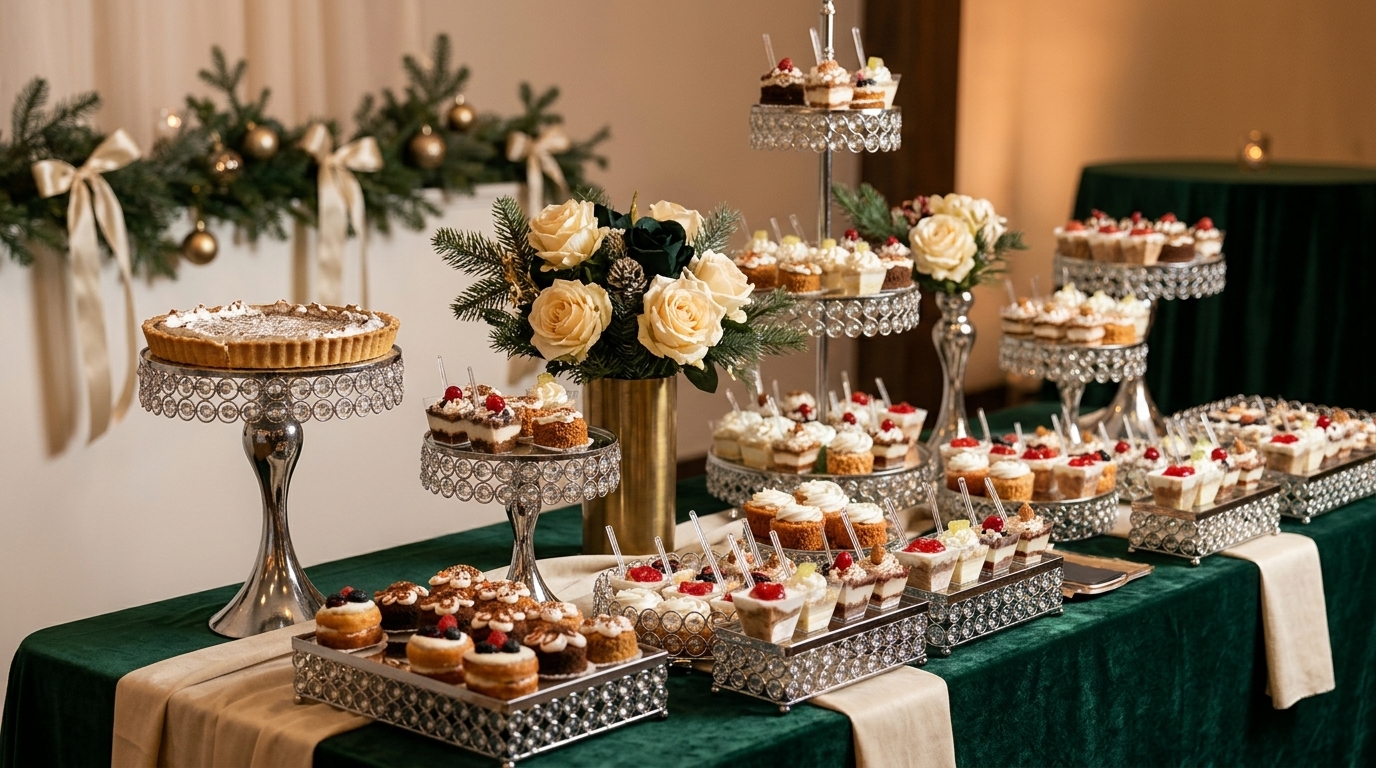
To create efficient flow, design a dual sided island station where guests can access platters from both sides simultaneously. Use vertical pedestals and tiered acrylic or metal risers to elevate items, creating visual drama while maximizing table surface area. Group items by flavor profile or dietary specification, placing clear printed menu cards in front of each platter. Clearly indicating which items are gluten free, nut free, or vegan cuts down on guest hesitation and eliminates the need for service staff to answer repetitive questions during peak volume.
Replenishment strategy directly affects food waste. Rather than staging all dessert inventory on the table at once, put out approximately sixty percent of the expected volume at the start of the dessert hour. Back of house staff should monitor consumption patterns and replenish depleted platters using fresh trays from refrigerated carriers. This prevents delicate sweets from drying out under ballroom lighting and ensures that any unserved backup trays remain pristine and food safe. For comprehensive banquet station design, explore our holiday carving station catering guide.
Frequently asked questions
How many miniature desserts should caterers prepare per guest for holiday parties?
When serving miniature desserts after a full dinner, plan on three pieces per guest across three or four varieties. If the event is a cocktail party where sweets substitute for a seated dessert course, increase the budget to four or five pieces per guest. Guests will sample multiple flavors, but small portion sizes keep total volume and food costs predictable.
What miniature desserts can commercial kitchens freeze weeks in advance?
Unfilled baked tartlet shells, baked mini cake layers, brownie bites, and unbaked choux pastry balls freeze exceptionally well for up to four weeks when wrapped tightly in plastic and stored in airtight containers. Ganaches, fruit curd pucks, and mousse inserts can also be frozen in silicone molds. Delicate whipped creams, meringue garnishes, and fresh fruit crowns should be added on event day.
How do caterers keep buffet lines moving at dessert stations?
Set up two identical dessert lines on opposite sides of the banquet table, use tiered risers to display varieties at varying heights, and clearly label every item with printed tent cards noting dietary attributes like gluten free or nut free. Preportioned individual shooter cups and mini tartlets allow guests to pick up items with tongs or fingers in seconds without slicing or scooping delays.
What is the typical food cost percentage for a catering mini dessert station?
When properly engineered around bulk base staples like butter pastry, flours, citrus curds, and choux dough paired with measured chocolate accents, commercial kitchens typically achieve food costs between fourteen and eighteen percent. This compares favorably to plated restaurant desserts, which frequently carry food costs between twenty four and thirty percent due to heavier plate waste.
How should caterers transport delicate chilled dessert shooters without melting or tipping?
Transport dessert shooter cups in fitted acrylic trays or commercial sheet pan cup inserts lined with non slip silicone baking mats inside prechilled insulated food pan carriers. Keep transit temperatures below forty one degrees Fahrenheit. Allow the display to temper for twenty to thirty minutes in the venue prep area before service to avoid condensation weeping on cold glassware.
Conclusion
Holiday dessert catering does not have to be an operational gamble or a labor trap for commercial kitchens. By moving from heavy plated portions to engineered miniature sweet displays, commercial kitchens capture lucrative holiday catering revenue while maintaining food costs between fourteen and eighteen percent. Success rests on adhering to strict per guest portion formulas, balancing premium cocoa with bulk base staples, executing multi week freezer production schedules, and managing transport temperatures with precision.
Edesia helps commercial kitchens and caterers streamline their holiday operations from initial inquiry to final execution. With Edesia, operators can convert event menus into precise ingredient shopping lists, track live food costs against target margins, monitor vendor purchasing across multiple suppliers, and manage catering client communications effortlessly. Step into your busiest holiday season with full control over kitchen margins, prep capacity, and client satisfaction.
Try it on your own menu
Use the restaurant food cost & variance calculator to run your numbers in your browser. No signup required, and your data stays on your device.