Christmas Finger Foods for Commercial Catering: Batch Prep Systems, Ambient Platter Logistics, and High Margin Holiday Service
Learn how commercial kitchens engineer high margin Christmas finger foods with batch assembly lines, ambient platter logistics, and smart ingredient cross utilization.
Photo by Kelly Jean on Unsplash.
December cocktail parties, office mixers, and holiday open houses generate a massive surge in demand for Christmas finger foods. For commercial kitchens and caterers, bite sized passed appetizers and stationary grazing platters represent some of the highest potential margins on the annual calendar. However, finger foods also represent one of the greatest operational risks. Without strict portion controls, standardized assembly sequences, and disciplined packaging workflows, the labor required to roll, fill, garnish, and transport hundreds of delicate items can easily erase your bottom line.
Turning holiday finger foods into dependable profit requires moving away from ad hoc, last minute prep. Successful commercial caterers approach holiday canapes with the same rigorous engineering they apply to large scale banquets. By pairing realistic per guest portion models with ambient platter strategies that bypass venue oven limitations, kitchen teams can protect food quality, speed up assembly, and maintain gross margins above seventy five percent. Whether you are expanding your existing holiday party catering menu or refining your catering menu planning guide for peak winter volume, here is how commercial kitchens engineer profitable, stress free Christmas finger foods.
The Economics of Christmas Finger Foods and Menu Portion Modeling
The foundational mistake most culinary teams make with holiday finger foods is treating them as shrunken entrees rather than discrete margin engines. When a kitchen creates six labor intensive passed items each requiring four separate touchpoints, prep cooks end up spending entire shifts on micro assembly while line throughput stalls.
To defend profitability, commercial caterers must establish strict portion modeling based on event timing and format:
- Pre dinner cocktail hour: Model five to seven pieces per guest across four varieties. Guests consume an average of three to four pieces in the first forty five minutes, with consumption dropping sharply as dinner approaches.
- Two hour afternoon corporate reception: Model six to eight pieces per guest across five varieties, balancing savory protein bites with hearty vegetarian options.
- Full evening cocktail reception: Model ten to twelve pieces per guest across seven to eight distinct selections. When finger foods replace dinner, include substantial carbohydrates such as potato croquettes, polenta bites, or mini brioche sliders to ensure guest satiety.
When calculating dish profitability, factor in both raw food cost and assembly labor. Review our framework on how to calculate food cost percentage to ensure every passed item maintains an eighteen to twenty two percent raw ingredient cost. Because delicate appetizers demand more hands on time than buffet pans, that low food cost percentage is essential to absorb prep labor while delivering seventy five to eighty percent gross margins.
Engineering Ambient Platters and Eliminating Venue Oven Bottlenecks
Relying on venue ovens during holiday catering is a recipe for operational gridlock. Most corporate offices, private estates, and boutique event spaces have domestic kitchens with a single residential oven. If your service team arrives with four hot passed finger foods that all require baking at three hundred seventy five degrees, courses will be delayed, pastry will soften, and servers will be left waiting.
The golden rule for holiday finger food menus is the seventy thirty principle. At least seventy percent of your items should be engineered for ambient room temperature service or cold platter presentation, leaving no more than thirty percent requiring hot holding or immediate venue baking.
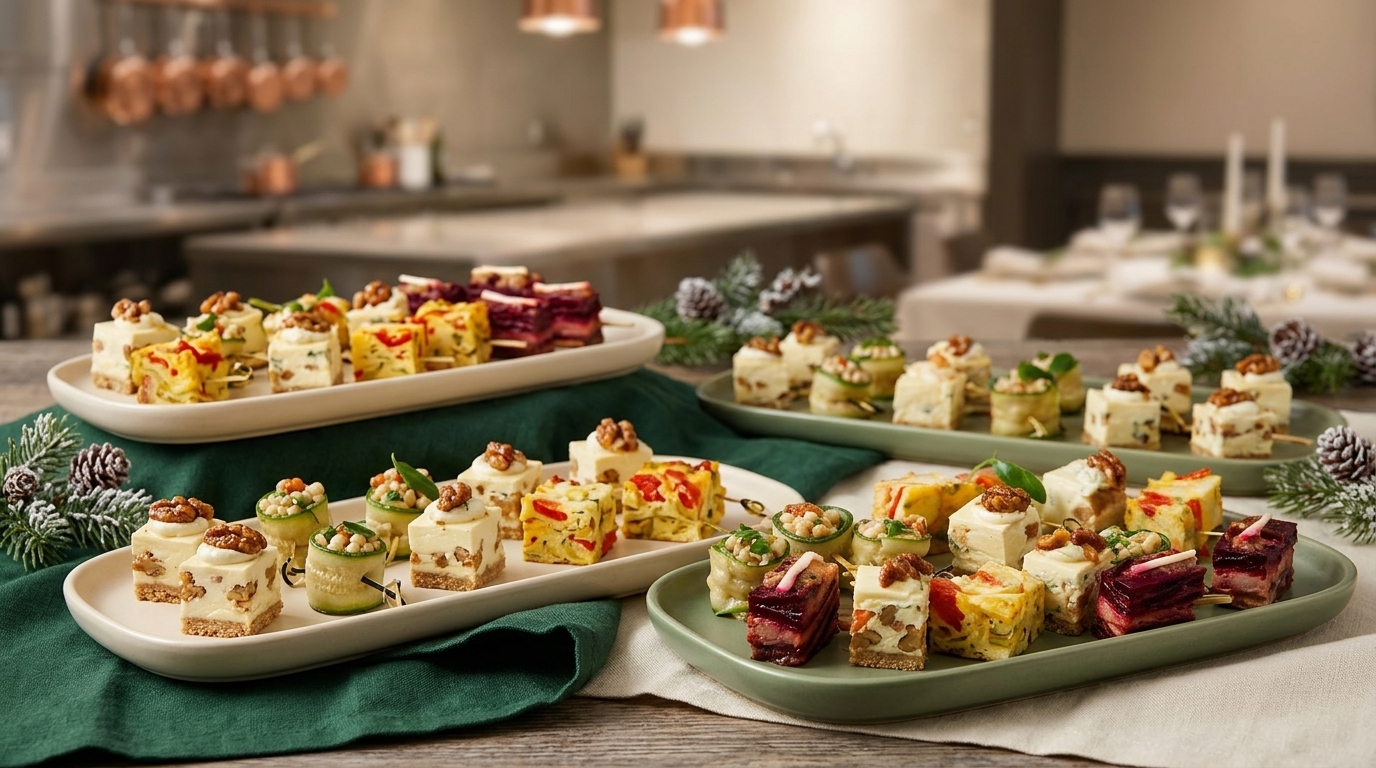
Ambient items that maintain texture and appeal without venue heating include:
- Crostini with whipped ricotta, winter honey, roasted persimmon slices, and crushed toasted pecans.
- Cucumber ribbon cups filled with spiced bulgur, pomegranate seeds, and fresh mint.
- Seared beef tenderloin carpaccio bites served on crisp potato gaufrettes with horseradish cream.
- Chilled glazed chicken skewers with sesame scallion dipping sauce.
When serving items with crisp foundations, moisture migration is the primary threat. Apply a fat barrier, such as herbed compound butter, goat cheese spread, or olive oil tapenade, directly onto crackers, croutons, or tart shells before adding moist ingredients. This simple barrier prevents sogginess during transport and maintains crispness for over two hours. For delicate puff pastry items, review our puff pastry appetizers catering guide for moisture defense techniques.
Assembly Line Mise en Place and Batch Packaging Protocols
High volume finger food production succeeds or fails based on prep scheduling and packaging logistics. Assembling two thousand canapes on the morning of a holiday delivery leads to rushed execution, sloppy presentation, and overtime labor. Instead, top catering operations separate prep work into distinct phases across forty eight hours.
Follow this two day commercial assembly timeline:
- Two days prior: Roast proteins, simmer reductions, bake pastry shells, and mix compound butters and creamy spreads. Store all spreads in disposable piping bags labeled with tip sizes.
- One day prior: Portion cooked proteins into uniform weights. Toast bread rounds and store them with food grade silica packs in airtight cambros. Slice firm vegetables and store them between damp paper towels in perforated pans.
- Day of event: Set up a linear assembly station. One cook pipes base spreads, the second cook deposits preportioned proteins, and the lead cook places garnishes and transfers items into catering delivery boxes.
Packaging finger foods requires specialized shallow containers. Deep hotel pans crush delicate canapes and cause toppings to shift during transport. Pack assembled ambient finger foods into shallow bakery boxes lined with parchment paper, allowing a quarter inch clearance between pieces. For high value items with loose toppings, such as microgreens or pomegranate arils, pack the garnishes separately in deli containers and have service staff apply them on site in less than ninety seconds per platter. For broader holiday party workflows, compare our holiday appetizers catering guide.
Cross Utilizing Foundation Ingredients Across Holiday Packages
A common operational trap during holiday party season is catalog bloat. Offering fifteen distinct finger foods with unique, unshared ingredients forces your kitchen to manage dozens of separate distributor cases, inflating inventory carrying costs and generating post event waste.
Smart catering kitchens build their Christmas finger food menus around three to four versatile culinary anchors that cross utilize shared ingredients across multiple passed and stationary platters:
- Braised short rib anchor: A single twenty pound batch of red wine braised beef short rib provides filling for mini brioche sliders, topping for crisp polenta cubes, and filling for savory phyllo tartlets.
- Herb whipped goat cheese anchor: A bulk batch of goat cheese whipped with rosemary and heavy cream serves as the base for cranberry crostini, filling for roasted baby beet cups, and dip for crudite platters.
- Spiced winter fruit compote: A scratch simmered compote of dried cranberries, figs, and port wine garnishes brie tartlets, glazes roasted duck breast skewers, and complements holiday charcuterie boards.
By anchoring your menu around shared ingredients, you reduce inventory shrinkage, secure volume pricing from your food distributors, and dramatically simplify prep lists. When every cook on the line knows the same braise and spread recipe, production speed accelerates and consistency remains rock solid across every holiday event.
Frequently asked questions
How many finger food pieces should caterers budget per guest for holiday parties?
For a standard two hour holiday cocktail mixer prior to a sit down dinner, budget five to seven pieces per guest across four to five varieties. For an evening reception where finger foods replace dinner, plan for ten to twelve pieces per person across seven to eight distinct items.
How do commercial kitchens keep passed finger foods crisp during transport?
Prevent soggy bases by creating a moisture barrier of fat between crisp crackers or pastry foundations and moist toppings, using whipped cream cheese, herbed butter, or tapenade. Transport delicate bases and moist fillings in separate containers, completing final assembly on site within thirty minutes of service.
What is the target food cost percentage for catering finger foods?
Holiday finger foods should carry a raw food cost between eighteen and twenty two percent. Because bite sized canapes demand higher labor for hand assembly, holding raw food costs low protects an overall gross profit margin of seventy five to eighty percent.
Conclusion
Executing high volume Christmas finger foods requires kitchen operators to align culinary craftsmanship with rigid production discipline. Hand crafted canapes, skewers, and tartlets carry immense perceived value for holiday party hosts, but without precise portion guidelines, ambient staging, and batch mise en place, labor hours can quickly devour your profits. By locking down a standard five to seven piece per guest model, engineering seventy percent of your offerings for room temperature service, and cross utilizing core braises and seasonal garnishes across multiple items, your kitchen can comfortably sustain gross margins between seventy five and eighty percent throughout December.
Managing complex holiday ingredient ordering and multi event catering workflows becomes substantially simpler when your numbers are organized. Edesia helps commercial kitchens turn event menus and prep sheets into consolidated supplier shopping lists, track ingredient costs in real time, and manage catering inquiries without administrative chaos. Explore our platform or book an in person demo to see how we help growing food businesses run calmer, more profitable holiday seasons.
Try it on your own menu
Use the menu item contribution calculator to run your numbers in your browser. No signup required, and your data stays on your device.