Holiday Carving Station Catering: How Commercial Kitchens Master Prime Rib Yields, Carryover Heat, and Portion Margins
Master commercial catering carving stations. Learn prime rib yield calculations, carryover resting controls, portion guides, and profitable holiday menu pricing.
Photo by Hailey Tong on Unsplash.
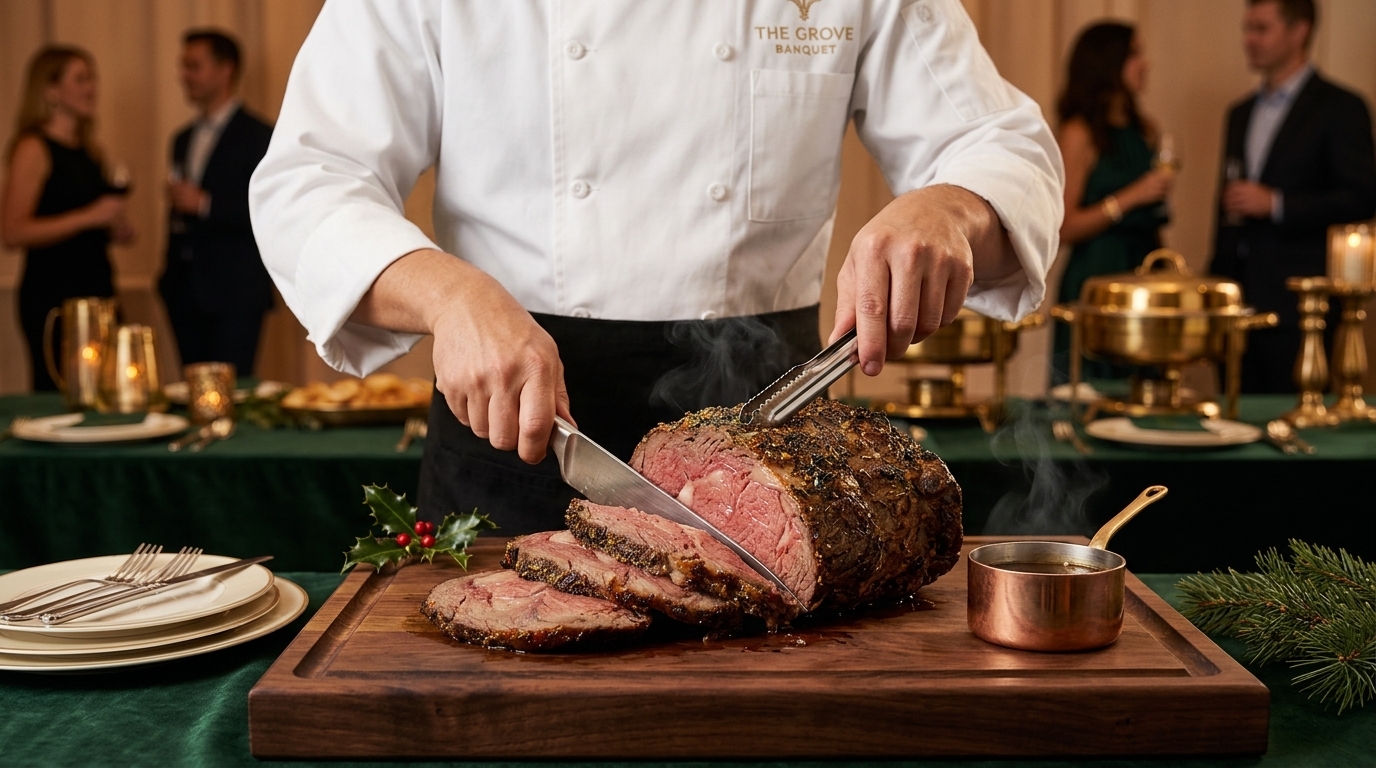
A live carving station serves as the crown jewel of winter galas, corporate holiday parties, and wedding receptions. The sight of a chef in crisp whites carving rosy, herb crusted prime rib or tender beef tenderloin creates immediate culinary theatre that commands premium guest pricing. Yet behind the dining room glow, carving stations represent one of the most volatile cost centers in commercial catering.
When a kitchen purchases wholesale beef primals at fourteen to eighteen dollars per pound, small operational oversights multiply into thousands of dollars in lost margin. Raw fat caps, bone trim, moisture evaporation in convection ovens, and carving board run off routinely consume twenty five to thirty five percent of purchased primal weight before the first guest arrives. Even worse, an untrained carving attendant who slices six ounce or eight ounce portions instead of a planned five ounce standard will run out of meat thirty minutes into service.
Protecting profitability requires treating the carving station as a precision engineering system. Commercial caterers must calculate true cooked yields, master thermal carryover during insulated transport, standardize slicing thickness, and build pricing tiers that absorb premium protein costs. By establishing strict back of house controls and front of house portion standards, your kitchen can deliver a spectacular guest experience while locking in food costs under twenty eight percent.
The Raw to Carved Yield Formula: Calculating True As Served Meat Costs
Many catering operators make the costly mistake of calculating plate margins from raw invoice weights. If a kitchen purchases a fifteen pound bone in lip on ribeye roast at sixteen dollars per pound, the wholesale invoice cost is two hundred forty dollars. If the chef assumes thirty five ounce portions from those fifteen pounds, the estimated meat cost appears to be eight dollars per guest. In reality, that calculation ignores three distinct stages of yield shrinkage:
-
Fabrication and Trimming Loss. Removing heavy fat caps, chime bones, and connective silver skin typically accounts for twelve to fifteen percent of raw primal weight. On a fifteen pound primal, trimming strips away roughly two pounds of scrap, leaving thirteen pounds of oven ready meat.
-
Thermal Cooking and Moisture Evaporation. High heat roasting causes protein fibers to contract and expel water. A standard convection roast cooked at three hundred twenty five degrees Fahrenheit loses another fifteen to eighteen percent of its weight in evaporative steam and pan drippings. The thirteen pound trimmed roast shrinks down to approximately eleven pounds of cooked roast.
-
Carving Waste and End Cut Scraps. Slicing warm beef at an active banquet station produces carving board purge, trim ends, and unsliced heels that cannot be served as prime center cut portions. This adds another five percent loss.
To find your true As Served cost per portion, use the following operational formula:
True Cost Per Portion equals Raw Invoice Cost divided by Total Number of Servable Portions.
In our fifteen pound example, eleven pounds of servable cooked beef yields approximately thirty five 5 ounce portions. Two hundred forty dollars divided by thirty five portions produces an actual meat cost of six dollars and eighty six cents per portion if bone out, or eight dollars and twenty cents if bone in loss is factored. To master these calculations across all banquet cuts, review our detailed guide on how to calculate food cost percentage for catering dishes. Knowing your exact as served yield allows you to price holiday packages with complete commercial confidence.
Managing Carryover Heat and Resting Windows During Insulated Transit
Cooking large beef roasts for off site catering presents a significant thermodynamic challenge. A whole prime rib roast or beef strip loin is a dense thermal mass. When removed from the oven, residual heat in the outer muscle tissue continues migrating inward toward the core, causing internal temperatures to climb substantially while the meat rests.
In a traditional restaurant kitchen, roasts rest on open wire racks where ambient air dissipates surface heat, resulting in a typical carryover rise of five to eight degrees Fahrenheit. In off site catering, however, roasts are immediately wrapped in foil and transferred into preheated insulated carriers such as Cambros. Inside a sealed insulated carrier, thermal energy cannot escape. Carryover cooking accelerates, driving core temperatures up by twelve to fifteen degrees Fahrenheit over a ninety minute transit window.
If your line cook pulls a prime rib from the convection oven at one hundred twenty five degrees Fahrenheit expecting a medium rare finish, insulated transit will push the core past one hundred thirty eight degrees Fahrenheit. The result is an overcooked, gray, medium well roast that compromises tenderness and customer satisfaction.
To maintain a perfect rosy medium rare across transport, implement this thermal staging protocol:
-
Target Pull Temperature. Remove roasts from the oven when the core reaches one hundred fifteen to one hundred eighteen degrees Fahrenheit for medium rare, or one hundred twenty two degrees for medium.
-
Open Air Bench Rest. Allow roasts to rest uncovered on perforated hotel pans at room temperature for fifteen to twenty minutes before wrapping. This allows initial surface steam to vent and moderates internal thermal pressure.
-
Pan Catchment and Wrapping. Place roasts in deep two inch hotel pans fitted with wire drip grates. Wrap pans securely with parchment paper followed by two layers of heavy aluminum foil. The parchment prevents acidic contact and foil corrosion while the drip grate elevates the roast above pooled juices, preventing the bottom crust from turning soggy.
-
Cambro Holding Log. Record the insertion temperature, vehicle departure time, and arrival temperature on your transport sheet. Insulated carriers should maintain meat safely above one hundred thirty five degrees Fahrenheit in compliance with food safety standards while resting muscle fibers for optimal juice retention.
Slicing Mechanics and Portion Creep: Training Attendants to Defend Margins
The carving station attendant is your kitchen's final cashier. An attendant who slices generously out of eagerness to please guests can destroy your food cost margin in less than an hour. A five ounce target portion sliced at seven ounces represents a forty percent cost overrun. Across a two hundred guest gala, that discrepancy adds twenty five extra pounds of expensive beef, erasing hundreds of dollars in profit.
Preventing portion creep requires standardized tools and visual training:
-
The Proper Cutlery. Equip stations with a fourteen inch scalloped or Granton edge slicing knife rather than a standard chef knife. A long slicing blade allows the chef to draw the knife through the meat in single smooth strokes without sawing. Sawing shreds tender meat fibers, releases valuable juices onto the cutting board, and results in uneven, ragged slices.
-
Visual Portion Standards. During pre service line meetings, carve two reference slices: a target five ounce portion and an acceptable four ounce portion. Weigh both slices on a digital kitchen scale in front of your front of house staff. Keep the scale hidden behind the station riser during service so attendants can perform spot checks between guest rushes.
-
Strategic Carving Angles. Slice against the grain at a slight bias. Slicing on a forty five degree angle yields a broad, visually generous slice that covers more plate real estate without adding unnecessary weight. Guests perceive a wide, thin slice as substantially more generous than a thick, narrow medallion.
-
Secondary Protein Balance. Pair expensive beef roasts with a secondary, lower cost carving option such as glazed country ham or roasted turkey breast. When given a choice between two carved meats, thirty to forty percent of guests will choose poultry or pork, significantly lowering your overall blended protein cost per guest. For broader menu packaging strategies, explore our comprehensive catering menu planning guide.
Station Setup, Heat Lamp Management, and Surface Moisture Protection
Heat lamps present a serious operational challenge. While necessary to maintain food safe holding temperatures above one hundred thirty five degrees Fahrenheit, radiant heat desiccates carved meat surfaces with astonishing speed. Within twelve minutes under direct halogen heat, an exposed slice of beef turns dark brown, leathery, and dry.
To maintain hot, succulent meat throughout a two hour reception, structure your carving station workflow around active preservation:
-
Never Pre Slice in Bulk. Train attendants never to pre carve more than three or four portions ahead of immediate guest arrival. Slicing on demand preserves core moisture, showcases culinary craftsmanship, and prevents meat oxidation.
-
The Au Jus Warm Bath and Basting Ladle. Keep a heated countertop induction burner or warm bain marie directly adjacent to the cutting board filled with rich, scratch made beef au jus held at one hundred sixty degrees Fahrenheit. As portions are carved, attendants can briefly dip the slice or ladle hot au jus over the cut face. This instantly restores surface luster, elevates serving temperature, and provides a barrier against drying heat lamps.
-
Face Cap Protection. When guest flow pauses between waves, attendants must immediately protect the cut face of the whole roast. Cover the exposed meat face with a clean strip of damp parchment paper or turn the roast face down against the wooden cutting board to trap internal moisture.
-
Cutting Board Purge Recovery. Wooden carving boards should feature deep perimeter juice grooves with an integrated pour spout. Train attendants to channel collected carving juices back into the au jus holding pot every thirty minutes. This recaptures rich rendered flavor and reduces kitchen waste. For disciplined kitchen waste systems, see our daily restaurant waste log routine.
Menu Engineering and Tiered Pricing: Minimums, Chef Fees, and Profitable Sides
Because carving stations involve dedicated culinary labor and expensive wholesale proteins, they must be priced through structured contracts that protect your bottom line. Relying solely on a single per guest food charge leaves your kitchen exposed to labor overtime and fluctuating market meat prices.
Build your catering contracts using these three revenue pillars:
-
Dedicated Attendant Fees. Bill carving chefs as a distinct service line item rather than rolling labor into the food price. Standard industry practice charges a flat chef fee between one hundred fifty and two hundred fifty dollars per carving attendant for up to two hours of service. This covers station setup, uniform presentation, active carving, and breakdown, protecting your kitchen labor budget.
-
Guaranteed Guest Minimums. Establish a strict fifty guest minimum for live carving stations. Because whole beef primals weigh twelve to eighteen pounds, smaller parties leave the kitchen with excess cooked leftovers that cannot be repurposed at full margin. If a party has fewer than fifty guests, offer pre carved platters from your banquet kitchen rather than an active carving station.
-
Margin Balancing Side Accompaniments. Balance expensive beef costs with high margin starch and vegetable sides. Pair carved roasts with bulk roasted garlic mashed potatoes, sea salt fingerling potatoes, glazed heirloom carrots, and warm bakery brioche rolls. Starch components carry food costs under twelve percent, balancing the twenty eight percent protein cost to achieve an overall event food cost under twenty percent. For additional ideas on balancing buffet station flow and margin stability, consult our autumn buffet catering guide.
-
Preorder Deposit Deadlines. Require final guest counts and a non refundable fifty percent deposit fourteen business days prior to the event date. This allows you to purchase wholesale primals from your meat purveyor in full case lots, locking in favorable contract pricing and avoiding spot market price spikes during peak holiday weeks.
Frequently asked questions
What is the best cut of beef for a catering carving station?
Bone in or boneless ribeye roast, often sold as prime rib, is the traditional favorite for holiday galas due to its rich marbling and tenderness. For corporate luncheons or tighter budgets, whole beef strip loin or top sirloin cap offers excellent flavor and tenderness at twenty to thirty percent lower wholesale cost per pound.
How much raw meat should a caterer purchase per guest for a carving station?
Plan on eight to nine ounces of raw bone out beef per guest. After trimming and cooking shrinkage of roughly twenty five to thirty percent, this raw amount yields a standard five to six ounce cooked portion. If offering two carved meats alongside hearty sides, you can reduce the per guest raw purchase to six ounces.
How do caterers keep carved meat hot without drying it out?
Avoid pre carving meat under radiant heat lamps. Keep the whole roast resting at one hundred thirty five degrees Fahrenheit, carve strictly on demand, and immediately ladle hot scratch made beef au jus held at one hundred sixty degrees Fahrenheit over each portion prior to plating.
Conclusion
Operating a profitable holiday carving station requires blending dramatic tableside presentation with meticulous back of house discipline. By tracking raw to cooked yields, mastering thermal carryover in insulated transport, and training attendants against portion creep, your catering team can turn centerpiece roasts into predictable profit drivers.
Edesia helps commercial kitchens and caterers automate recipe costing, track inventory yields, and organize smooth catering prep lists without spreadsheets. To learn how Edesia streamlines kitchen operations, explore our platform and schedule a live demo at https://edesia.catering.
Try it on your own menu
Use the restaurant food cost & variance calculator to run your numbers in your browser. No signup required, and your data stays on your device.