Holiday Appetizers for Commercial Catering: Menu Engineering, High Margin Small Bites, and Batch Assembly Logistics
Master holiday appetizer catering with high margin small bites, frozen puff pastry batching, ambient platter staging, and transport logistics for commercial kitchens.
Photo by RYNA studio on Unsplash. Modified illustration.
Holiday party season is the most demanding window on the commercial catering calendar, but it also carries the highest margin potential. Official Pinterest search trends show searches for holiday appetizers surging 200 percent month over month and 90 percent week over week as event planners, corporate coordinators, and private hosts secure menus for November and December gatherings. Passed small bites and stationary cocktail platters command premium per head pricing, yet many commercial kitchens watch their profitability evaporate because appetizers require excessive finishing labor on site, crowd precious venue oven capacity, or wilt inside transport containers.
Success during peak holiday catering does not come from offering dozens of delicate, hand pinched canapes that slow down your pack out. Profitable holiday appetizer catering requires intentional menu engineering, systematic freezer batch production, and smart staging workflows that separate preparation from day of service execution. When your kitchen standardizes bite portions, relies on shared base ingredients, and designs half of the cocktail menu to serve at room temperature, your team can execute back to back holiday events without burning out your staff or sacrificing your target 75 percent gross margins.
Menu Engineering for 75 Percent Gross Margins on Cocktail Menus
Holiday appetizer menus often look deceptively simple on paper, but small bites can easily become labor traps if recipes call for intricate multi step garnishes during live service. To protect gross margins, commercial kitchens must cost every bite down to the fraction of an ounce. A well balanced holiday cocktail package should maintain an average food cost between 20 and 25 percent across the full spread, delivering a reliable 75 to 80 percent gross margin.
The secret to hitting this threshold lies in margin blending across three distinct bite tiers. The first tier consists of high visual value anchor bites that feature luxury proteins such as cold smoked salmon, braised short rib, or seared duck breast. These items carry an individual food cost around 30 to 35 percent. You balance these with a second tier of starch and vegetable foundations, including savory puff pastry pinwheels, caramelized shallot tartlets, and roasted squash crostini, which operate at a 12 to 16 percent food cost. The third tier features ambient grazing boards, house dips, and whipped cheeses served with artisan crackers, which drive food costs down near 10 percent while filling event platters with color and volume.
When quoting holiday receptions, calculate portion volume based on event duration and meal timing rather than a single flat guest estimate. For a two hour pre dinner cocktail reception, plan for five to seven pieces per guest across four to six menu varieties. For a standing cocktail party that replaces dinner, increase production to ten to twelve pieces per person across eight to ten varieties. Standardize portion weights strictly between 0.75 and 1.25 ounces per piece. Anything larger spoils guest appetites and inflates ingredient costs, while anything smaller looks sparse on passed trays. Use our restaurant food cost calculator to test plate pricing and ensure your ingredient purchasing stays aligned with your profitability targets before contracts are signed.
Bulk Freezer Batching and Sheet Pan Par Baking Systems
Oven bottlenecks inside commercial kitchens and satellite event venues are the single biggest cause of delayed service during holiday rushes. Attempting to assemble and bake delicate puff pastry bites, gougeres, or phyllo cups from scratch on the day of an event creates chaos on the line. The solution is bulk freezer batching, executed during low volume weekday prep windows two to three weeks before the holiday rush begins.
Commercial puff pastry is the workhorse of holiday appetizer production. Using pre rolled frozen commercial puff pastry sheets, prep cooks can batch hundreds of savory bites in a single shift. For savory pinwheels filled with fig jam, prosciutto, and gruyere, or sun dried tomato pesto with goat cheese, roll the logs tightly, wrap them in plastic film, and freeze them until solid. Once firm, slice them into uniform rounds using a serrated knife, lay them on parchment lined full sheet pans, and freeze them individually before transferring the frozen rounds into labeled lexan boxes.
On the day of service, these frozen bites can be baked directly from the freezer at 400 degrees Fahrenheit without thawing, eliminating condensation soggy pastry bottoms. Similarly, mini meatballs, empanada pastries, and savory gougeres should all be portioned, shaped, and flash frozen weeks ahead. By transferring 70 percent of your pastry and hot bite production into freezer inventory, your kitchen shifts heavy labor away from event days and transforms peak prep into simple sheet pan management.
The Ambient Platter Strategy: Bypassing Venue Ovens Completely
One of the most common mistakes independent caterers make during holiday cocktail catering is designing a menu that depends entirely on venue ovens. In historic mansions, corporate office lobbies, and rented loft venues, kitchen facilities are often limited to a domestic four burner range or an unreliable microwave. If your team arrives with six hot appetizers requiring oven space, service will stall immediately.
A resilient holiday appetizer menu follows a strict 50 50 operational split: exactly half of your offerings should require hot service, and the other half must present beautifully at ambient room temperature or cool display. Ambient small bites do not require venue heating equipment, do not lose texture if a client speech runs twenty minutes late, and allow your front of house staff to pass trays the moment guests walk through the door.
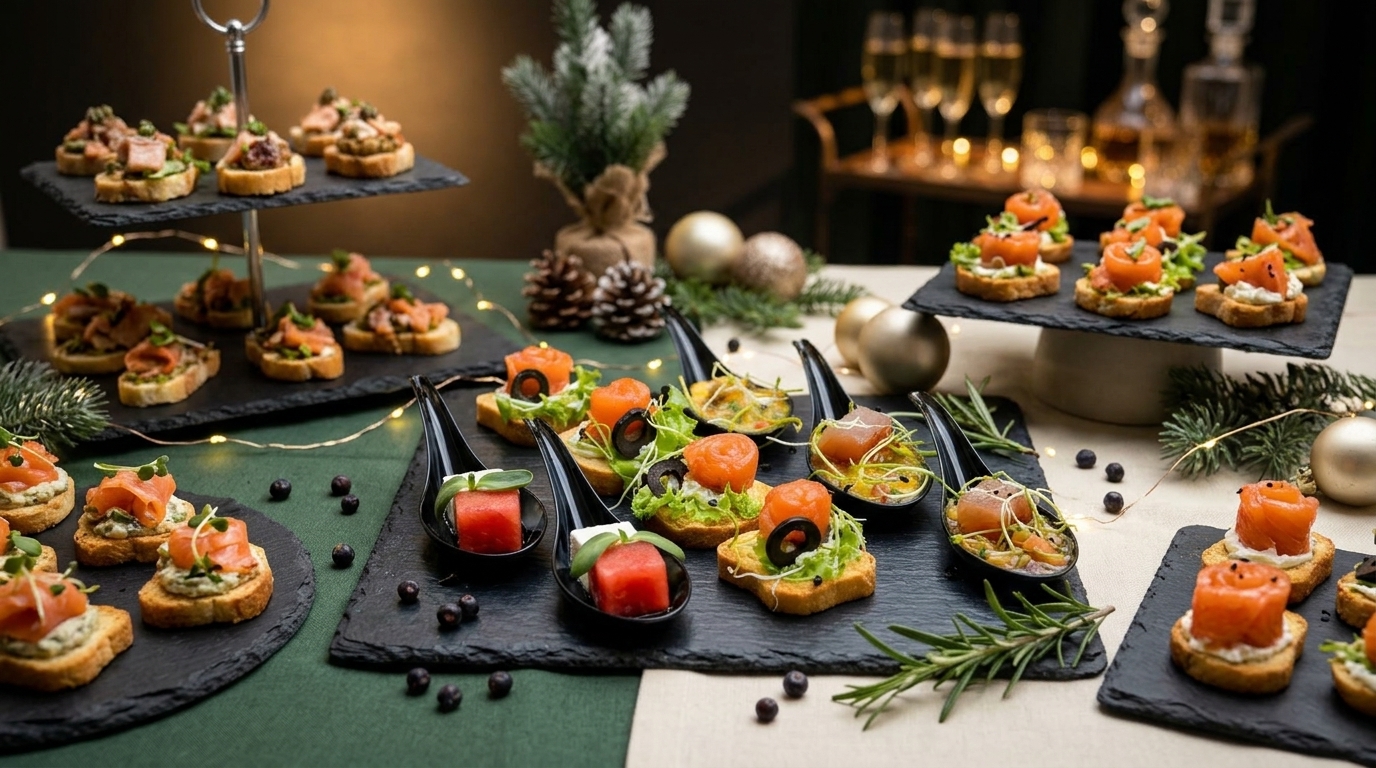
High performing ambient catering bites include cured salmon pastrami skewers with pickled mustard seeds, roasted beet and goat cheese mousse on crisp polenta rounds, shaved roast beef with horseradish creme on crostini, and spiced butternut squash tartlets with whipped ricotta. Ambient items also include substantial grazing platters, such as winter antipasti boards featuring marinated olives, cured meats, artisan cheeses, spiced nuts, and dried fruit. Staging these platters in advance frees your hot holding capacity for items that truly demand warmth, such as braised short rib croquettes or seared pork belly skewers. Review our winter cocktail party catering guide for additional beverage pairings and passed tray workflows that complement ambient small bites.
Cold Chain Packaging, Hot Holding, and Transport Logistics
Transporting delicate appetizers across town in winter traffic introduces substantial risks of moisture buildup, crushed garnishes, and temperature failure. Maintaining pristine presentation requires purpose built catering containers and strict thermal staging protocols.
For ambient and chilled canapes, use shallow catering trays with locking clear dome lids. Line trays with food safe silicone baking mats or ribbed parchment sheets to prevent small bites from sliding during transport. Never stack heavy containers directly on delicate items; utilize commercial catering pan racks inside delivery vans. Keep microgreens, herb sprigs, crispy shallots, and finishing drizzle oils packed separately in labeled deli containers inside a portable finishing kit. Staff should apply these delicate final touches on site immediately before trays enter the dining room, preserving crisp textures and vibrant green color.
For hot appetizers, preheat insulated cambro carriers using hotel pans filled with steaming water for thirty minutes before loading. Drain the water, wipe the interior dry, and load hot sheet pans directly into the carrier. Use perforated foil or vented hotel pan lids to allow excess steam to escape. Trapped steam turns crisp pastry crusts and seared croquettes soggy within fifteen minutes of transport. Keep calibrated probe thermometers inside each vehicle and record internal food temperatures upon arrival at the venue. All hot holding items must remain above 135 degrees Fahrenheit, and chilled seafood or dairy items must stay below 41 degrees Fahrenheit throughout the transport and staging window. Pair these logistics with our Christmas party food ideas catering guide to coordinate timely delivery routing during downtown holiday traffic.
Frequently asked questions
How many holiday appetizer pieces should caterers plan per guest?
For a two hour pre dinner cocktail party, prepare five to seven pieces per guest across four to six selections. For an evening standing cocktail reception where appetizers substitute for a full meal, plan for ten to twelve pieces per guest across eight to ten varieties.
How far in advance can puff pastry holiday appetizers be prepped and frozen?
Unbaked puff pastry pinwheels, tarts, and filled bites can be assembled, sliced, and stored in airtight lexan containers in the commercial freezer for up to four weeks. Bake them directly from frozen at 400 degrees Fahrenheit without thawing to ensure a crisp, flaky texture.
What is the ideal ratio between hot and cold appetizers for catering events?
Commercial caterers should maintain a 50 50 ratio between hot passed bites and ambient room temperature selections. Ambient items eliminate venue oven bottlenecks, prevent service delays during guest speeches, and allow immediate tray service upon guest arrival.
How do caterers keep fried or baked appetizer bites crispy during transport?
Avoid solid plastic wrap over warm items. Use vented pan covers or perforated foil inside preheated insulated carriers. Venting allows steam to escape so pastry crusts and breadings do not trap moisture and become soggy during transit.
Conclusion
Engineering a profitable holiday appetizer catering menu comes down to smart operational design rather than culinary complexity. By anchoring your offerings with high margin ambient platters, batching frozen puff pastry foundations weeks ahead of time, and enforcing strict portion standards between 0.75 and 1.25 ounces, your kitchen can capture surging winter event demand without overwhelming line cooks or overspending on venue labor.
Connecting your holiday recipes to real time supplier purchasing and inventory counts gives your business a lasting commercial edge. Edesia helps caterers and commercial kitchens turn client event guest counts into automated ingredient shopping lists, track live prep station yields, monitor food costs across every small bite, and handle seasonal catering inquiries smoothly across phone, text, and email. Learn how Edesia simplifies your catering workflow and keeps your holiday kitchen running profitably.
Try it on your own menu
Use the menu item contribution calculator to run your numbers in your browser. No signup required, and your data stays on your device.