Puff Pastry Appetizers for Commercial Catering: Batch Prep Systems, Freezer Storage Logistics, and High Margin Holiday Service
Learn how commercial catering operations batch bake high margin puff pastry appetizers, manage sheet freezer storage, and prevent soggy pastry during holiday events.
Photo by sheri silver on Unsplash.
Entering November and December, holiday cocktail parties and corporate receptions surge across the event calendar. For catering operators and commercial banquet kitchens, savory puff pastry appetizers represent one of the most profitable menu categories available. When engineered thoughtfully, laminated dough delivers visual elegance, rich buttery mouthfeel, and excellent portion volume while keeping raw food cost well under twenty percent of the per piece sale price.
Yet puff pastry presents unique operational vulnerabilities during high volume weeks. Laminated dough is notoriously sensitive to kitchen ambient temperatures, humidity, and moisture migration from wet fillings. A pinwheel or tartlet that looks crisp on the sheet pan during Tuesday morning prep can easily turn into a soggy, collapsed disappointment after forty eight hours in the walk in cooler or twenty minutes inside an insulated holding hot box at a client venue. Furthermore, raw dough parcels take up vast amounts of speed rack freezer space that commercial kitchens desperately need for turkeys, stocks, and holiday entrees.
Running a profitable holiday appetizer program requires commercial kitchens to treat puff pastry not as an artistic bakery item, but as a disciplined batch production system. By standardizing dough sourcing, engineering dry and bound fillings, establishing strict freezer staging protocols, and mastering on site rethermalization workflows, catering operators can deliver crisp, flaky hors d oeuvres that delight guests while protecting kitchen sanity and bottom line profitability.
The Economics of Puff Pastry: Dough Selection, Portion Weights, and Margin Targets
Every commercial pastry decision begins with labor versus ingredient cost. Operators face a fundamental operational choice between laminating puff pastry in house or sourcing commercial frozen butter sheets. While scratch laminated dough yields outstanding quality, the rolling, chilling, turning, and resting cycles demand skilled pastry labor that few busy catering kitchens can spare during peak holiday months. Sourcing commercial bakery grade all butter puff sheets, typically delivered frozen in ten by fifteen inch rectangles or bulk rolls, provides consistent thickness and predictable lift at a fraction of the labor cost.
Food cost accounting for puff pastry appetizers must measure dough yield per square inch. A standard ten by fifteen inch sheet yields one hundred and fifty square inches. When rolling savory pinwheels or cutting mini tart shells, aim for one and a half inch squares or rounds, delivering twenty four to thirty bite size appetizers per sheet. Commercial puff pastry sheets cost roughly two dollars to three dollars each from broadline distributors, translating to less than ten cents of dough per portion.
Adding savory proteins and cheeses brings the total raw food cost per bite to between twenty five and forty cents. When priced at two dollars and fifty cents to three dollars and fifty cents per passed piece in corporate catering packages, puff pastry hors d oeuvres comfortably achieve eighty to eighty five percent gross margins. For a detailed breakdown on recipe costing formulas, explore our guide on how to work out food cost percentage.
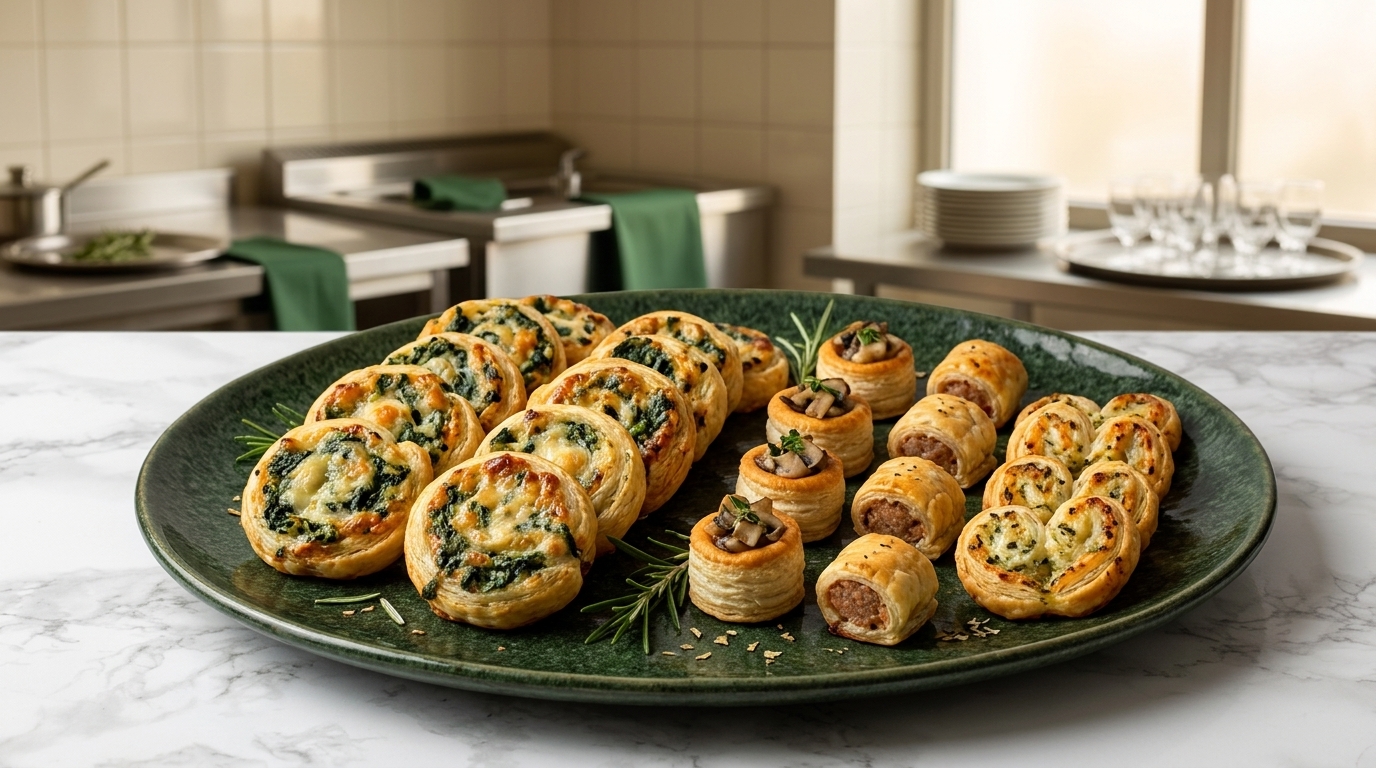
To protect these margins, operators must enforce strict gram portion standards for fillings. A standard mini vol au vent or tartlet requires no more than twelve to fifteen grams of filling. Exceeding this portion weight not only inflates ingredient expense, but also overweights the delicate pastry base and inhibits the mechanical lift of the laminated butter layers during baking. Pairing puff pastry bites with wider reception offerings, as detailed in our catering menu planning guide and our holiday appetizers guide, creates a balanced spread that satisfies guests while defending operational bandwidth.
Moisture Control and Filling Chemistry: Eliminating the Soggy Bottom Trap
The primary culprit behind failed catering pastry is moisture migration. When wet vegetable purees, watery cheeses, or unrendered meats sit on raw laminated dough, liquid seeps into the uncooked dough layers. As heat hits the pastry in the oven, steam attempts to escape downward and sideways rather than upward, resulting in the dreaded raw dough ring and soggy bottom crust.
Commercial kitchens prevent moisture migration through three professional prep disciplines:
-
Aggressive Moisture Extraction: Raw vegetables such as spinach, mushrooms, zucchini, and leeks must be thoroughly cooked, caramelized, and pressed dry before assembly. Sautéed mushrooms should be roasted until dry and finely minced into a duxelles. Frozen thawed spinach must be squeezed through clean linen until bone dry. Every ounce of water removed during prep is an ounce of crispness preserved in the finished bake.
-
Hydrocolloid and Starch Binding: Savory fillings require functional binders to lock internal juices under high heat. Incorporating a small percentage of modified food starch, cream cheese, egg yolk, or grated aged hard cheeses like Parmesan and Pecorino binds free liquid. When the appetizer enters the oven, the binder coagulates and seals moisture within the filling matrix rather than releasing it into the underlying dough.
-
Fat Barriers and Prebaking Protocols: For open tartlets, quiche bites, or vol au vent cases, blind baking shells completely before filling creates an impervious barrier. Brushing prebaked shells with a light egg wash and returning them to the oven for sixty seconds creates a micro seal on the interior pastry floor. For filled turnovers and pinwheels where dough and filling bake together, dusting the rolled dough surface with fine toasted breadcrumbs or grated dry cheese before spreading filling provides an absorbent buffer that catches juices before they touch raw pastry.
Freezer Staging, Sheet Pan Logistics, and Batch Production Workflow
Puff pastry relies on water vapor expanding between thin butter layers to achieve lift. That physical reaction requires cold fat meeting intense heat. As soon as butter softens above sixty eight degrees Fahrenheit, the layers meld into a solid mass and the pastry bakes into a dense, greasy biscuit rather than a light puff. Therefore, speed and cold temperature management define every step of batch assembly.
Commercial kitchens should execute puff pastry production during dedicated early morning shifts when ambient kitchen temperatures are at their coolest. Work in disciplined small batches. Keep unused dough sheets flat in the walk in cooler until the exact moment of rolling. As soon as a full sheet pan of pinwheels, sausage parcels, or filled pockets is assembled and brushed with egg wash, transport it directly to the walk in blast chiller or freezer for thirty minutes to firm the butter before cutting or handling.
For event catering, puff pastry items should almost always be frozen unbaked. Freezing unbaked appetizers allows the kitchen to produce hundreds or thousands of pieces weeks in advance of the holiday rush. Line heavy gauge aluminum sheet pans with parchment paper, space the raw cut appetizers one half inch apart, and freeze them solid on speed racks. Once rock hard, transfer the frozen pieces into food grade plastic containers or vapor barrier bags labeled with exact item name, batch date, allergen tags, and baking instructions. This bulk packaging consolidates valuable freezer space and protects delicate pastry edges from freezer burn. Items can be baked straight from frozen without thawing, which preserves optimal butter flake definition.
Venue Execution: Rethermalization, Speed Ovens, and Ambient Platter Holding
Executing puff pastry appetizers at a remote client venue or busy banquet floor requires a clear heating and staging timeline. The greatest operational mistake caterers make is baking pastry hours early and holding it inside a humid insulated hot box. Insulated carriers retain steam, rapidly transforming crisp pastry into soft, limp dough.
Follow these proven venue execution standards:
-
Bake Fresh from Frozen on Site: Whenever the venue provides working convection ovens, bake pastry appetizers directly from the frozen state at four hundred degrees Fahrenheit. Convection fan circulation forces rapid heat transfer, producing immediate steam lift and golden browning within twelve to fifteen minutes. Rotate sheet pans once at the nine minute mark to ensure even color across the entire deck.
-
The Ambient Serving Window: Many savory puff pastry items, including caramelized onion and goat cheese tarts, Mediterranean tapenade pinwheels, and roasted squash bites, taste significantly better and hold their structure far longer at room temperature than lukewarm. Planning a menu where half the puff pastry selections are served as ambient cocktail grazing bites relieves massive pressure on venue oven capacity. Once baked and cooled on wire racks for ten minutes, ambient pastries can be staged on decorative platters for up to two hours with zero loss of crispness. Balancing baked hot items with cold displays, such as grazing platters outlined in our food board ideas catering guide and seasonal ideas in our Thanksgiving appetizers guide, keeps the buffet line moving smoothly.
-
Speed Oven Finishing for Satellite Sites: For venues equipped only with ventless high speed ovens or warming drawers, prebake the pastries to ninety percent doneness at the central kitchen, cool them completely on wire racks, and transport them chilled in breathable cardboard bakery boxes. At the venue, flash the pastries in a high speed oven or hot dry convection cycle for sixty to ninety seconds at four hundred and twenty five degrees Fahrenheit to crisp the exterior butter without drying out the interior filling.
-
Clear Menu Engineering and Digital Tracking: Avoid offering more than three distinct baked pastry items on a single event menu. Restricting variety allows service staff to consolidate baking cycles, minimizes tray cross handling, and simplifies allergen separation. Tracking your ingredient yields, batch sizes, and event orders through central kitchen software like Edesia ensures you purchase exact bulk inventory and never run out of freezer capacity during the holiday rush.
Frequently asked questions
Is it better to bake puff pastry appetizers from frozen or thaw them first?
Always bake puff pastry appetizers directly from frozen. Baking from a frozen state ensures the laminated butter layers stay cold until the sudden high heat of the oven turns the moisture into steam, creating maximum flaky lift. Thawing beforehand allows butter to soften, resulting in greasy, flat pastry.
How do commercial kitchens prevent the bottoms of puff pastry appetizers from getting soggy?
Soggy bottoms occur when wet fillings release moisture downward into raw dough. Prevent this by thoroughly cooking and pressing liquid out of wet vegetables like mushrooms and spinach, binding fillings with egg yolks, modified starches, or aged cheeses, and blind baking shells with a light egg wash seal before adding warm fillings.
How long can unbaked puff pastry appetizers be stored in a commercial freezer?
Unbaked savory puff pastry appetizers can be safely stored in a commercial freezer for up to four weeks when properly packaged. Freeze the shaped pieces solid on parchment lined sheet pans, then pack them into airtight food grade containers or vapor barrier bags to prevent freezer burn and odor absorption.
Can baked puff pastry appetizers be held in an insulated hot box during transport?
Insulated hot boxes trap humidity and steam, which quickly softens crisp pastry crusts. Instead of hot holding in humid cabinets, either transport pastries chilled in breathable bakery boxes and flash bake them on site, or serve room temperature ambient selections that cool on wire racks without losing crunch.
Conclusion
Mastering puff pastry appetizers is one of the highest leverage moves an independent caterer or banquet operator can make ahead of the winter holiday season. High perceived value, rapid finger food consumption, and minimal raw ingredient expense combine to generate exceptional catering margins. By respecting the cold chain during batch prep, engineering dry and bound savory fillings, freezing raw pieces for space efficient storage, and refusing to trap baked pastry in humid hot boxes, your kitchen can deliver flawless, crisp hors d oeuvres that elevate client events. For commercial kitchens looking to streamline seasonal purchasing, calculate recipe food costs, and manage event orders effortlessly, explore Edesia at https://edesia.catering.
Try it on your own menu
Use the menu item contribution calculator to run your numbers in your browser. No signup required, and your data stays on your device.