Food Board Ideas for Commercial Catering: How Kitchens Build High Margin Grazing Displays, Portion Standards, and Transport Workflows
Learn how commercial kitchens engineer high margin catering food boards, establish per person portion standards, and streamline assembly and transport.
Photo by Travis Fish on Unsplash.
Food boards and grazing tables have moved from casual party novelties into high demand catering centerpieces. Corporate planners and wedding hosts frequently request lavish charcuterie platters, artisan cheese boards, and Mediterranean mezze tables for cocktail receptions and networking events. For commercial kitchens and independent caterers, these displays offer remarkable visual impact and command strong retail pricing. However, without disciplined portion controls and structured assembly routines, food boards can quickly become operational money pits.
When kitchen staff build grazing platters without exact gram weights, expensive cured meats and specialty cheeses vanish into oversized wooden boards. Food costs escalate beyond forty percent, while inconsistent styling confuses clients and slows down staging. Successful commercial operators treat food boards as precision engineered catering products. By establishing per person portion formulas, batch prepping subassemblies during off peak kitchen hours, and deploying moisture protective packaging, your kitchen can deliver show stopping grazing boards that reliably maintain seventy to seventy five percent gross profit margins.
The Economics of Commercial Food Boards: Setting Exact Portion Benchmarks
The primary reason catering food boards lose profitability is portion creep. A line cook decorating an eighteen inch board by eye will naturally fill empty spaces with whatever ingredients are within reach. If that ingredient is prosciutto di Parma or aged Manchego, the plate cost doubles in minutes.
To protect your margins, your kitchen must establish explicit portion formulas based on event timing and guest role:
-
Cocktail Hour Grazing Boards: When the board serves as an appetizer before a plated or buffet meal, calculate two to three ounces of combined cheese and charcuterie per guest, supplemented by two ounces of accompaniments. A standard formula allocates 1.5 ounces of cheese, 1.25 ounces of cured meats, 1 ounce of fresh or dried fruit, 0.5 ounce of nuts or olives, and 1 ounce of crackers or artisan bread.
-
Heavy Reception Food Boards: When the display serves as the primary dinner reception food, increase the portioning to five to six ounces of combined proteins and cheeses per guest. This breakdown includes 3 ounces of cheese, 2.5 ounces of cured meats, 2 ounces of fruits and vegetables, 1.5 ounces of dips or spreads, and 2 ounces of artisan breads.
-
Margin Balancing Ratios: High margin grazing displays rely on a seventy thirty visual balance. Expensive protein and artisan cheese components should represent thirty percent of the board volume while providing seventy percent of the visual prestige. The remaining seventy percent of the surface area is filled with high margin, low cost bulk staples: house roasted spiced almonds, marinated Castelvetrano olives, seasonal grapes, house made fig preserves, and artisan sourdough crisps.
To verify your exact ingredient pricing down to the ounce, review our guide on how to work out the food cost percentage of a dish and run your recipes through our restaurant food cost calculator.
Standardizing Core Food Board Concepts Across Your Menu
Offering fully custom grazing boards for every client creates severe inventory headaches and prep inefficiency. Instead, commercial kitchens should offer three or four standardized board profiles that cross utilize walk in inventory from normal dining or catering service:
-
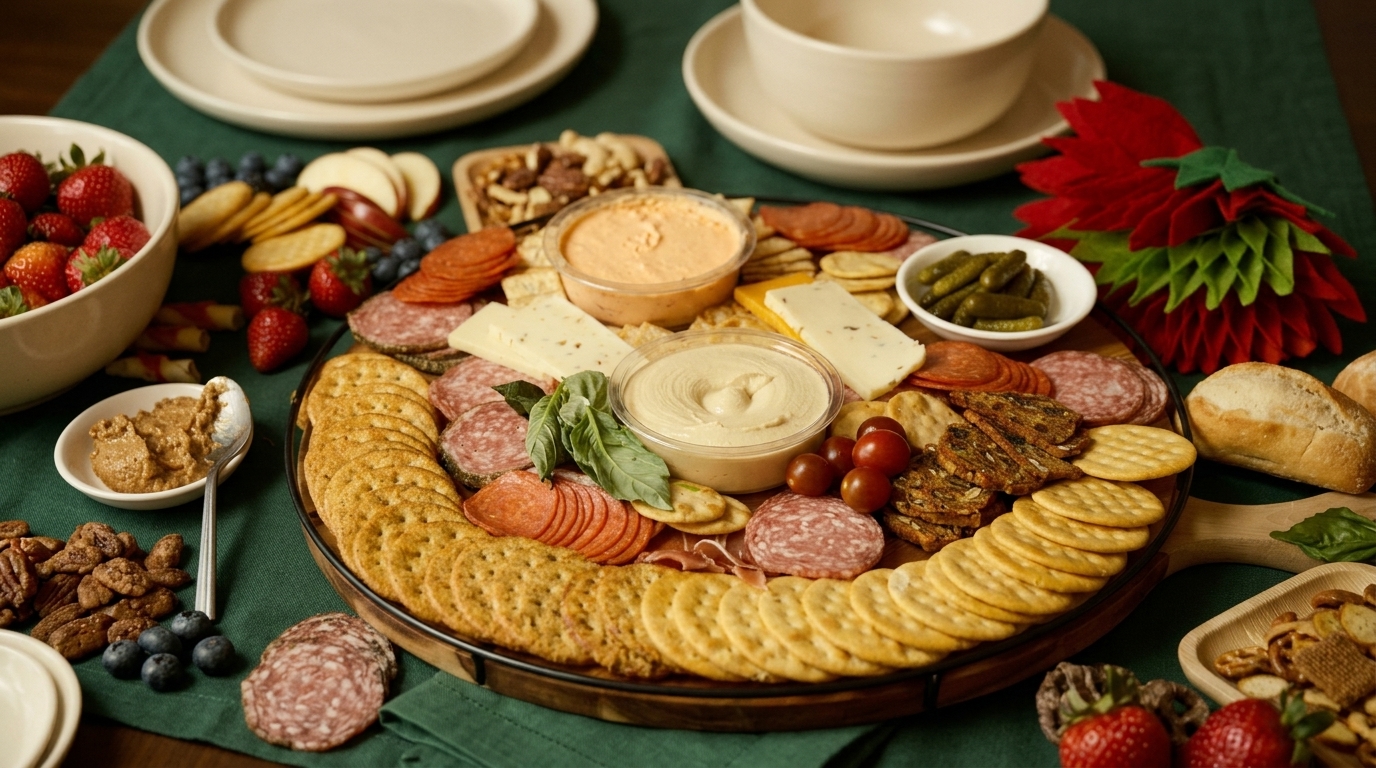
The Classic Artisan Charcuterie and Cheese Board: Features three distinct cheese profiles such as a sharp aged cheddar, a creamy double cream brie, and an earthy blue cheese or goat cheese round. Pair these with three cured meats including thinly ribboned prosciutto, dry cured Genoa salami, and spicy capocollo. Complement the proteins with whole grain mustard, clover honey, cornichons, and dried apricots.
-
The Mediterranean Mezze Board: An exceptional high margin offering that appeals strongly to vegetarian and plant forward corporate gatherings. Anchor the display with scratch made garlic hummus, whipped feta with lemon and zaatar, and roasted eggplant dip. Fill the perimeter with warm pita triangles, cucumber spears, rainbow cherry tomatoes, marinated kalamata olives, dolmas, and marinated artichoke hearts. Because produce and legume dips carry raw food costs under fifteen percent, mezze boards routinely deliver gross margins above eighty percent.
-
The Market Crudite and Dip Display: Elevate standard vegetable platters by featuring blanched and chilled Romanesco, French breakfast radishes, purple baby carrots, and sugar snap peas arranged around house whipped green goddess dressing and smoked paprika white bean dip. Pairing fresh produce with emulsified house dressings creates an upscale presentation at minimal ingredient cost. For more ideas on engineering party friendly small bites, review our holiday appetizers catering guide.
-
The Morning Continental Pastry and Fruit Board: Designed for corporate breakfast drop off orders. Stage mini almond croissants, blueberry scones, house granola cups, lemon curd, whipped honeycomb butter, and sliced seasonal berries on butcher paper lined platters. Sourcing pastries through wholesale dough programs keeps morning labor minimal.
Batch Prep Systems and Mise en Place Assembly Lines
Assembling elaborate food boards during peak catering rush hours causes severe kitchen logjams. A high volume kitchen must separate component prep from final platter layout:
-
Bulk Protein and Cheese Slicing: Slice firm cheeses and cured meats forty eight hours in advance during afternoon prep downtime. Portion cheeses into uniform wedges or bite size cubes and store them in airtight containers lined with parchment paper. Pre roll prosciutto into ribbons and fold salami into interlocking fans or roses using portion cups as templates. Weigh each portion into deli containers matched to small, medium, or large board sizes.
-
Garnish and Accompaniment Staging: Portion shelf stable condiments into disposable or ceramic ramekins twenty four hours ahead. Fill containers with olives, roasted nuts, pickled vegetables, and mustard, then seal them with lids. Keep crackers and crisps sealed in original dry packaging until delivery to prevent moisture absorption from the walk in cooler.
-
Platter Assembly Order: When assembling the board, follow a disciplined geometric sequence. Place the ramekins containing wet dips, honey, and mustard on the board first to serve as structural anchors. Arrange sliced cheeses next to the ramekins, radiating outwards. Layer meat ribbons and folded salami slices along the board curves to create natural visual barriers. Fill the secondary pockets with clusters of grapes, berries, and pickled vegetables. Finally, tuck sprigs of fresh rosemary, thyme, or edible flowers into empty gaps to create an abundant, overflowing look without adding costly ingredients.
Packaging, Transport Logistics, and Food Safety Standards
Transporting delicate grazing displays requires specialized packaging to prevent ingredient migration during delivery:
-
Choosing the Right Presentation Surface: For drop off catering where board collection is impractical, use disposable bamboo boards, palm leaf platters, or disposable wooden trays included in the menu package price. For staffed corporate galas or luxury weddings, use branded hardwood boards with rubber feet, requiring a refundable deposit or a post event pickup fee.
-
Transit Packaging and Moisture Control: Never wrap a finished board in standard plastic cling film without internal support, as the plastic compresses soft cheeses, smears dips, and causes cracker softening. Use deep catering sheet pan boxes or windowed bakery boxes that provide two to three inches of overhead clearance. Place sheets of greaseproof butcher paper directly under the foods to prevent wood oil staining. Pack crackers and bread slices in separate paper sleeves so they remain crisp regardless of transit humidity.
-
Cold Chain Compliance: Soft cheeses, sliced meats, and cut produce must remain held below 41 degrees Fahrenheit (5 degrees Celsius) throughout vehicle staging and transit. Transport loaded platter boxes inside insulated catering carriers chilled with frozen gel packs. Once delivered to the client venue, advise the event planner of the four hour ambient serving window. Under local health codes, perishable foods displayed without active temperature control must be discarded after four hours at room temperature.
Managing Food Board Operations and Scaling Production with Edesia
As corporate catering inquiries scale up, manually estimating bulk cheese blocks, charcuterie weights, and wholesale produce orders becomes an error prone chore. A missing ingredient on delivery morning forces frantic retail grocery runs that instantly wipe out catering profit margins.
Implementing dedicated commercial kitchen management software transforms food board catering from chaotic custom orders into a predictable, high margin production line:
-
Automated Ingredient Aggregation: Modern kitchen software takes your booked event orders and automatically converts them into consolidated purchasing lists. If your weekend calendar includes six large charcuterie boards and eight mezze platters, the system tallies exact weights for brie, prosciutto, chickpeas, and cucumbers, allowing you to place bulk wholesale orders that unlock Tier 1 distributor pricing.
-
Waste and Trim Tracking: Cheese rinds, cured meat ends, and vegetable trim can represent up to twelve percent of raw food purchases. Logging these discards through an operational workflow allows your culinary team to repurpose usable trimmings into hot pasta specials, frittatas, or soup stocks. Review our framework on how to set up a daily restaurant waste log routine to capture and eliminate these silent losses.
-
Instant Inquiry and Order Response: Corporate clients booking holiday mixers or client receptions often request rapid proposals from multiple caterers simultaneously. Utilizing an integrated catering operations platform like Edesia ensures client inquiries receive prompt quotes, portion transparent menus, and verified booking confirmations across phone, text, and email before your competitors even open the inquiry.
Frequently asked questions
How much food should be budgeted per person for a catering food board?
For cocktail receptions and pre dinner grazing boards, budget three to four ounces of food per guest, comprising 1.5 ounces of cheese, 1.25 ounces of cured meats, and 1 to 1.5 ounces of fruits, nuts, dips, and crackers. For main meal receptions where the food board is the primary offering, increase the portion to six to eight ounces total per guest.
What cheeses hold up best on a room temperature commercial catering board?
Firm and semi firm cheeses hold up best during extended ambient display. Aged cheddar, Manchego, gouda, Gruyere, and Parmigiano Reggiano maintain their structure for several hours without sweating. Soft cheeses like double cream brie, Camembert, and goat cheese rounds should be served chilled from the walk in and placed on the board right before service.
How far in advance can a commercial kitchen prep catering food boards?
Meats and firm cheeses can be sliced and portioned into sealed containers forty eight hours in advance. House dips and roasted nuts can be prepped up to seventy two hours ahead. However, final platter assembly should occur within two to four hours of delivery, with crackers and breads packaged separately to prevent moisture softening.
How can caterers maintain a seventy percent gross margin on charcuterie boards?
Maintain margins by following a seventy thirty volume rule. High cost cured meats and artisan cheeses should provide thirty percent of the board volume while anchoring sixty percent of the plate cost. Fill the remaining seventy percent of the platter with high margin accompaniments such as seasonal grapes, house roasted nuts, marinated olives, scratch hummus, and artisan crisps.
Conclusion
Food boards and grazing tables offer commercial kitchens an outstanding opportunity to capture high margin event revenue, provided every board is built with strict portion metrics and repeatable kitchen systems. By replacing guesswork styling with standardized gram formulas, prepping protein folds and dips during off peak hours, and enforcing safe transport workflows, your kitchen can produce breathtaking displays that protect both food quality and your bottom line. Take control of your catering menu engineering and supplier purchasing today to make seasonal food boards one of your most lucrative revenue streams.
Try it on your own menu
Use the menu item contribution calculator to run your numbers in your browser. No signup required, and your data stays on your device.