Holiday Shrimp Cocktail Catering: How Commercial Kitchens Control Seafood Margins, Master Ice Display Logistics, and Prevent Waste
Learn how commercial caterers master holiday shrimp cocktail stations with exact portion formulas, ice drainage logistics, and food cost controls.
Photo by David Kirchner on Unsplash.
Shrimp cocktail remains one of the most requested menu items for corporate holiday galas, private estate parties, and winter cocktail receptions. Clients love it because it signals luxury, while guests naturally flock to the seafood station before touching anything else in the room. For commercial caterers and banquet kitchens, however, shrimp cocktail can become an operational trap that quietly erodes event profitability. High raw ingredient costs, rapid temperature degradation on buffet tables, unmonitored guest grazing, and waterlogged presentation from melting ice turn what should be a profitable showpiece into an expensive headache.
Protecting your bottom line on holiday seafood stations requires a strict operational system that begins days before the event. When your kitchen understands raw to cooked yield calculations, deploys individual portion architecture, builds active drainage into ice displays, and paces replenishment with precision, you can maintain food costs below twenty eight percent while delivering a luxury experience. Here is the complete commercial kitchen playbook for engineering, prepping, transporting, and executing profitable holiday shrimp cocktail service.
Sizing, Sourcing, and Calculating True Cooked Yield
Seafood purchasing errors compound rapidly when catering large events. Choosing the wrong shrimp count size or failing to account for cooking shrinkage will instantly break your budget. For commercial catering displays, 16/20 count (sixteen to twenty shrimp per pound) or 21/25 count black tiger or white vannamei shrimp strike the ideal balance between visual prestige and cost control. Jumbo U12 or U15 shrimp look impressive, but guests consume them at almost the same numerical rate as 16/20 shrimp, which doubles your raw protein expenditure per head.
Shrimp lose between eighteen and twenty two percent of their raw weight during thawing, peeling, deveining, and poaching. If you purchase forty pounds of raw frozen shell on 16/20 shrimp, you will yield approximately thirty one pounds of cleaned cooked product. When calculating raw orders, always calculate backward from finished cooked portion counts rather than gross weight. For a seated dinner or plated first course, standard portioning is five shrimp per guest. For passed hors d'oeuvres, budget three pieces per guest. For an open stationary holiday buffet, unguided grazing easily climbs to seven or eight pieces per attendee if left unchecked. Establishing your base food cost requires logging raw price per pound, usable cooked yield, and labor hours spent cleaning. You can test your plate margins with the restaurant food cost calculator and review our guide on how to calculate food cost percentages to lock in profitable pricing before contracts are signed.
Acidulated Poaching and Thermal Shock Protocols
Overcooked shrimp turn rubbery, lose excess moisture, and curl into tight, unattractive knots that look small on display. Undercooked shrimp pose serious food safety risks and turn translucent and mushy. Commercial batch poaching requires a heavily seasoned court bouillon and an aggressive ice bath shock system to achieve a crisp, tender snap and bright coral coloring.
Build your poaching liquid using water, white wine or lemon juice, sea salt, black peppercorns, fresh bay leaves, smashed garlic cloves, and fresh dill sprigs. The acid tightens the exterior proteins and brightens the shell pigment, while adequate salinity seasons the meat through the muscle fiber. Bring the court bouillon to a rolling boil, then reduce heat to a gentle simmer around 185 to 190 degrees Fahrenheit. Never boil shrimp violently in rolling water. Drop your batch prepped shrimp into the simmering liquid in manageable batches of five to ten pounds. Cook 16/20 shrimp for only two and a half to three minutes until they turn opaque pink and form a gentle C shape. A shrimp curled into a tight O shape is severely overcooked.
Immediately transfer the cooked shrimp with stainless steel spider strainers into a prepared ice shock slush composed of equal parts ice cubes and cold water salted with kosher salt. Plunging hot seafood into ice water stops carryover cooking within seconds and locks in precious moisture. Once the internal temperature drops below 38 degrees Fahrenheit, lift the shrimp from the ice bath, drain them thoroughly in perforated colanders, toss them lightly in fresh lemon juice and neutral oil to prevent oxidation, and pack them into shallow stainless steel hotel pans lined with clean parchment paper. Store covered at 34 to 36 degrees Fahrenheit until transport.
Ice Display Engineering and Meltwater Drainage Logistics
Nothing ruins the visual appeal of premium seafood faster than shrimp sitting in murky puddles of lukewarm meltwater. Placing shrimp directly onto an open bed of ice inside a standard solid banquet tray is a common catering mistake. Ambient room heat, venue lighting, and guest traffic melt surface ice within forty five minutes, submerging the bottom layers in water that leaches away seasoning and creates unsafe holding conditions.
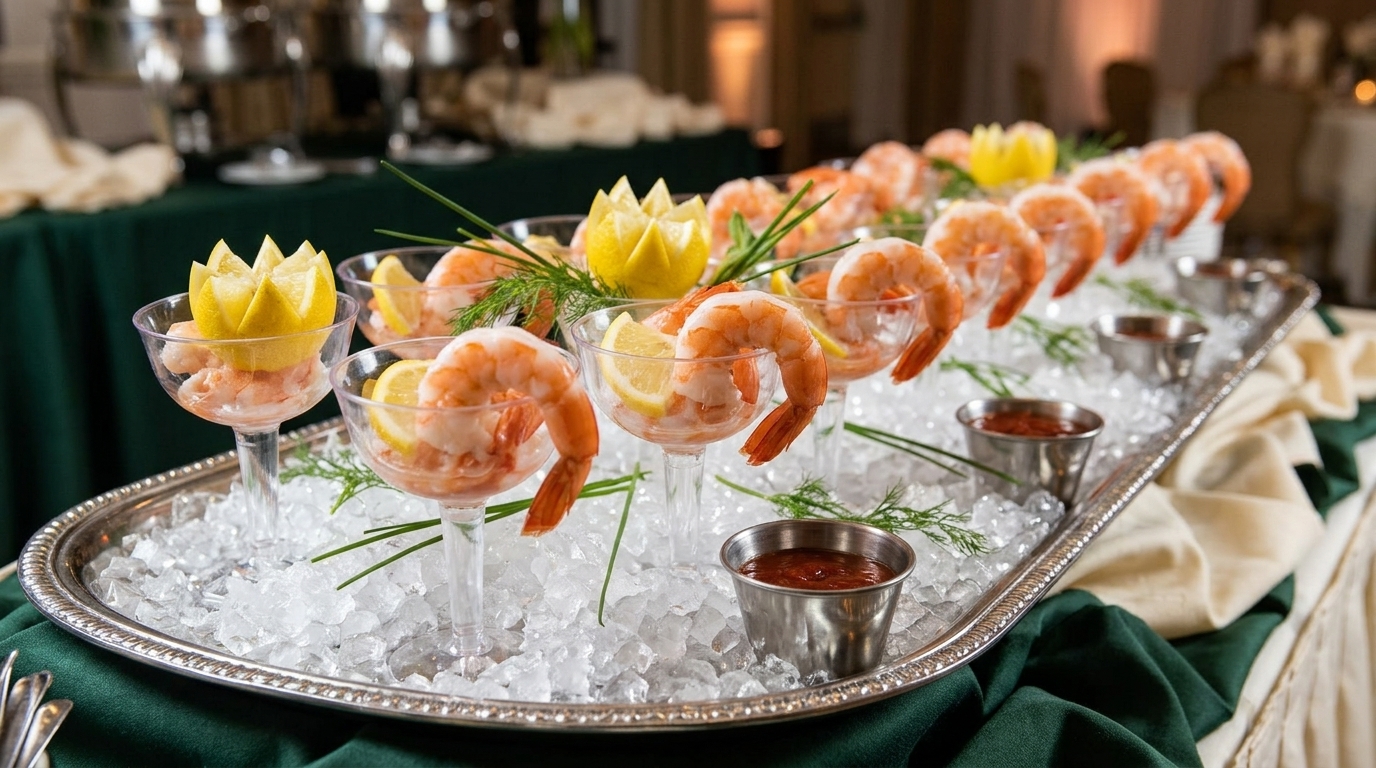
Professional ice displays require a two tier false bottom drainage system. Set perforated two inch or four inch deep stainless steel hotel pans directly inside deeper six inch solid hotel pans. The perforated top pan holds the crushed ice bed and portioned seafood, while the lower solid pan collects melting water without allowing it to contact the food. For luxury acrylic or hammered metal display bowls, insert custom acrylic false bottom riser plates or silicone drain mats beneath the ice layer.
Crushed ice or flaked ice holds temperature far better than standard bar ice cubes and creates a smooth foundation that supports glassware and garnishes. Pack the crushed ice firmly across the perforated tray, smoothing the surface with a clean bench scraper. Position stainless steel ramekins for sauces and fresh herb bunches into the ice bed before adding seafood. In accordance with FDA Food Code standards, potentially hazardous cold foods must remain at 41 degrees Fahrenheit or below throughout service. Use calibrated digital probe thermometers to verify surface temperatures every thirty minutes, and keep extra bags of flaked ice staged in insulated mobile coolers near the buffet station for discreet surface refreshes.
Station Architecture, Preportioned Cups, and Portion Defense
Station layout dictates guest velocity and consumption volume. When guests encounter a massive communal mound of loose shrimp with serving tongs, psychological inhibition disappears. Guests frequently pile six to ten shrimp onto small appetizer plates, exhausting your inventory within the first forty minutes of a three hour cocktail reception.
To defend your gross margin, replace communal bulk mounds with individual portion architecture. Arrange chilled shrimp in individual crystal clear stemless glassware, acrylic martini cups, or petite glass vessels. Place two to three ounces of scratch cocktail sauce in the bottom of each glass, hang two or three plump jumbo shrimp over the rim, and garnish with a petite lemon wedge and micro herb sprig. This presentation looks significantly more luxurious than a bulk buffet pile, yet it strictly caps consumption at two or three shrimp per selection. Guests pick up one finished cup at a time, allowing your staff to control throughput effortlessly.
Surround the seafood station with high margin, volume filling accompaniments that slow down seafood consumption while enhancing the dining experience. Flank the station with crusty sliced sourdough baguettes, house seasoned lavash crackers, lemon crowns, pickled seasonal vegetables, marinated olives, and multiple scratch sauces such as classic horseradish cocktail sauce, creamy remoulade, and tangy salsa verde. Learn more about arranging profitable grazing displays in our guide on commercial catering food board ideas and check our breakdown of holiday appetizer batch logistics.
Transport Safety, Replenishment Pacing, and Surplus Prevention
Cold chain integrity during transport is critical. Shrimp must never sit in the temperature danger zone between 41 degrees and 135 degrees Fahrenheit. Pack finished portion cups or prepped seafood trays into thoroughly sanitized, prechilled insulated transport carriers. Use frozen eutectic cold plates positioned at the top and bottom of each carrier stack, as cold air naturally sinks through the cabinet. Keep transport logs documenting pack out temperatures, departure times, arrival times, and initial on site inspection temperatures.
Once on site at the event venue, follow a shallow pan replenishment strategy. Never stage your entire evening inventory on the display floor at once. Keep seventy percent of your backup seafood safely chilled in the venue walk in cooler or in refrigerated staging cabinets. Display only enough portions to sustain twenty to thirty minutes of service. As guests arrive and the station sees heavy traffic, an attendant replenishes the display with fresh, pristine portion cups while wiping down silver trays and removing discarded lemon rinds.
This shallow staging model also protects your kitchen from costly overproduction waste. Unserved portion cups held in temperature safe refrigeration at 36 degrees Fahrenheit can be repurposed or broken down safely in accordance with local health codes, whereas food that sits exposed in ambient room temperature for hours must be discarded. To establish strict tracking of food discard and production yield across holiday jobs, implement our daily restaurant waste log routine across your back of house team.
Menu Pricing Structures and Gross Margin Optimization
Pricing a luxury seafood station requires clear contract language and disciplined margin targets. Because fresh and frozen seafood commodities experience seasonal price swings during November and December, never quote fixed per person pricing months in advance without clear supplier lock ins.
Structure your catering proposals with a targeted sixty eight to seventy two percent gross margin on seafood stations. To achieve this, use a tiered pricing formula that accounts for protein costs, specialty glassware rentals, crushed ice purchases, floral garnishes, and dedicated attendant labor. If your food and packaging cost per guest totals six dollars and fifty cents, your retail station price should sit between twenty dollars and twenty two dollars per guest.
Always establish minimum guest count guarantees and minimum station spend requirements. If a client books an event for one hundred guests, specify that seafood station pricing is based on a minimum of one hundred guaranteed covers. Include an overage clause specifying that additional portions requested during service will be billed at an agreed premium rate per dozen. Pair seafood stations with lower cost items from your package menus, such as our recommended winter cocktail party catering selections and holiday finger foods menus, to balance aggregate menu costs across the entire contract.
Frequently asked questions
What is the best shrimp count size for commercial catering displays?
For commercial catering displays, 16/20 count or 21/25 count shrimp provide the best balance of visual appeal and margin control. Jumbo U12 shrimp look striking, but guests consume them at the same numerical pace, which significantly inflates raw food costs.
How many shrimp should caterers budget per guest for holiday parties?
Budget three pieces per guest for passed cocktail hors d'oeuvres, four to five pieces per guest for plated dinner courses, and five to six pieces per guest for stationary displays when paired with high margin accompaniments and preportioned presentation.
How do commercial kitchens keep ice displays from turning into waterlogged messes?
Use a two tier drainage system by placing a perforated hotel pan or drain tray inside a deeper solid hotel pan. Melted water flows into the lower basin away from the ice bed, keeping shrimp elevated, crisp, and cold without becoming waterlogged.
What is the safe holding temperature for catering seafood stations?
Seafood must remain at 41 degrees Fahrenheit or lower throughout service in accordance with FDA Food Code guidelines. Caterers should monitor display temperatures every thirty minutes using calibrated probe thermometers and refresh crushed ice beds as needed.
Why should caterers avoid open bulk mounds of shrimp on buffet tables?
Open bulk mounds encourage uninhibited grazing where guests frequently take seven to ten pieces at once, rapidly depleting inventory. Individual portion cups cap consumption at two or three shrimp per selection and maintain a clean, luxurious display.
Conclusion
Holiday shrimp cocktail stations do not have to be a financial gamble for commercial caterers. When you standardize your purchasing specifications, execute disciplined court bouillon poaching with instant thermal shock, engineer dual pan ice drainage, and serve individual portion cups, you transform an expensive catering liability into a reliable profit center. Your guests enjoy pristine, crisp seafood presented with high end elegance, and your kitchen defends its margins throughout the busiest weeks of the winter event season.
As your catering operation expands its seasonal bookings, managing supplier purchasing, inventory levels, recipe costing, and incoming event inquiries can quickly overwhelm kitchen leadership. Edesia automates commercial kitchen workflows, converting event menus into consolidated supplier shopping lists, tracking real time food costs, and managing client catering inquiries across phone, text, and email so your culinary team can focus on culinary excellence.
Try it on your own menu
Use the restaurant food cost & variance calculator to run your numbers in your browser. No signup required, and your data stays on your device.