Halloween Party Food Ideas for Adults: Commercial Kitchen Menu Engineering, Batch Stations, and Margin Controls
Discover how commercial kitchens turn adult Halloween party demand into profitable catering events with engineered grazing stations, batch bites, and tight food costs.
Photo by Anto Meneghini on Unsplash.
October brings an intense surge in seasonal entertaining inquiries, but the most profitable opportunities for commercial kitchens are rarely found in novelty children parties. Search trends on Pinterest demonstrate that adult focused Halloween gatherings are driving major momentum, with searches for adult Halloween party food ideas expanding fourfold heading into mid autumn. For independent restaurants and professional caterers, these events represent premium corporate cocktail receptions, evening venue buyouts, and upscale private celebrations. Guests at adult gatherings expect refined culinary execution rather than green food coloring and candy garnishes. By engineering adult Halloween menus around dramatic autumn palettes, rich braised fillings, artisan charcuterie boards, and prebatched seasonal beverages, operators can capture premium event revenue while locking food costs comfortably between twenty and twenty four percent. This operational guide details how commercial kitchens build profitable adult Halloween catering packages, streamline batch production, and eliminate costly service bottlenecks.
The Commercial Opportunity: Shifting from Novelty to High Margin Hospitality
Many food businesses make the mistake of treating Halloween purely as a novelty occasion, offering labor intensive snacks that look clever on social feeds but collapse kitchen margins during prep. Adult Halloween parties operate on entirely different business fundamentals. Event planners, corporate culture committees, and private hosts booking adult gatherings are seeking sophisticated seasonal hospitality. They want moody, atmospheric food presentations that pair seamlessly with craft cocktails and fine wine.
From a commercial perspective, adult event clients accept substantially higher price points. While family style novelty buffets often face price resistance above twenty five dollars per guest, adult cocktail receptions and evening grazing stations comfortably command forty five to seventy five dollars per head, depending on market density and beverage integration.
To maximize profitability, operators must focus on perceived value rather than expensive primary ingredients. Deep purple roasted beets, black garlic reductions, roasted wild mushrooms, rich chicken liver mousse, and dark seasonal berries create dramatic visual impact without the heavy wholesale cost of prime beef cuts. When kitchen teams anchor their menus in these accessible ingredients, overall food cost can be maintained at twenty to twenty four percent, leaving healthy margin to cover specialized labor and venue logistics.
Designing High Impact Grazing Boards and Savory Stations
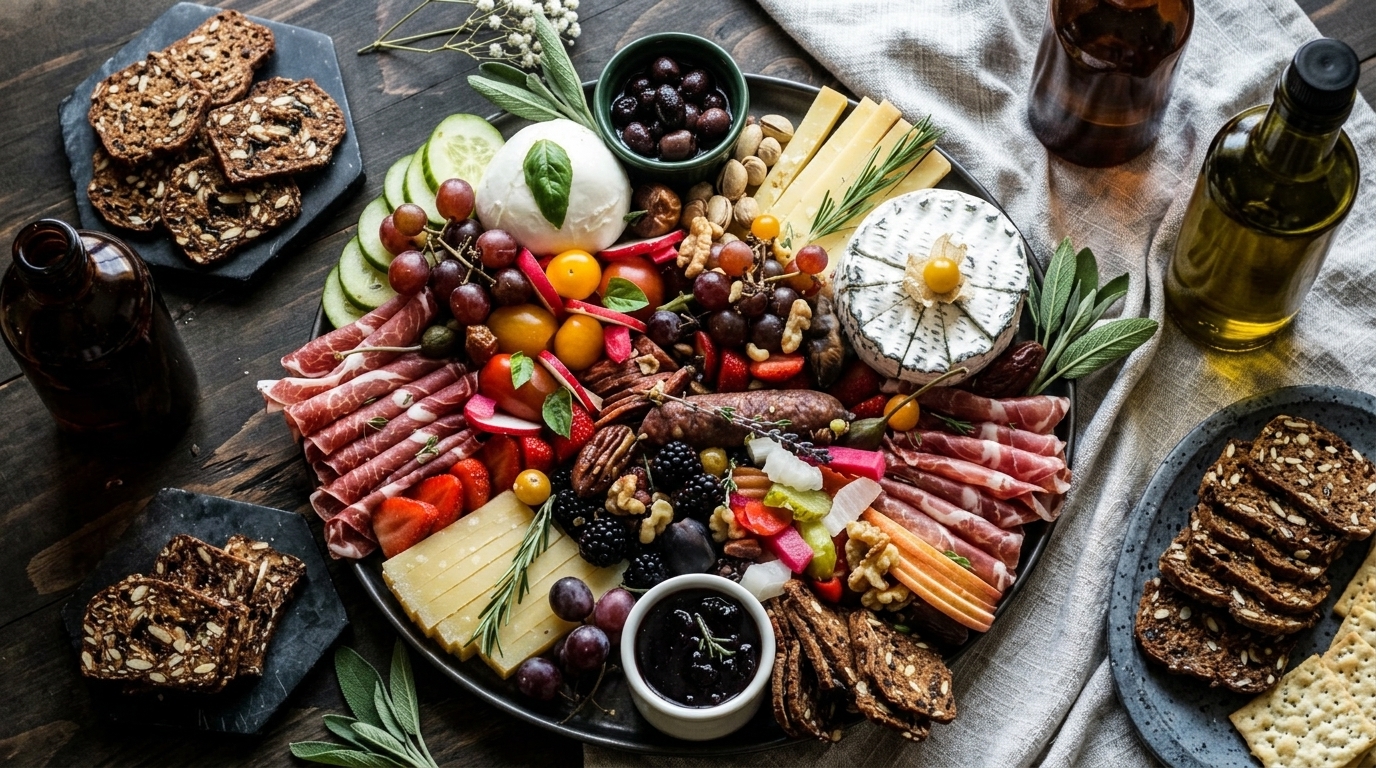
Grazing tables and antipasto boards serve as the visual centerpiece for adult autumn gatherings. However, without strict portion standards, self service boards can quickly erode kitchen profit through uncontrolled guest grazing or excessive prep waste. Operators must design boards with engineered volume ratios.
For a two hour cocktail reception, plan on three to four ounces of combined cheese and charcuterie per guest, supplemented by two ounces of artisan crisps and two ounces of seasonal fruit, olives, and pickled garnishes. Build vertical interest on dark slate boards, wooden platters, or footed stands using dark ceramic ramekins for spreads and dips.
Incorporate high margin house prepared elements that align with the moody aesthetic. House cured bresaola, thinly shaved prosciutto, aged sharp cheddar, and ash ripened goat cheese provide visual drama. Balance these with spiced blackberry compote, whole grain mustard, dark kalamata olives, and roasted pumpkin seeds. Operators can explore our Halloween finger food catering guide for complementary passed bites and our fall party catering guide for comprehensive station layout templates. Every component should be portioned by weight during prep shifts rather than estimated by sight during on site assembly.
Batch Production and Holding Protocols for Savory Hot Items
While ambient grazing tables anchor the room, guests at evening adult events expect warm, satisfying savory bites. The challenge for commercial kitchens lies in delivering high volumes of hot food without tying up line cooks or creating service delays. The solution is modular batch production and strict temperature management.
Focus on items that hold their texture and moisture under heat lamps or inside insulated transport carriers. Excellent options include braised beef short rib sliders on dark brioche rolls, butternut squash and fontina arancini, and wild mushroom tartlets with thyme. Braised fillings can be cooked two days in advance during quiet kitchen hours, improving flavor development while shifting labor away from peak event days. Review our fall soup batch production guide for parallel techniques in high volume cooling and reheating.
Food safety must remain paramount during high volume events. The United States Food and Drug Administration Food Code requires hot foods to be held at 135 degrees Fahrenheit or above, while cold items must remain at 41 degrees Fahrenheit or below. When operating ambient grazing stations without active refrigeration, kitchens must adhere strictly to the four hour time as a public health control rule, discarding any remaining perishable food once the four hour window elapses. Maintaining detailed temperature logs throughout the event protects your guests and your operating license.
Beverage Program Integration: Prebatched Mixology and Average Ticket Growth
Beverage pairings represent the single most effective lever for increasing average guest spend at adult Halloween gatherings. Adding a dedicated autumn cocktail or mocktail program can lift catering package revenue by thirty to forty percent while maintaining pouring costs below eighteen percent.
To avoid bar service bottlenecks, eliminate made to order shaker cocktails in favor of prebatched cocktail and mocktail foundations. Kitchen prep cooks can prepare concentrated syrups and reductions during morning prep blocks. Popular autumn flavor profiles include spiced apple cider reductions, smoked rosemary simple syrups, blood orange shrubs, and activated charcoal infused citrus cordial.
On event day, bar staff simply combine the prebatched foundation with spirits, sparkling water, or dry ginger beer in chilled glassware with single clear ice cubes and herb sprigs. This approach limits guest wait times to under thirty seconds per drink, keeping service lines moving and encouraging steady beverage consumption throughout the event. For further analysis on event beverage pricing and client proposals, consult our catering event profitability guide.
Purchasing Precision, Prep Par Lists, and Discard Waste Controls
Seasonal holiday menus introduce real supply chain risks if inventory is mismanaged. Ordering specialized ingredients that cannot be cross utilized across your regular restaurant or catering menu often results in expensive dead stock sitting in walk in coolers once November arrives.
Protect your margins by establishing strict prep par lists tied directly to contracted guest headcounts. Standardize recipes down to the exact gram or ounce, and consolidate supplier orders across your regular lunch and dinner services. Shared foundation items like roasted squash puree, caramelized onions, and house stock can support both daily dining room service and private event catering.
After each event concludes, conduct an immediate post service audit. Record what returned on platters, what remained untouched in hot boxes, and what was discarded. Operators who track discards using our daily restaurant waste log routine consistently identify overportioning trends within three services, saving thousands of dollars in annual food waste. Precision software like Edesia allows commercial kitchens to translate event menus directly into exact shopping lists, check existing stock before placing orders, and track ingredient costs across multiple local suppliers.
Frequently asked questions
What food cost percentage should commercial caterers target for adult Halloween events?
Commercial kitchens should target a food cost between twenty and twenty four percent for adult Halloween catering. This margin accounts for specialized garnishes and seasonal presentation while leaving sufficient room for prep labor and transport overhead.
How much food should be prepped per guest for a two hour adult cocktail reception?
Plan on three to four ounces of charcuterie and cheese, two ounces of bread or crisps, two ounces of fruit and pickles, and three to four passed warm savory bites per guest. This provides ample satiety without excessive leftovers.
What are the food safety rules for ambient Halloween grazing tables?
According to standard food safety regulations, ambient perishable foods can remain at room temperature for up to four hours under the time as a public health control protocol. After four hours, any remaining food must be discarded.
How can catering kitchens prevent leftover seasonal ingredients from going to waste?
Cross utilize ingredients across both your catering menu and your regular dining room offerings. Use autumn staples like squashes, beets, mushrooms, and braised meats that can easily transition into daily soups, specials, or family style meal prep.
Conclusion
Capturing the full commercial value of adult Halloween demand requires shifting away from novelty gimmicks and embracing disciplined catering systems. By combining moody visual presentations, modular batch prep, strict portion standards, and batched beverage programs, commercial kitchens can deliver memorable guest experiences while securing strong operating profits. Success comes down to repeatable operational systems that control purchasing, reduce food waste, and keep prep labor contained. Visit Edesia at edesia.catering to learn how our kitchen management tools help restaurants and caterers spend less, source smarter, and run a better kitchen every season of the year.
Keep more of what your kitchen earns
Edesia helps you track inventory, reduce waste, compare suppliers, and plan purchases. Catering orders and customer replies are included, too.