Chef-led expertise. Edesia technology.
Restaurant Food Cost Consultant
Keep more of every dollar you sell.
You know your food cost is high. Find out why. Edesia's food cost consulting connects recipes, portions, inventory, waste, and purchasing to the decisions your team makes every day.
For restaurant owners, chefs, and growing hospitality teams.
Start with the real problem
Food cost leaks through small decisions.
Portions creep up. Vendor prices change. Recipes become outdated. Too much gets prepped. Waste goes unrecorded. Inventory counts drift. Each issue looks small until the month-end numbers arrive.
A restaurant food cost consultant examines what should have been used against what was actually used. The difference can point to recipe errors, purchasing problems, unrecorded waste, or weak controls. Accurate counts and current ingredient prices come first.
Sound familiar?
Actual usage exceeds recipe expectations
Prep is discarded at the end of service
Vendor prices change without review
Purchases ignore stock already on hand
What we work on
Restaurant cost control, from purchase to plate.
Follow ingredients through the kitchen, then connect the menu and prep workload to labor. Food and labor belong in the same operating conversation.
Recipe costs & yields
Review ingredient prices, portion sizes, preparation yields, and substitutions against current recipes.
Actual vs. theoretical usage
Compare recipe-based expectations with inventory movement for the same period and scope.
Waste & overproduction
Find recurring spoilage, excessive prep, remakes, and ingredients that are bought but rarely used.
Purchasing & receiving
Review order quantities, vendor pricing, delivery checks, and the use of existing stock.
Menu economics
Assess pricing, ingredient overlap, sales mix, and contribution before making changes to the menu.
Labor & prime cost
Identify restaurant labor cost reduction opportunities in scheduling, overtime, prep, and workflow. Agree on which costs your prime cost reporting includes.
From review to routine
Leave with something your team can use.
We agree on the scope, deliverables, and implementation responsibilities around your business. The goal is a working plan that your managers can carry into the next shift.
Book a DemoA baseline for ingredient cost and usage
A prioritized list of cost drivers
Purchasing, portion, and waste controls
Food and labor review routines
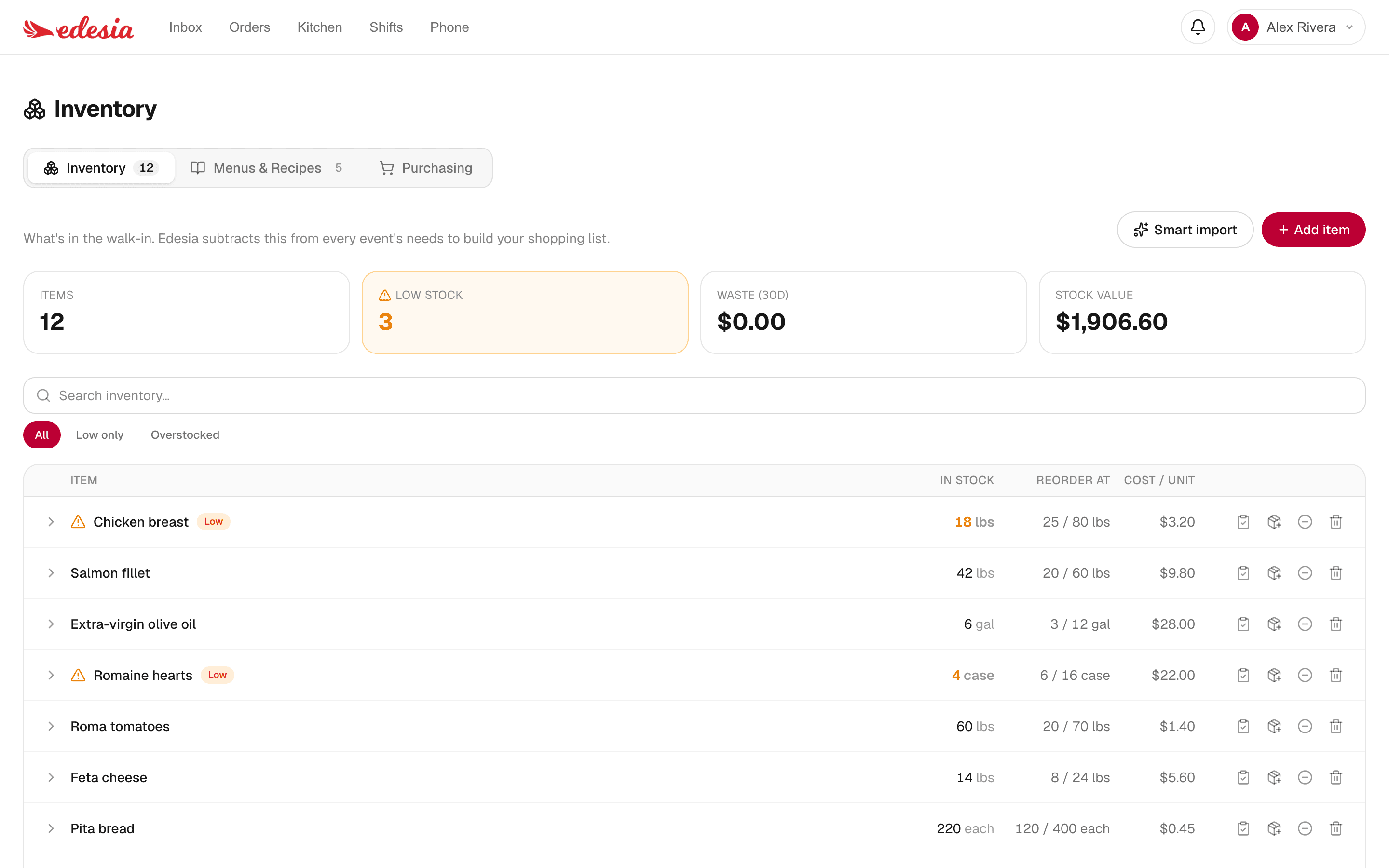 The Edesia kitchen workspace
Expertise + an operating system
Make cost control part of the daily routine.
To reduce restaurant food cost, the findings have to change ordering, prep, and inventory habits. Edesia supports stock visibility, supplier sourcing, purchasing, and waste tracking so those controls can become part of the way your team works.
Chef Chris Dumesnil brings the culinary perspective. Edesia connects it to the day-to-day information your food business uses.
Book a DemoBefore we talk
Questions, answered.
How do you reduce restaurant food cost without lowering quality?
Start with waste, overproduction, portion consistency, recipe accuracy, and purchasing habits. Removing spending that does not improve the guest experience is different from changing ingredient quality. Recommendations should reflect the concept and actual operating data.
What is theoretical versus actual food cost?
Theoretical usage estimates ingredients required by recorded sales and standard recipes. Actual usage comes from inventory movement, purchases, and relevant adjustments. Compare the same period and use consistent units and valuation before interpreting the variance.
Does food cost consulting also cover labor?
It can. Menu complexity, prep planning, station workflow, and sales patterns affect staffing needs. Food and labor are reviewed together when prime cost or kitchen workload is part of the agreed scope.
Let's look at your operation
A better next step starts with a conversation.
Book a Demo to discuss your restaurant's priorities and see where Edesia fits your business.
- Start with your priorities
- See the relevant Edesia workflows
- Discuss a practical scope for support
Three quick questions help us tailor the conversation.
Keep exploring