Fall Luncheon Catering Menu Ideas: How Commercial Kitchens Build High Margin Daytime Buffets and Drop Off Systems
Discover how commercial kitchens engineer profitable fall luncheon catering menus, master batch prep for daytime drop off events, and protect food margins.
Photo by Yukiko Kanada on Unsplash.
Autumn daytime catering brings a welcome shift in kitchen revenue. Between corporate board meetings, donor appreciation luncheons, faculty symposiums, and seasonal client gatherings, lunch orders offer dependable midweek volume without the late night staffing strains of evening banquets. Yet daytime events introduce their own distinct operational bottlenecks. Kitchen teams must prep, cook, package, and transport complete multicourse menus while maintaining morning restaurant prep or standard breakfast shifts.
When commercial kitchens fail to engineer their daytime luncheon offerings around labor efficiency and ingredient cross utilization, margins quietly vanish. Small ticket customizations, complex plating requirements, and separate procurement streams for lunch versus dinner quickly inflate prime costs. Turning autumn daytime catering into a consistent profit center requires three foundational disciplines: engineered core menus that share bulk roasted staples across courses, disciplined morning batch production schedules that safeguard hot holding quality, and reliable insulated delivery workflows. By applying strict ingredient yield management and modular packaging systems, operators can capture lucrative lunchtime demand while preserving target kitchen margins below twenty eight percent.
Menu Engineering for High Margin Autumn Luncheon Packages
A profitable luncheon menu starts with deliberate ingredient clustering rather than an sprawling selection of bespoke dishes. Corporate event planners and office coordinators typically want three core elements: an elevated seasonal protein, a hearty grain or roasted vegetable foundation, and a crisp autumn salad paired with artisan bread. When operators offer too many unrelated entree choices, line cooks face fragmented prep lists that derail morning efficiency.
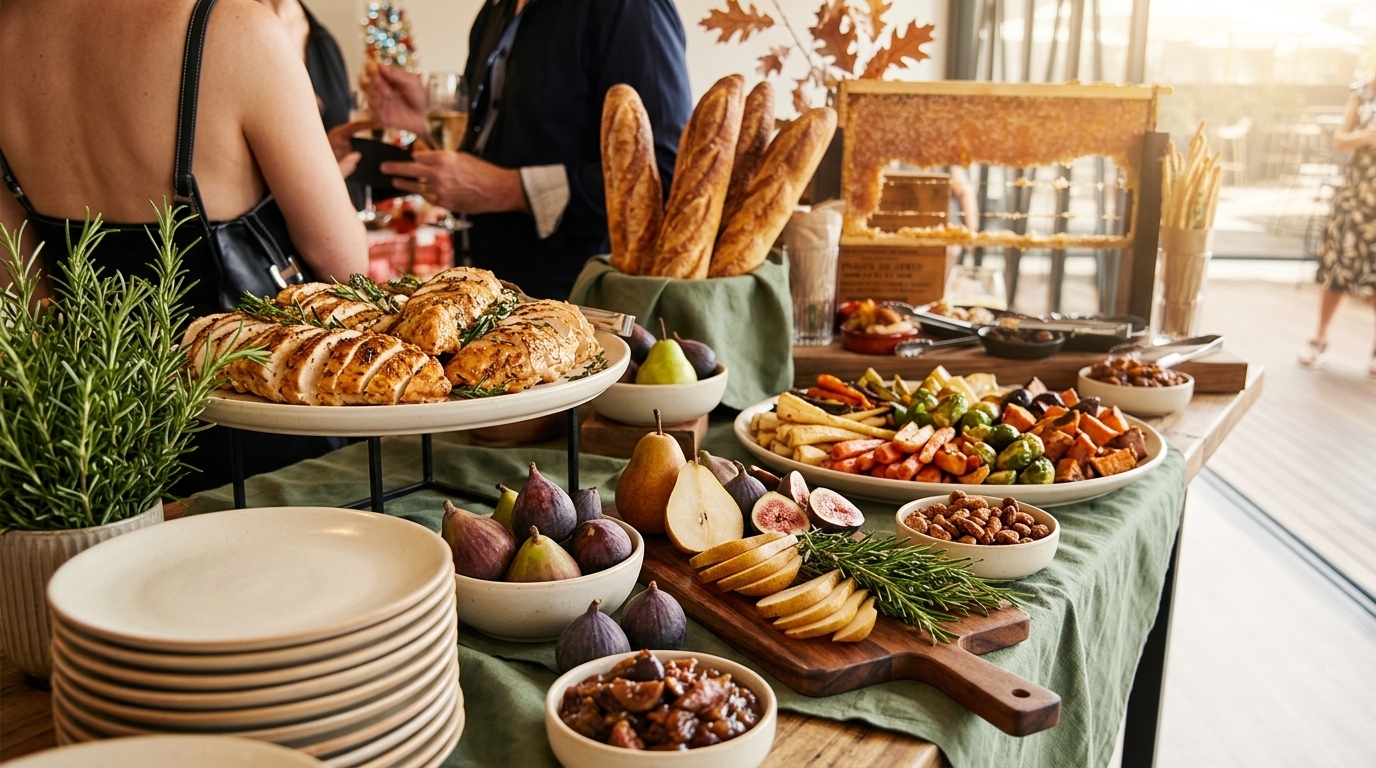
To maintain a food cost between twenty two and twenty six percent, anchor your autumn luncheon packages around versatile proteins and seasonal starches that hold quality exceptionally well in hot boxes. Herb roasted chicken breast seasoned with garlic and fresh rosemary yields clean, uniform slices that present elegantly on family style platters or individual executive bento boxes. Pair this with cider glazed pork tenderloin or a wild mushroom and farro pilaf for vegetarian guests.
Both entrees can draw from identical foundation prep: a base of diced roasted butternut squash, caramelized shallots, and chopped herbs. If you prepare autumn family style dinners using our Easy Fall Meals Guide, you already know the commercial value of dual purpose bulk roasting. Standardizing on three set menu tiers rather than open ended catering menus eliminates purchasing guesswork and lets you negotiate bulk pricing with suppliers ahead of peak holiday rushes.
Morning Batch Prep and Kitchen Station Workflows
The greatest threat to lunchtime catering profitability is labor friction during morning prep. If catering orders force your prep cooks to abandon their daily restaurant pars, your evening service suffers from delayed mise en place and elevated overtime. Successful kitchens schedule daytime catering prep as an early morning assembly line that concludes before the main restaurant line opens at eleven in the morning.
Establish a rigid prep sequence based on oven occupancy and holding stability. At six in the morning, start with dense root vegetables and sheet pans of peeled carrots, parsnips, and cubed squash, which roast uniformly at four hundred degrees Fahrenheit. Once the ovens clear at seven thirty, transition immediately to roasting seasoned proteins on parchment lined sheet pans. While proteins rest and slice, prep cooks assemble salads and cold side dishes at the pantry station.
Tossing delicate greens hours before an event leads to soggy leaves and customer complaints. Instead, pack bulk greens dry with autumn toppings like toasted pumpkin seeds, dried cranberries, and shaved aged gouda in separate sealed inserts. Dressings should always travel in portioned squeeze bottles or wide mouth plastic containers to be applied on site. If your kitchen produces seasonal soups, review our Fall Soup Production Guide for safe batch chilling protocols that allow stocks and purees to be made days in advance rather than under morning deadline pressure.
Drop Off Logistics and Food Safety Holding Protocols
Catering excellence is measured by food temperature and presentation at the client delivery site, not at your kitchen expediting pass. Under United States Food and Drug Administration food safety guidelines, hot foods must remain at or above one hundred thirty five degrees Fahrenheit throughout staging and transit. For drop off catering without dedicated service staff, the transit window represents your highest risk zone.
Preheat insulated cambros or thermal delivery carriers with hot water pans for twenty minutes before loading hotel pans. Ensure each shallow pan is sealed with heavy aluminum foil and labeled with item name, guest count, and production time. When packing roasted sliced chicken or pork tenderloin, add a splash of strained warm poultry stock beneath the protein slices to preserve moisture during transit without diluting seasoning.
For buffet setups where clients serve themselves over sixty to ninety minutes, provide disposable chafing stands with two hour ethanol fuel canisters. Include simple, printed setup cards that instruct office managers where to place chafing fuels and how to unseal pans. If you offer chilled drop off packages designed for client reheating, provide clear oven reheating instructions with target internal temperatures measured by a digital probe thermometer. Implementing structured drop off procedures prevents the emergency refunds and rushed service calls that eat into catering margins.
Managing Luncheon Catering Inquiries with Edesia
Daytime catering inquiries often arrive on short notice from administrative assistants who need immediate quotes, itemized allergen breakdowns, and guaranteed delivery times. When busy chefs and general managers spend forty minutes calculating recipe costs, checking walk in inventory, and drafting email proposals, high margin orders slip away to competitors who respond within the hour.
This is where automated kitchen management transforms catering profitability. Edesia helps commercial kitchens turn incoming lunch orders directly into consolidated shopping lists, cross check existing inventory levels before ordering from suppliers, and price custom menu tiers accurately against real time ingredient costs. By automating catering quotes and supplier purchasing, Edesia frees operators from tedious administrative overhead so culinary teams can focus on cooking exceptional food.
If your team is also organizing holiday group feasts or Friendsgiving packages this quarter, explore our Friendsgiving Catering Menu Engineering Guide to learn how to structure profitable tiered packages. Visit Edesia to see how smart inventory tracking and automated catering inquiry workflows streamline your commercial kitchen operations.
Frequently asked questions
What food cost percentage should commercial kitchens target for fall luncheon catering?
Operators should target a food cost between twenty two and twenty six percent for daytime catering buffets. Because luncheons typically require smaller protein portions than evening banquets, six ounces of cooked protein paired with seasonal grains and roasted root vegetables keeps plate costs tightly controlled.
How far in advance should commercial caterers prepare autumn luncheon salads and cold sides?
Vegetable roasting and grain cooking can be completed twenty four hours in advance and chilled safely below forty one degrees Fahrenheit. However, leafy greens should be washed and crisped the morning of delivery, with dressings and crunchy toppings packaged separately until client service.
What are the best hot holding techniques for drop off catering without service staff?
Preheat commercial insulated delivery boxes with hot water pans prior to loading. Pack hot proteins in shallow hotel pans with a small amount of warm seasoned stock to retain moisture, and supply clients with two hour disposable chafing fuel kits along with clear setup directions.
Conclusion
Autumn luncheons provide commercial kitchens and restaurants with high margin revenue during otherwise quiet weekday daytime hours. By engineering tightly focused menus around shared roasted autumn staples, instituting disciplined morning batch prep routines, and protecting food safety throughout drop off logistics, operators build a sustainable catering division that boosts bottom line profitability without disrupting core dinner service. With modern purchasing and inventory tools like Edesia, you can quote rapidly, purchase accurately, and deliver flawless seasonal dining experiences across your market.
Keep more of what your kitchen earns
Edesia helps you track inventory, reduce waste, compare suppliers, and plan purchases. Catering orders and customer replies are included, too.