Healthy Fall Meals: How Commercial Kitchens Build High Margin Grain Bowls, Warm Salads, and Batch Roasted Menus
Learn how commercial kitchens engineer profitable healthy fall meals, balance grain bowl food costs below twenty five percent, and streamline roasted batch prep.
Photo by Louis Hansel on Unsplash.
Photo by Louis Hansel on Unsplash
When autumn arrives, commercial kitchen menus instinctively pivot toward heavier braises, cream loaded soups, and carb dense holiday feasts. Yet guest demand tells a significantly different story. Pinterest search trends show searches for healthy fall meals surged 300 percent over the past month. Guests are actively searching for nourishing, colorful, vegetable forward plates that feel comforting without feeling sluggish.
For restaurant operators and commercial caterers, this shift presents an exceptional profit opportunity. Healthy fall meals centered on ancient grains, roasted root vegetables, and nutrient dense legumes carry dramatically lower ingredient volatility than prime cuts of meat. However, building a successful healthy fall program requires operational discipline. Without clear portioning rules, expensive garnishes like toasted pepitas or goat cheese can erode margins, while delicate baby greens can wilt during delivery holding. By establishing structured batch roasting routines, cross utilizing core ingredients, and controlling scoop sizes, your kitchen can meet autumn health demand while maintaining food costs well below twenty five percent.
1. The Autumn Nutrition Opportunity: Understanding Guest Demand
Every October, restaurant menus fill up with rich casseroles, braised meats, and pumpkin pastries. While those comfort classics have their place on the menu, a large segment of corporate catering clients and weekday dinner guests want balanced, energizing alternatives. In the United States, official Pinterest Trends data reveals a 300 percent month over month jump in searches for healthy fall meals. Diners want dishes that highlight seasonal autumn crops such as roasted butternut squash, caramelized Brussels sprouts, sweet parsnips, and dark leafy greens, paired with warm grains and lean proteins.
From a restaurant consulting perspective, healthy seasonal dishes offer commercial kitchens two distinct advantages. First, they attract corporate drop off catering orders from medical offices, tech campuses, and professional firms that require wholesome, dietary inclusive lunches. Second, seasonal vegetables and ancient grains provide remarkable cost stability compared to wholesale beef and dairy. The operational challenge lies in portion consistency and holding quality. Kitchen teams often struggle when cold salad prep clashes with hot line ticket times. By developing modular recipes where hot roasted vegetables and warm grain bases meet fresh chilled greens, kitchen lines can assemble complex seasonal plates in under two minutes.
2. The Three Tier Plate Architecture: Base, Bulk, and Garnish
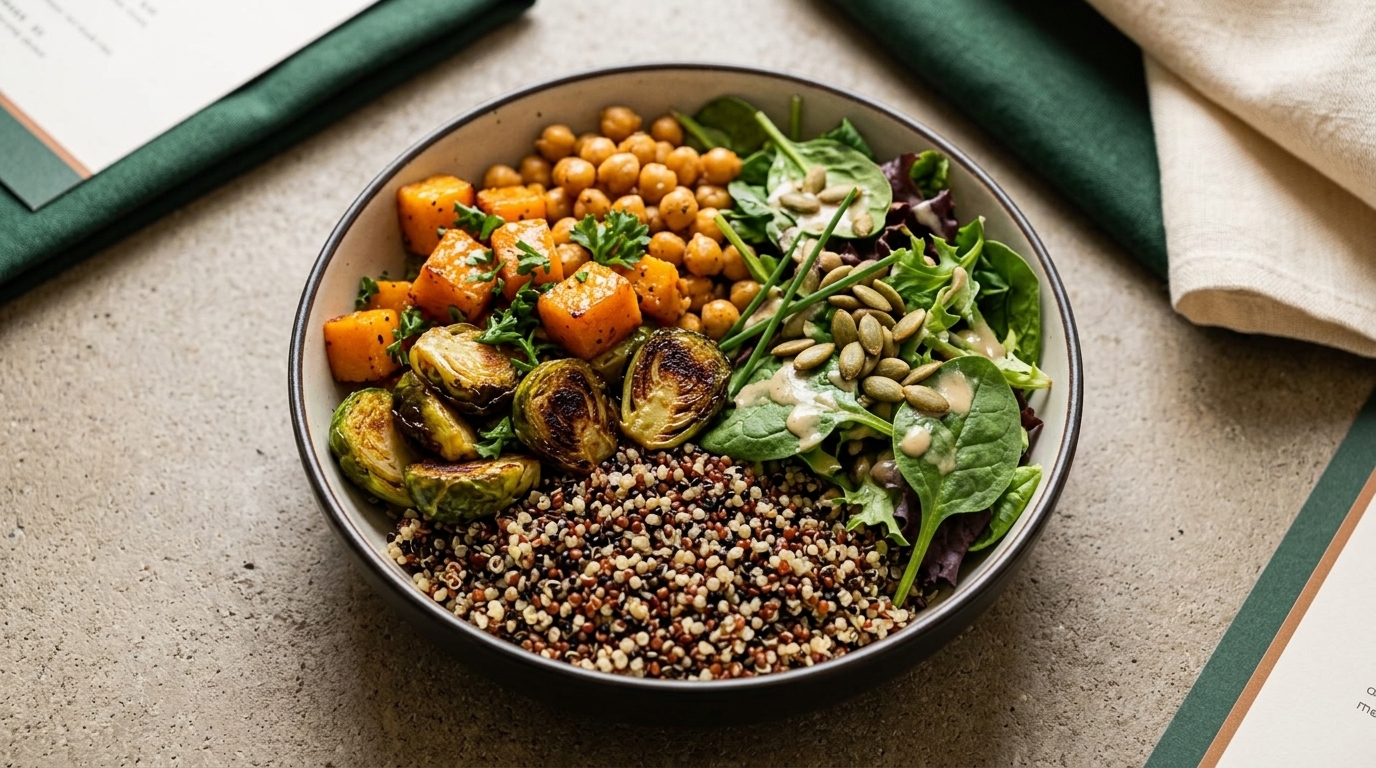
To keep food costs under twenty five percent and line assembly effortless, commercial kitchens should build healthy fall bowls around a disciplined three tier architecture: foundation grains, roasted seasonal bulk, and high flavor garnishes.
-
Foundation Grains (Five Ounces): Anchor the bowl with cost effective, shelf stable whole grains. Tri color quinoa, farro, brown rice, or sprouted wild rice blends provide rich nutty flavor and excellent holding texture. At wholesale volume, cooked ancient grain foundations cost between thirty and forty five cents per serving. For operators serving gluten sensitive guests, maintaining an entirely wheat free grain base simplifies prep and eliminates cross contact concerns.
-
Roasted Seasonal Bulk (Six Ounces): The visual and caloric heart of the dish consists of seasonal autumn vegetables roasted in olive oil, sea salt, cracked pepper, and fresh woody herbs like rosemary and thyme. Combine sweet cubed butternut squash, halved Brussels sprouts, diced sweet potatoes, and golden beets. Because seasonal roots cost between sixty cents and one dollar per pound wholesale, a generous six ounce vegetable portion costs less than sixty cents while delivering tremendous plate volume and visual appeal. See our guide on easy fall meals for additional seasonal vegetable frameworks.
-
High Flavor Garnishes and Dressings (Two Ounces): Flavor complexity comes from concentrated accents rather than excessive portion weight. Use standardized two tablespoon disher scoops for toasted pepitas, dried cranberries, or crumbled sheep milk feta. Pair with two ounces of house emulsified maple cider vinaigrette or lemon tahini dressing. These accents cost approximately forty to fifty cents per bowl.
Total plate cost for this complete vegetarian foundation totals approximately one dollar and forty five cents. Selling the bowl for fourteen to sixteen dollars yields a food cost below twelve percent. When guests add four ounces of sliced grilled chicken breast or warm spiced chickpeas, total food cost remains comfortably beneath twenty two percent.
3. Batch Roasting Standards and Safe Two Stage Cooling
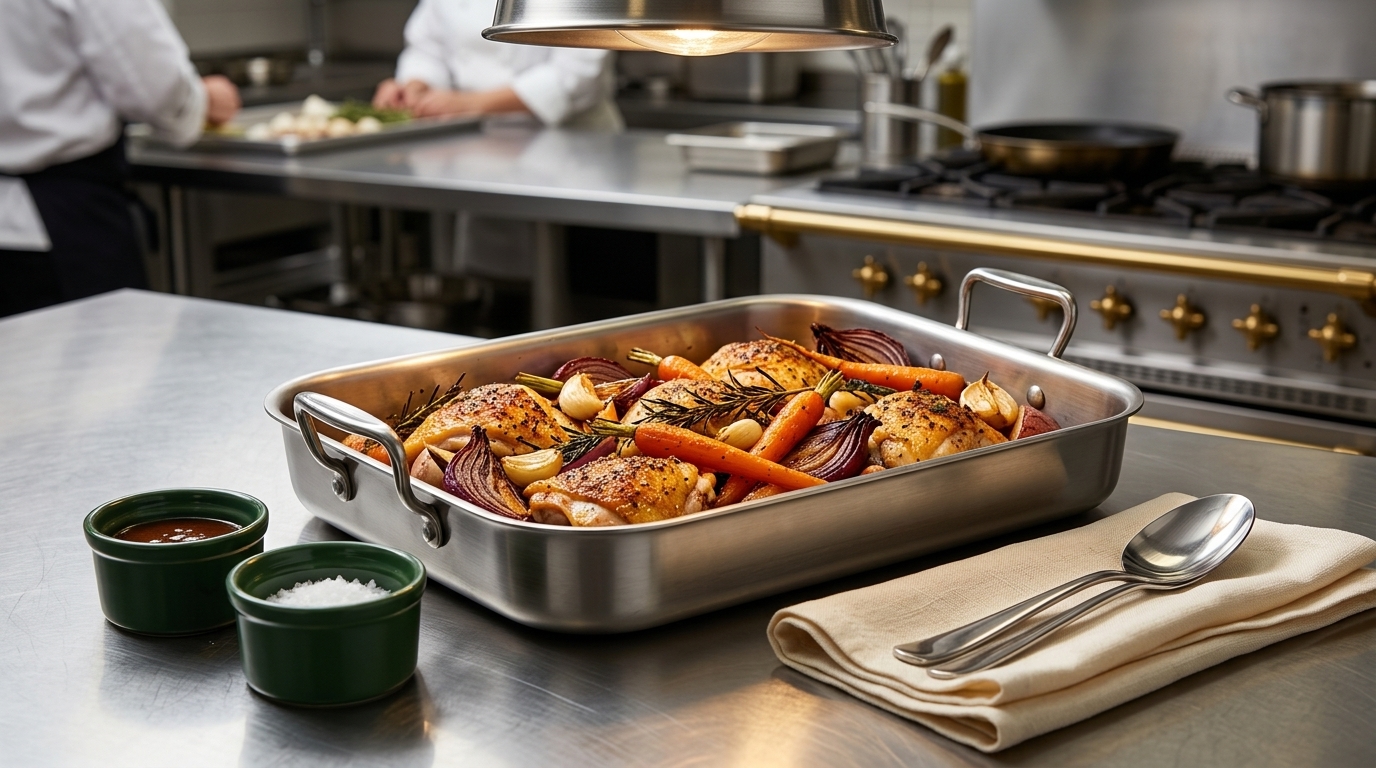
The key to making healthy fall meals commercially viable is morning batch roasting. Cooking root vegetables to order slows down ticket times and creates inconsistent caramelization. Instead, prep cooks should roast full sheet pans of vegetables during early morning prep windows.
To achieve golden brown exterior caramelization without turning vegetables mushy, avoid overcrowding sheet pans. Space cubed squash and Brussels sprouts in a single layer with at least a quarter inch between pieces. Roast in a high heat convection oven at 400 degrees Fahrenheit or a combi oven set to thirty percent moisture. This method caramelizes natural plant sugars rapidly while preserving crisp tender vegetable texture.
Commercial kitchens managing batch prep must strictly comply with two stage cooling protocols to guarantee food safety. Cool roasted vegetables from 135 degrees Fahrenheit down to 70 degrees within two hours, and from 70 degrees down to 41 degrees Fahrenheit within four additional hours. Spread hot roasted vegetables onto shallow, chilled sheet pans rather than deep plastic storage bins, and place them immediately into walk in cooling racks with adequate air circulation.
Cross utilization further protects your food cost. Diced roasted sweet potatoes and squash that remain unsold after two services can be quickly blended into velvety vegetable purees for our commercial kitchen fall soups. Tracking vegetable trimmings and unused daily batches in a daily restaurant waste log ensures prep pars reflect real register sales rather than kitchen guesswork.
4. Packaging and Delivery Systems for Catering and Takeout
Healthy fall meals are especially popular for drop off corporate catering, where clients expect warm, vibrant food that travels well without becoming soggy. Packaging choices make or break the guest experience.
For off site catering and takeout delivery, use wide, shallow compostable fiber bowls with vented lids. Deep narrow containers trap steam, which wilts delicate baby greens and makes roasted squash soggy during transit. Pack vinaigrettes and dressings in separate compostable two ounce portion cups with snap tight lids so guests can dress their bowls immediately before eating. When packaging individual boxed lunches for corporate clients, keep roasted warm grains and vegetables separate from tender salad greens until final station assembly. For bulk buffet setups, present grains and roasted vegetables in separate shallow hotel pans inside insulated hot boxes, with dressing carafes and seed garnishes displayed alongside. Review our operational breakdown in the work meals corporate catering guide for packing station templates.
Using kitchen management software like Edesia eliminates inventory guesswork across multiple catering jobs. Edesia automatically aggregates confirmed guest counts across orders, converts upcoming event menus into consolidated produce shopping lists, and tracks ingredient prices across local food distributors. That automation prevents over purchasing perishable autumn greens while locking in wholesale volume pricing on root vegetables and ancient grains.
Frequently asked questions
How do commercial kitchens keep food costs below twenty five percent on healthy fall meals?
Operators achieve target margins by anchoring plates on low cost foundation bases like ancient grains, legumes, and bulk roasted fall squash, while using standardized disher scoops for higher cost items like nuts, seeds, and lean proteins.
Which autumn produce items offer the best yield and holding stability for meal service?
Hard winter squashes like butternut and kabocha, dense root vegetables like carrots and parsnips, and hearty crucifers like Brussels sprouts offer edible yields exceeding eighty five percent after trimming and hold excellent texture in hot or cold holding wells.
How can kitchen teams accommodate gluten free and dairy free requests without slowing line ticket times?
Standardize on naturally gluten free grain foundations such as quinoa, brown rice, and wild rice, keep emulsified vinaigrettes dairy free by using tahini or cider oil bases, and package dairy garnishes like goat cheese or feta in separate ramekins.
Conclusion
Healthy fall meals allow independent restaurants and commercial caterers to capture surging seasonal demand without complicating daily kitchen operations. By designing balanced bowls around low cost ancient grains, standardized batch roasted vegetables, and portion controlled seed and dressing garnishes, your kitchen can deliver premium nutritional value while maintaining food costs under twenty five percent.
Ready to streamline your kitchen purchasing, eliminate seasonal prep waste, and scale your catering revenue? Explore how Edesia automates menu costing, inventory counts, and distributor orders for busy commercial kitchens.
Keep more of what your kitchen earns
Edesia helps you track inventory, reduce waste, compare suppliers, and plan purchases. Catering orders and customer replies are included, too.