Holiday Cocktail Meatballs for Commercial Catering: Batch Roasting Yields, Glaze Stability, and Chafing Dish Thermal Control
Learn how commercial kitchens engineer profitable holiday cocktail meatballs with batch convection roasting, stable glaze emulsions, and chafing dish thermal control.
Photo by Clark Douglas on Unsplash.
Cocktail meatballs are a cornerstone of winter catering menus, corporate holiday parties, and evening receptions. Guests expect them, event planners order them by the hundreds, and kitchen teams appreciate their make ahead convenience. Yet beneath their approachable profile lies a series of classic operational traps. Unmonitored batch baking can cause excessive fat shrinkage and moisture loss, turning tender ground meat into dry, rubbery nuggets. Sugary holiday glazes containing cranberry preserves, chili sauce, or brown sugar scorch rapidly in shallow chafing dishes over open Sterno flames. Without disciplined portion standards and smart buffet presentation, grazing guests can wipe out a ninety minute catering allocation in twenty minutes.
Managing cocktail meatballs profitably requires a systematic commercial approach. By engineering balanced meat blends with moisture retaining panades, calibrating convection oven roast times, stabilizing glaze emulsions with acid and natural pectin, and enforcing dual pan chafing dish thermal buffers, commercial kitchens can deliver exceptional flavor while holding food cost below eighteen percent. Here is the operational framework to prep, cook, hold, and merchandise high margin holiday cocktail meatballs at scale.
Ground Meat Formulation, Panade Ratios, and Cooked Protein Yields
The profitability of commercial meatball production begins at the butcher block. Ground meat shrinks significantly during cooking as intramuscular fat melts and moisture evaporates. Using an 80/20 ground beef blend alone often results in a twenty to twenty five percent cooked weight loss. That shrinkage directly inflates your plate cost. To protect both margin and texture, commercial caterers rely on a strategic protein blend paired with a milk soaked panade.
A blend of seventy percent ground beef (80/20 chuck) and thirty percent ground pork shoulder provides the ideal balance of savory beef depth, tender pork fat, and gelatinous mouthfeel. Ground pork fat renders at a slightly lower temperature than beef tallow, creating a more tender bite that holds up during prolonged hot holding.
To counteract moisture loss, incorporate a standard breadcrumb or torn bread panade hydrated with whole milk and liquid whole eggs. The starches in the bread gelatinize during baking, capturing fat and rendered juices within the meatball structure rather than allowing them to pool on the sheet pan. A reliable commercial ratio per ten pounds of ground meat includes:
- Ten pounds combined ground meat (seven pounds beef, three pounds pork).
- One and one quarter pounds panko breadcrumbs or day old artisan bread crumbs.
- Two cups cold whole milk or unsalted poultry stock.
- Six large whole eggs lightly beaten.
- Three ounces grated aged parmesan cheese for umami depth.
- Two ounces kosher salt, half an ounce freshly ground black pepper, and granulated garlic.
This panade formula raises usable cooked yield from seventy five percent to nearly eighty eight percent. Because breadcrumbs and dairy cost a fraction of raw ground meat per pound, this technique drops baseline raw material cost by fifteen percent before cooking even starts. Learn more about recipe plate costing in our comprehensive guide on how to work out food cost percentage.
High Volume Convection Roasting and Quick Chill Logistics
Pan frying meatballs on a commercial stovetop is completely impractical for holiday catering orders exceeding five hundred pieces. It requires constant chef supervision, produces uneven browning, and ties up high heat ranges during busy prep shifts. High temperature convection roasting on parchment lined sheet pans is the standard for high volume commercial efficiency.
Standardize raw meatball portioning using a number 60 portion scoop (measuring roughly point six ounces) or a number 50 scoop (measuring point eight ounces). A point eight ounce raw ball cooks down to approximately point seven ounces, producing the ideal bite size appetizer for cocktail picks.
Follow this step by step roasting and cooling protocol:
- Sheet pan spacing: Line commercial full size sheet pans with unbleached parchment paper. Arrange meatballs in ten rows of ten, yielding one hundred pieces per full sheet pan. Ensure meatballs do not touch, allowing circulating dry oven heat to caramelize surfaces rapidly.
- Oven calibration: Preheat convection ovens to 400 degrees Fahrenheit (204 degrees Celsius) with the fan set to high. Roast for twelve to fourteen minutes until exterior surfaces develop a deep golden crust and internal temperature reaches 160 degrees Fahrenheit (71 degrees Celsius). Residual carryover heat will finish pasteurization to 165 degrees Fahrenheit.
- Rendered fat drainage: Immediately upon pulling pans from the oven, transfer roasted meatballs into perforated hotel pans set over solid drain pans. Allow excess surface fat to drip away for three minutes. Do not leave roasted meatballs sitting in rendered grease, which softens the exterior crust and muddles glaze adherence.
- Two stage food safe cooling: If preparing batches for future events, spread roasted meatballs in single layers across clean chilled sheet pans. Place in a walk in cooler or blast chiller, ensuring internal core temperatures drop from 135 degrees Fahrenheit to 70 degrees Fahrenheit within two hours, and from 70 degrees Fahrenheit to 41 degrees Fahrenheit within an additional four hours. Once chilled, vacuum seal or bag in standard five pound portions and freeze for up to sixty days.
Glaze Engineering: Emulsion Stability, Sugar Burn, and Acid Balance
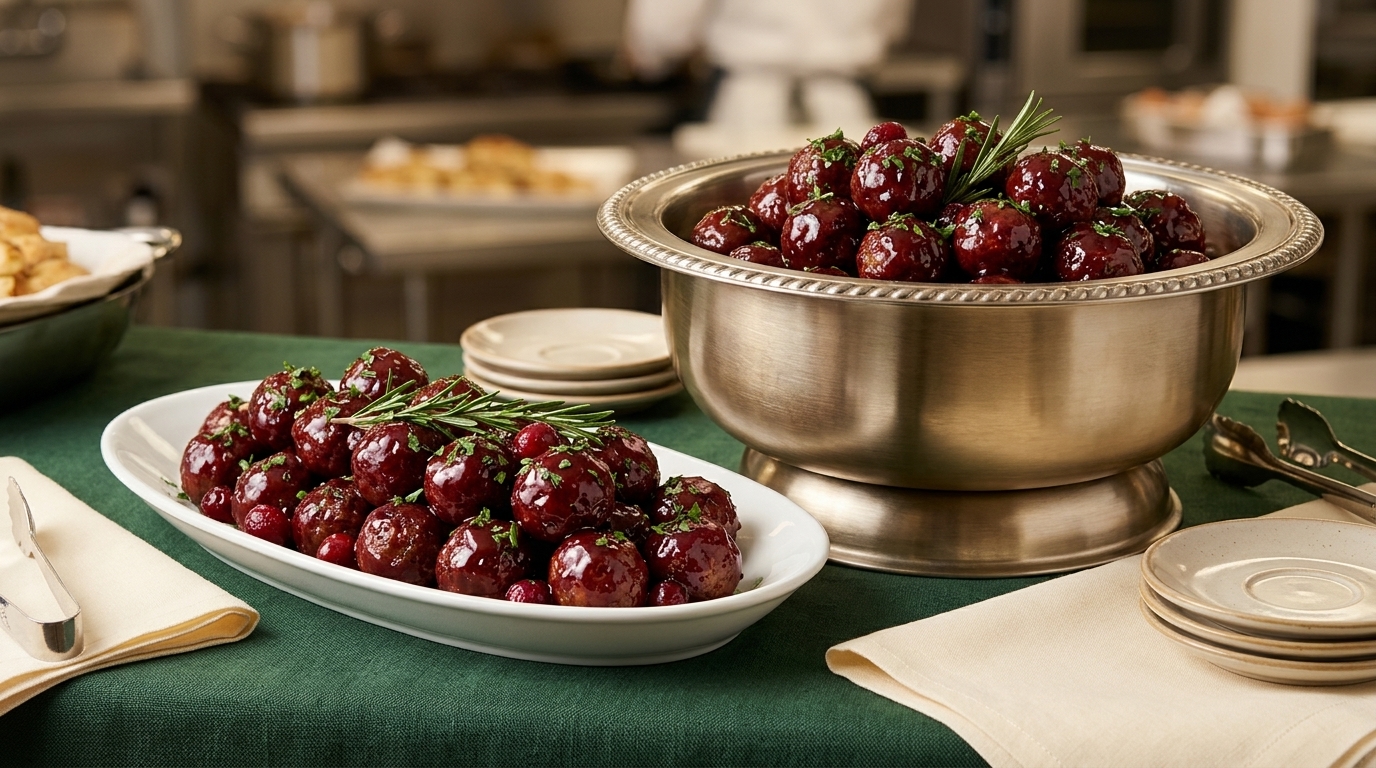
The sauce makes or breaks catering meatballs on a buffet. Most commercial operators default to a classic holiday glaze combining canned jellied cranberry sauce, tomato chili sauce, and brown sugar. While beloved by event guests, high sugar glazes create severe operational headaches in banquet service.
When exposed to direct heat in a chafing dish, simple sugars caramelize, darken, and ultimately scorch onto the stainless steel well. Scorched glaze imparts an acrid, burnt aroma throughout the venue and makes pan cleanup agonizing for dishwashers. Furthermore, watery sauces thin out under steam, running off the meat and leaving meatballs looking dull and gray.
To engineer a resilient catering glaze, kitchen teams must manage viscosity, acidity, and thermal stability:
- Pectin and starch binding: Utilize whole berry cranberry sauce combined with a modified cornstarch slurry or citrus pectin. Cook the sauce base in a steam jacketed kettle or heavy stockpot until glossy and thick enough to coat the back of a spoon (a light nappe). As the sauce holds in the chafing dish, the starch network prevents syneresis (water weeping).
- Acid balance: Cut heavy sweetness by adding apple cider vinegar, Dijon mustard, and a splash of fresh orange juice. A pH around four point zero brightens savory notes, cuts rich pork fat, and prevents the glaze from tasting like candy.
- Glazing technique: Never boil meatballs in the glaze for extended periods, which breaks down the meat binder and muddies the sauce. Instead, reheat chilled cooked meatballs separately in a combi oven or covered hotel pan with a splash of rich stock until hot, then gently fold into warm glaze just prior to pan replenishment. For related menu planning frameworks, see our catering menu planning guide.
Chafing Dish Thermal Control and Water Bath Management
Thermal management at off site catering venues separates professional operators from amateur setups. Chafing dishes are designed solely to maintain hot holding temperatures above 135 degrees Fahrenheit (57 degrees Celsius). They cannot safely reheat chilled food from cold storage.
When serving thick, glazed items like cocktail meatballs, traditional dry holding or improper water bath levels guarantee scorched food and cold centers. Commercial catering supervisors must enforce strict hot holding protocols:
- Double pan water bath buffering: Always utilize a water pan filled with at least one inch of hot water (heated to roughly 180 degrees Fahrenheit before lighting Sterno cans). Never place a food insert directly into an empty chafer well. For extra temperature moderation, float a two inch deep half pan inside a four inch deep water pan. The steam buffer distributes heat evenly across the stainless steel bottom without hot spots.
- Shallow pan replenishment: Avoid dumping two hundred meatballs into a deep four inch full pan. Deep pans trap dense heat at the bottom while allowing surface meatballs to cool and dry out. Instead, deploy shallow two and a half inch half pans holding no more than fifty to sixty meatballs at a time. Rotate fresh, freshly glazed pans from the on site holding cabinet every twenty to thirty minutes.
- Steam lid discipline: Keep chafing dish roll top lids closed between rush periods. Open buffet lids vent moisture, causing surface glaze to form a tough skin. Attendants should stir gently every ten minutes with a heat resistant silicone spatula to redistribute glaze without bruising the tender meat.
Portion Standards, Buffet Merchandising, and Food Cost Control
Meatballs are high appeal comfort food, meaning uncontrolled self serve buffets can quickly destroy catering profit margins. When faced with large tongs and generous dinner plates, guests frequently scoop seven to eight meatballs, treating the appetizer station like a main course.
Controlling portions requires subtle operational nudges rather than restrictive signage:
- Utensil sizing: Replace large tongs or eight ounce serving spoons with small two ounce solid ladles or four inch bamboo tongs. Smaller serving tools slow down guest plate filling and naturally guide guests toward three to four pieces.
- Individual tasting vessels: For high end corporate receptions, eliminate chafing pans altogether. Pre portion three glazed meatballs into bamboo boats, ceramic tasting spoons, or clear compostable cups with an inserted decorative skewer. This visual portion control locks food cost precisely to guest count while elevating perceived presentation value. Review our buffet setup guide for station layouts that defend food margins.
- Portion modeling: Model three to four meatballs per guest for two hour cocktail parties where other passed appetizers are offered. If meatballs serve as the primary heavy protein, allocate five to six pieces per person. At four meatballs (point seven ounces cooked each), total meat allocation is two point eight ounces per guest.
- Cost breakdown: At wholesale ingredient prices, four meatballs and two ounces of scratch cranberry chili glaze cost approximately one dollar and forty cents total. Merchandised within an appetizer package at six dollars and fifty cents per guest, this dish achieves an eighty percent gross margin and a stellar twenty one point five percent food cost.
Frequently asked questions
What is the best ground meat blend for commercial catering meatballs?
A combination of seventy percent ground beef (80/20 chuck) and thirty percent ground pork shoulder provides ideal moisture retention, savory richness, and structural integrity during extended hot holding.
How do you prevent sweet glazes from scorching in buffet chafing dishes?
Maintain at least one inch of active hot water in the chafing water pan, use shallow two and a half inch food pans, and fold meatballs into warm glaze just before service rather than simmering them over direct flame.
How many cocktail meatballs should a caterer plan per guest?
Plan three to four meatballs (roughly three ounces total cooked protein) per person for cocktail receptions with multiple appetizers. For cocktail parties where meatballs are the primary hot protein, increase allocation to five or six pieces.
Can catering cocktail meatballs be cooked and frozen ahead of time?
Yes. Roast meatballs completely to 160 degrees Fahrenheit, chill rapidly within two hours to 70 degrees Fahrenheit and under 41 degrees Fahrenheit within four hours, then vacuum pack and freeze for up to sixty days. Reheat in sauce before service.
Conclusion
Holiday cocktail meatballs remain an indispensable catering asset when managed with precise kitchen discipline. By calculating accurate cooked yields across beef and pork blends, roasting on parchment lined sheet pans, engineering acid balanced glazes that resist chafing dish scorching, and deploying shallow pan rotation, commercial kitchens can easily scale production without sacrificing quality.
Edesia helps commercial kitchens turn seasonal menus into consolidated ingredient orders, track batch recipe costs, and manage catering event inquiries across phone, text, and email. Discover how our kitchen operations platform keeps margins predictable and prep smooth at edesia.catering.
Try it on your own menu
Use the menu item contribution calculator to run your numbers in your browser. No signup required, and your data stays on your device.