Holiday Trifle Cups for Commercial Catering: Layer Stability, Batch Piping Logistics, and High Margin Dessert Displays
Learn how commercial caterers engineer high margin holiday trifle cups. Master gelatin stabilized creams, batch piping workflows, and spill proof transport logistics.
Photo by Fumiaki Hayashi on Unsplash.
Every holiday catering season, large format dessert buffets run into the same predictable bottleneck. Sheet cakes and communal trifle bowls start the evening looking spectacular. Thirty minutes into guest service, spoons have dragged through delicate layers, custard has wept into bruised sponge cake, and the display looks like a construction zone. Even worse for the kitchen ledger, guests serve themselves erratic, oversized portions that exhaust dessert inventory before the final table reaches the buffet.
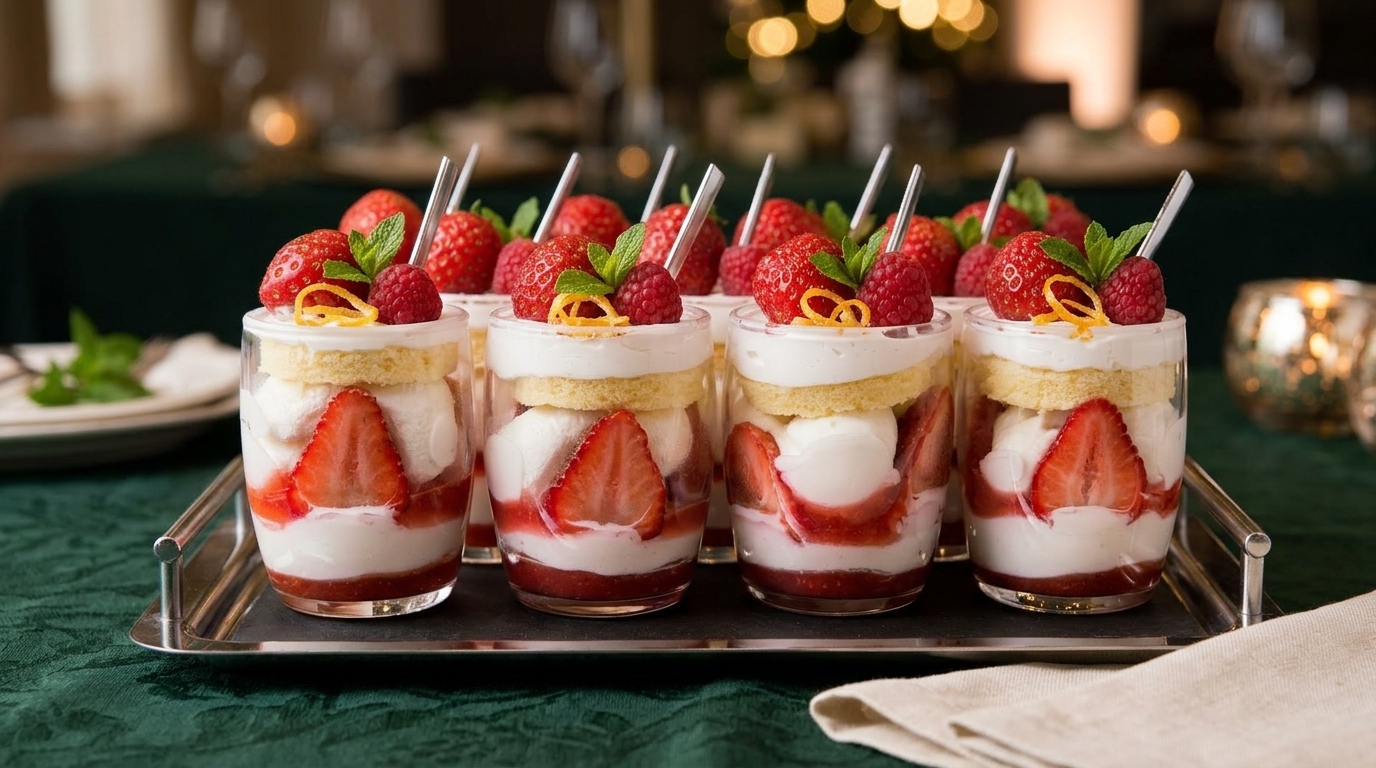
Individual holiday trifle cups solve these presentation and cost headaches simultaneously. By scaling classic trifle architecture into clear five ounce disposable or reusable vessels, commercial catering kitchens gain complete control over portion weights, ingredient costs, and station flow. A single pastry team member can pipe and assemble several hundred dessert cups during morning production hours, stage them on standard sheet pans, and deliver ready to serve displays that require zero carving staff at the venue. With staple ingredients like sheet cake trim, scratch pastry cream, and seasonal fruit coulis, individual trifle cups routinely deliver gross margins above eighty percent. Here is how high volume catering operators engineer structurally stable layers, streamline batch assembly, and run profitable holiday dessert stations.
Formula Architecture and Layer Stability Under Ambient Holding
The central engineering challenge of catering trifles is preventing syneresis, the separation of liquid that turns crisp cake layers into unappetizing sludge during a four hour cocktail reception. In a standard bakery display case kept at thirty eight degrees Fahrenheit, dairy holds its structure easily. On a crowded catering buffet table in a heated banquet hall, ambient temperatures soften butterfats and accelerate moisture migration.
To protect structural integrity, commercial kitchen recipes must balance three distinct moisture zones within every cup:
-
Base Sponge Density. Light chiffon or angel food cake collapses when saturated with compote. Instead, use a dense genoise, vanilla butter pound cake, or spiced ginger cake. Cut cake rounds or cubes to uniform thickness using a guitar cutter or portion ruler. When applying flavor syrups, use an atomizer or squeeze bottle with a fine nozzle to mist no more than one quarter ounce of spiced syrup per cake layer. The cake must absorb aromatics without becoming fully saturated.
-
Gelatin Stabilized Custard and Pastry Cream. Standard cornstarch pastry cream often breaks and weeps when held above forty degrees Fahrenheit for multiple hours. Commercial kitchens overcome this by formulating a hybrid pastry cream stabilized with both modified cornstarch and bloomed sheet gelatin, roughly two sheets of silver gelatin per quart of base custard. For white chocolate or mascarpone mousses, incorporating melted cocoa butter provides thermo reversible firmness that keeps pipeable peaks razor sharp under event lighting.
-
Pectin Controlled Fruit Compote. Never layer raw macerated berries or watery pie fillings into catering trifle cups. Free water in fruit immediately leaches into surrounding cream. Cook seasonal cranberries, tart cherries, or winter berries with low methoxyl pectin and citrus juice until the mixture achieves eighty percent water activity binding. Cool completely before assembly. The gel structure locks in moisture while delivering bright acid balance against rich dairy layers.
High Speed Assembly Line Logistics and Sheet Pan Staging
Assembling hundreds of individual dessert cups can quickly become a labor sinkhole if stations are poorly organized. High volume catering operations structure trifle production using systematic assembly line staging on standard full size baker sheet pans.
A standard eighteen by twenty six inch sheet pan holds forty eight five ounce squat dessert cups in a nested eight by six grid. Setting up four sheet pans side by side on a prep table allows two kitchen team members to assemble nearly two hundred cups in a single thirty minute sprint.
To maximize throughput, equip the station with dedicated tools before assembly begins:
-
Clear Preportioning Vessels. Use food grade crystalline PET cups or mini glassware with straight or slightly tapered sides. Straight walls allow clean visual display of horizontal layers without uneven perspective distortion.
-
Double Bagged Disposable Pastry Bags. Fit heavy duty twenty one inch disposable piping bags with large round tips, such as Ateco 808 or 809. Fill bags only half full to minimize hand fatigue and maintain uniform squeezing pressure. One operator pipes the cream layer while the second operator follows with the fruit compote using a culinary piston funnel or wide gauge squeeze bottle.
-
Clean Rim Discipline. The fastest way to spoil a dessert cup display is smearing custard across the upper rim of the glass. Always place the piping tip deep into the center of the cup, hold the nozzle steady, squeeze until the dose fills outward to the perimeter, and release pressure before pulling straight up.
-
Speed Rack Transport. Once assembled, slide full sheet pans directly into mobile speed racks fitted with vinyl covers. This keeps ambient dust away, prevents surface skinning on whipped garnishes, and maximizes refrigerated walk in storage footprint. For mobile catering drop offs, stack pans securely in insulated food pan carriers with anti slip silicone mats.
Food Cost Economics and Bakery Scrap Utilization
Dessert stations are often treated as unavoidable expense centers that caterers provide merely to complete a full service package. When engineered properly, individual trifle cups transform desserts into one of the highest margin categories on the catering menu.
The secret weapon in commercial trifle economics is scrap recovery. Bakeries and full service restaurant kitchens generate substantial quantities of clean cake trim every week when leveling layer cakes, trimming sheet pans, or portioning petit fours. Rather than discarding these trimmings into the kitchen waste bin, staff can dice cake ends into half inch cubes and freeze them in airtight cambros. In our guide on how to set up a daily restaurant waste log routine, tracking prep discards is the first step toward recovering margin; cake trim repurposed into trifle bases converts zero value scrap into billable guest covers.
Consider the baseline ingredient cost breakdown for a five ounce holiday cranberry orange trifle cup:
- Cake base: One ounce of diced vanilla pound cake or scrap trim costs roughly ten to twelve cents.
- Custard cream: Two ounces of gelatin stabilized vanilla mascarpone custard costs twenty four cents.
- Fruit layer: One ounce of spiced scratch cranberry orange compote costs fourteen cents.
- Garnish: Fresh raspberry, candied orange peel, and micro mint cost eight cents.
- Disposable clear cup and bamboo dessert spoon: Fourteen cents.
Total prime unit cost sits at approximately seventy cents per guest serving. On corporate catering and holiday banquet menus, individual dessert cup stations price between four dollars and fifty cents to six dollars per portion. That represents an exceptional food cost percentage under fifteen percent, generating gross margins above eighty five percent. Operators who master how to work out the food cost percentage of a dish can benchmark these exact ratios across their holiday event calendar.
Event Station Architecture and Guest Flow Optimization
At large corporate receptions and holiday galas, self service dessert stations frequently cause major traffic jams. Traditional cakes requiring guest slicing or staffed carving stations demand ongoing labor and create lengthy queues that frustrate attendees.
Individual trifle cups eliminate station friction through smart visual staging. To optimize buffet flow and protect guest experience, follow these operational layouts:
-
Multi Tier Risers Over Flat Platters. Staging dessert cups flat on banquet tables limits visual impact and forces guests to reach over front rows, increasing the risk of knocked over cups. Use acrylic, brushed metal, or reclaimed wood tiered risers to display cups vertically in staggered rows. Vertical presentation catches room lighting and guides guest eyes upward.
-
Two Sided Buffet Access. For parties larger than one hundred guests, configure the dessert station as a central island with dual access corridors. Placing identical selections on both sides cuts guest waiting time in half, a standard rule detailed in our buffet set up commercial catering guide.
-
Batch Replenishment Rules. Never set out all four hundred cups at the beginning of the evening. Set out eighty to one hundred cups at a time. Keep backup sheet pans chilled in mobile holding cabinets or portable insulated coolers. Rotate fresh pans onto the display as levels drop to thirty percent. This ensures every guest receives a crisp, perfectly chilled dessert while preventing ambient room heat from softening dairy garnishes.
Frequently asked questions
How far in advance can individual trifle cups be assembled before an event?
Assembled individual trifle cups hold their texture and structural stability for up to forty eight hours when stored in a walk in cooler at thirty eight degrees Fahrenheit. Cover sheet pans with airtight plastic covers or clean wrap to prevent flavor transfer. For optimal presentation, apply fresh herb garnishes and delicate whipped cream rosettes within four to six hours of event service.
How do you prevent cake layers from turning soggy inside catering trifle cups?
Choose dense cakes like pound cake or genoise rather than airy sponge. Apply flavored syrups sparingly using a fine mist spray bottle or squeeze bottle with a narrow tip. Ensure fruit compotes are cooked with pectin or starch to bind free water, and allow both custard and fruit layers to chill completely before assembling the cups.
What is the optimal cup size for catering dessert stations?
For cocktail receptions and corporate mix and mingle events featuring multiple food stations, four to five ounce cups are the industry sweet spot. They provide a satisfying, luxurious sweet portion without overwhelming guests or driving up ingredient costs. For seated formal banquets serving trifle as the sole plated dessert, seven to eight ounce glassware works best.
How do you transport individual trifle cups safely to off site catering venues?
Stage cups in standard eighteen by twenty six inch sheet pans lined with nonslip silicone baking mats or textured pan liners to prevent sliding. Transport pans inside enclosed speed racks fitted with vinyl covers or heavy duty insulated food pan carriers. Keep carrier doors latched firmly during transit and move directly into the venue refrigerated holding area upon arrival.
Conclusion
Holiday catering profitability depends on eliminating operational bottlenecks before service begins. Individual holiday trifle cups deliver the visual drama that corporate event planners expect while solving the mess, labor overhead, and cost unpredictability of traditional dessert displays. By stabilizing custards against ambient temperature changes, setting up efficient sheet pan assembly lines, and converting bakery trimmings into premium menu features, commercial kitchens can protect their bottom line during peak holiday weeks.
Managing complex catering production schedules, accurate ingredient purchases, and high margin menu pricing requires dependable kitchen systems. Edesia helps commercial kitchens and caterers automate inventory tracking, generate precise prep lists from event guest counts, and calculate true food costs across every catering package. Explore how Edesia streamlines commercial catering operations at https://edesia.catering.
Try it on your own menu
Use the menu item contribution calculator to run your numbers in your browser. No signup required, and your data stays on your device.