Holiday Glazed Ham for Commercial Catering: Glaze Caramelization Systems, Carving Yields, and Moisture Control Logistics
Learn how commercial catering kitchens engineer high margin holiday glazed ham. Master glaze caramelization timing, cooked yields, and banquet holding logistics.
Photo by Robert Gareth on Unsplash.
Holiday banquet season brings massive catering volume, but rising wholesale beef and poultry prices place intense pressure on kitchen profit margins. Glazed holiday ham offers commercial kitchens and independent restaurants an exceptional opportunity to deliver a beloved holiday centerpiece while keeping food costs firmly below twenty percent. Pork ham remains one of the most accessible wholesale proteins on the market, yet executing glazed ham at catering scale presents distinct culinary and operational challenges.\n\nMany kitchens struggle with scorched sugar glazes in convection ovens, excessive trim loss on bone in roasts, and dried meat fibers on hot buffet lines. A dry, overcooked ham slice floating in cloudy pool water inside a chafing dish destroys event reputation instantly. Producing tender, juicy ham with an amber lacquered crust requires deliberate systems for cut selection, yield modeling, two stage thermal prep, and hot holding chemistry. Here is how commercial kitchens engineer holiday glazed ham for maximum profitability, rapid banquet execution, and pristine plate quality.
Cut Selection and True Yield Calculations: Bone In Versus Boneless Yields
The foundation of a profitable holiday ham program starts with selecting the right commercial cut. Kitchen operators typically choose between bone in ham, semi boneless ham, and boneless pit ham. Each cut serves a distinct service format and produces vastly different usable cooked yields.\n\nBone in hams, including shank and butt portions, offer superior flavor, attractive structural presentation, and excellent natural moisture retention. However, bone in hams produce an average usable meat yield of 68 to 72 percent once the femur bone, shank bone, heavy skin, and exterior fat cap are trimmed away. Semi boneless hams, where the center bone has been removed while retaining the shank end for visual appeal, improve usable carving yields to approximately 76 to 80 percent.\n\nBoneless pit hams, which are cured and pressed into uniform logs, deliver the highest operational yield at 88 to 92 percent. They slice rapidly on an electric meat slicer, creating identical portions for boxed office drop offs and high volume corporate buffets. However, boneless pressed hams lack the artisanal crust, marbling, and visual drama demanded by premium weddings and executive holiday galas.\n\nWhen ordering raw inventory, kitchens must calculate wholesale purchasing quantities based on finished portion targets. Plated banquet events require 6 ounces of carved meat per guest. Self service buffets require 8 ounces per guest to buffer against uneven guest portions. For a 100 guest plated banquet requiring 37.5 pounds of finished carved ham, a kitchen using bone in hams must order 55 pounds of raw product. At wholesale pork costs between $2.40 and $3.20 per pound, the protein cost per guest lands between $1.32 and $1.76. Comparing this to beef tenderloin or prime rib at $14.00 to $22.00 per portion demonstrates why ham is a margin powerhouse. You can review detailed plate portioning methods in our guide on how to work out the food cost percentage of a dish.
Glaze Chemistry and Two Stage Convection Baking: Preventing Scorched Sugars
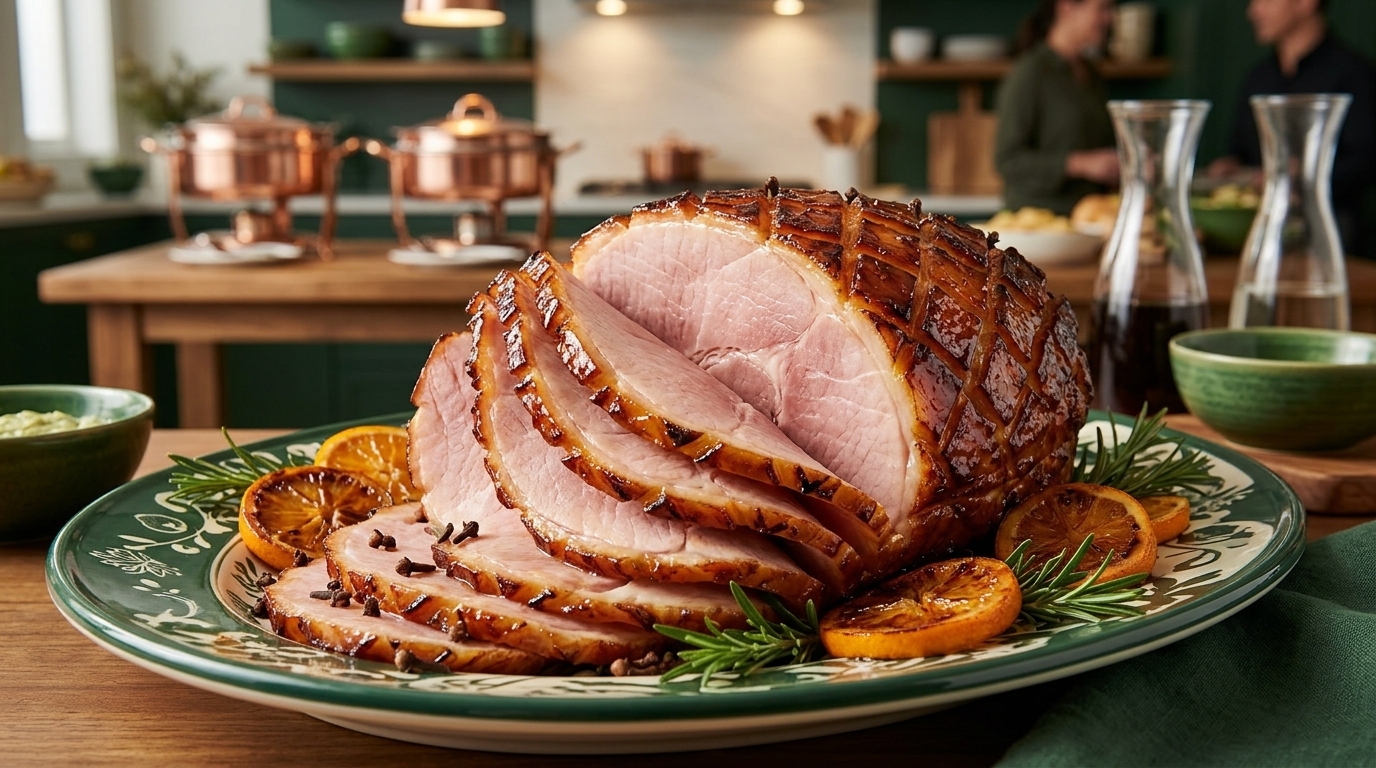
The most common operational failure when roasting holiday hams in commercial convection ovens is premature glaze application. Glazes formulated with brown sugar, honey, maple syrup, or fruit jams burn rapidly when exposed to continuous forced air heat. Applying a sugar rich glaze at the beginning of a two hour cook cycle causes surface sugars to char into an acrid black crust long before the interior of the ham reaches safe serving temperature.\n\nTo achieve a balanced mahogany lacquer without scorching, commercial kitchens must employ a two stage baking process. In the first stage, place the cured hams into deep two inch or four inch hotel pans. Add half an inch of aromatic liquid to the pan bottom, such as unsweetened apple cider, mirepoix stock, and citrus peel. Cover the pans tightly with parchment paper and heavy aluminum foil. Bake in a commercial convection oven set to 300 degrees Fahrenheit with fans on low. The trapped steam and gentle heat warm the ham slowly at 12 to 14 minutes per pound for bone in cuts, bringing the internal core temperature to 125 degrees Fahrenheit while preventing moisture evaporation.\n\nWhile the ham warms, prepare your scratch glaze reduction on the range. Combine dark brown sugar, whole grain Dijon mustard, clover honey, apple cider vinegar, black pepper, and ground cloves in a heavy bottomed rondeau. Simmer the mixture until it reduces into a glossy syrup that coats the back of a spoon. The addition of cider vinegar is critical: acid cuts through the heavy sweetness and balances the salty richness of the cured pork.\n\nOnce the ham hits 125 degrees Fahrenheit internally, initiate the second stage. Remove the foil and score the fat cap in a clean one inch diamond pattern using a sharp boning knife. Be careful to score only through the skin and fat layer without slicing into the pink lean meat below. Brush an even layer of hot glaze across the scored surface. Raise the convection oven temperature to 375 degrees Fahrenheit. Roast uncovered for 15 to 20 minutes, brushing additional glaze every 6 to 7 minutes. The intense dry heat rapidly bubbles the sugars, creating a glossy, crackling caramel shell that adheres securely to the roast.
Thermal Holding and Transit Logistics: Defending Moisture in Buffet Service
Holding carved ham safely while defending its juicy texture is where many catering operations falter. Because cured ham is salted, cut slices lose moisture rapidly when exposed to dry hot holding equipment. Heat lamps and dry chafing pans evaporate surface water within 20 minutes, leaving sliced ham rubbery, iridescent, and gray around the edges.\n\nFor off site catering deliveries, never slice the ham completely in the commissary kitchen before loading the transit truck. Rest the glazed ham on a sheet pan for 25 minutes after removal from the oven, allowing internal meat pressures to equalize and juices to redistribute into the muscle fibers. Wrap the warm whole ham in parchment paper, followed by a double layer of heavy aluminum foil. Transfer the wrapped roasts directly into preheated insulated food carriers like Cambro units. Whole hams hold safe internal temperatures above 145 degrees Fahrenheit for up to four hours inside insulated carriers with less than two percent moisture loss.\n\nWhen setting up on site banquet buffets, implement a shallow pan rotation protocol. If your event package includes a staffed station, position an attendant with a sharp carving knife and heat lamp to slice portions to order, which preserves optimum juiciness and controls portion sizes. Review our operational standards in the holiday carving station catering guide.\n\nIf the event calls for a self service buffet line, shingle carved ham slices neatly across shallow two inch hotel pans rather than piling thick mounds into four inch pans. Pour a quarter inch of warm seasoned pork broth and apple cider reduction into the pan bottom beneath the shingled slices. This aromatic bath generates gentle steam that keeps every slice tender without washing away the surface glaze. Keep chafing dish water pans filled with clean water maintained at 160 degrees Fahrenheit, and swap in fresh pans every 25 minutes. You can explore complete buffet layouts and heat staging in our buffet setup commercial catering guide.
Menu Engineering and Cross Utilization: Maximizing Holiday Margins
A profitable catering menu relies on smart cross utilization of every purchased ingredient. Holiday glazed ham offers exceptional versatility across multiple service formats, allowing commercial operators to extract maximum value from raw inventory.\n\nIn addition to whole banquet roasts, kitchens can package glazed ham into high margin drop off cocktail party trays. Shingled cold ham platters served alongside house baked sweet potato biscuits, whipped honey butter, and pickled mustard seeds provide a turnkey holiday reception offering that requires zero on site kitchen equipment. Kitchens can also build warm glazed ham and Swiss slider trays for late night event snacks or corporate luncheon deliveries, utilizing the same scratch glaze as an exterior bun wash.\n\nDo not discard trimmed bones and scrap meat. The shank bones and collagen rich trimmings from bone in hams should be transferred directly to stock pots to produce scratch smoked pork broth for winter soups, braised collard greens, or rich bean stews. Repurposing these trimmings turns an unavoidable prep scrap into a zero cost foundation for high margin weekly lunch specials.\n\nPackage your holiday ham dinner as part of a complete three tier banquet tier. Pair the protein with low labor, high margin sides such as roasted root vegetables, potato gratin, and seasonal brassicas to create an attractive per person package price while keeping aggregate event food costs between 20 and 24 percent. Discover more menu planning frameworks in our catering menu planning guide and our seasonal recipe collection in the holiday appetizers catering guide.
Frequently asked questions
What is the best cut of ham for commercial catering service?
A semi boneless ham or shank half gives commercial caterers the best balance of visual appeal and efficient carving speed. Bone in cuts offer superior juiciness and rich presentation for manned carving stations, while boneless pit hams provide the fastest slicing throughput and consistent portion control for high volume drop off buffets.
How much glazed ham should caterers order per guest?
For plated dinners, calculate 6 ounces of carved meat per guest. For buffet stations, calculate 8 ounces per guest to account for self service portion variance. When purchasing raw bone in ham, multiply the guest count by 0.55 pounds. When purchasing boneless ham, multiply by 0.42 pounds.
How do commercial kitchens keep carved ham from drying out on a buffet line?
Avoid pre slicing more than a single pan at a time. Shingle carved slices in a shallow two inch hotel pan over a quarter inch of warm seasoned pork stock reduction, keep chafing dish water pans at 160 degrees Fahrenheit, and rotate pans every twenty minutes during service.
At what temperature should catering kitchens glaze a holiday ham?
Roast the ham covered at 300 degrees Fahrenheit until the internal core reaches 125 degrees Fahrenheit. Then uncover, apply the glaze generously, and raise the oven temperature to 375 degrees Fahrenheit for fifteen to twenty minutes to caramelize the sugar without scorching.
Conclusion
Mastering holiday glazed ham gives commercial kitchens a high margin anchor protein that pleases large crowds and delivers dependable profit. By separating gentle thermal heating from high heat glaze caramelization, kitchens protect moist pork muscle while building a glossy lacquered crust. Ordering based on true cooked yields prevents embarrassing food shortages and eliminates unnecessary inventory waste. Holding carved portions in shallow pans with warm aromatic stock preserves succulent texture through the longest holiday banquets.\n\nControlling inventory, calculating protein yields, and scaling holiday order quantities becomes effortless with the right kitchen management tools. Edesia helps caterers and restaurants turn event menus and preorder counts into automated purchasing lists, track raw ingredient yields, and calculate true plate food costs. Spend less time wrestling with prep sheets and inventory spreadsheets this holiday season. Explore how Edesia streamlines commercial catering operations at edesia.catering.
Try it on your own menu
Use the restaurant food cost & variance calculator to run your numbers in your browser. No signup required, and your data stays on your device.