Pinwheel Appetizers for Commercial Catering: Moisture Barrier Systems, Log Chilling Logistics, and High Margin Platter Assembly
Learn how commercial catering kitchens engineer high margin pinwheel appetizers. Master moisture barrier binders, log chilling protocols, and clean slicing logistics.
Pinwheel appetizers remain a quiet workhorse for commercial caterers, corporate drop off operators, and banquet kitchens. Official search interest on Pinterest demonstrates a steady thirty percent week over week increase as event planners seek out colorful, crowd friendly finger foods for holiday gatherings. For kitchen operators, pinwheels provide a rare operational combination: exceptionally low food costs, rapid make ahead batching, and zero dependence on venue reheating equipment. Yet many commercial kitchens struggle with soggy tortillas, loose unrolling spirals, and messy slicing that wastes valuable prep hours. By implementing precise fat based moisture barriers, tight plastic wrap log rolling, thorough walk in chilling, and serrated slicing techniques, your kitchen can produce hundreds of immaculate pinwheels while keeping gross margins firmly above eighty percent.
The Catering Economics of Pinwheel Appetizers
Pinwheel platters represent one of the highest margin categories in commercial catering. When kitchen teams calculate true recipe costing, a standard twelve inch flour or spinach tortilla costs approximately forty to fifty cents wholesale. A four ounce portion of whipped cream cheese binder combined with thin shaved deli turkey, roasted red peppers, and baby spinach adds another dollar and twenty cents in food cost. Slicing that single rolled log produces eight to ten uniform rounds, bringing the direct ingredient cost to approximately sixteen to twenty cents per piece.
Caterers routinely price cold hors d oeuvres platters between two dollars and fifty cents and three dollars per guest portion, yielding food cost percentages below twenty percent and gross margins exceeding eighty percent. The challenge that many independent operators encounter is not ingredient expense, but labor inefficiency and texture degradation. When kitchen prep staff roll tortillas without a firm moisture barrier or rush slicing before the binder has set, the result is squashed, soggy pinwheels that look sloppy on the platter and take twice as long to portion. Integrating standardized batch prep procedures turns pinwheel production into a streamlined assembly line that maximizes both speed and presentation.
Moisture Barrier Engineering and Binder Formulation
The primary technical failure in advance pinwheel production is water migration. Flour tortillas and flatbreads absorb ambient moisture rapidly. If moist fillings like sliced cucumbers, pickled vegetables, or fresh tomatoes come into direct contact with the wrap, the starches swell and turn gummy within three hours.
To build an impermeable moisture barrier, commercial kitchens rely on high fat binders spread edge to edge. Full fat cream cheese whipped with roasted garlic, lemon zest, and dried herbs provides an ideal structural foundation. Soften the cream cheese to sixty five degrees Fahrenheit before mixing to avoid tearing the delicate tortilla surface during spreading. Alternatively, a thick aioli or compound butter can serve as the primary seal for dairy free catering orders.
Before placing produce on top of the binder, prep cooks must enforce strict vegetable dewatering protocols. Blot roasted red peppers, artichoke hearts, and pickled jalapeños between multiple layers of lint free towels to remove excess packing brine. Spin washed baby spinach or arugula through a commercial salad spinner until bone dry. For additional inspiration on moisture barrier methods, examine our operational guides on crostini appetizers and phyllo cup appetizers, which detail similar crispness defenses across varied pastry styles.
Log Rolling Tension, Plastic Wrapping, and Chill Logistics
Uniform pinwheel slices require consistent log diameter and tight internal tension. Loose rolling creates hollow centers that collapse under the knife, while uneven distribution of ingredients causes wedge shaped portions.
Train your prep team to follow a standardized assembly layout. Place the twelve inch wrap on a clean prep board. Spread two ounces of seasoned binder across the entire surface, leaving a half inch margin along the top edge to act as the final sealing seam. Shave deli meats paper thin, shingling them across the bottom two thirds of the wrap. Add dry vegetables in an even single layer, keeping bulk items away from the closing edge.
Begin rolling from the bottom edge, using your fingertips to tuck the tortilla tightly over the initial ingredients. Pull backward gently as you roll forward to establish structural tension. Once rolled, immediately wrap the log in commercial plastic food wrap, twisting the ends like a candy wrapper to compress the cylinder. Transfer the wrapped logs onto sheet pans and refrigerate at thirty eight degrees Fahrenheit for a minimum of two hours, or overnight. This chilling window solidifies the fat binder, hydrates the tortilla evenly, and locks the cylindrical structure in place.
Clean Slicing Protocols, Blade Sanitation, and Platter Assembly
Slicing is where prep velocity and portion presentation either succeed or fail. Standard chef knives with straight edges exert downward compression that flattens chilled rolls into unsightly ovals.
Equip your prep line with ten inch offset serrated slicers. The offset handle keeps knuckles clear of the cutting board, while sharp scalloped teeth saw through tortillas and cured meats without dragging fillings across the face of the slice. Cut off the uneven outer half inch tips from each end and reserve them for employee family meal or chopped salad garnishes. Slice the remaining log into three quarter inch rounds, producing eight picture perfect pinwheels per wrap.
Blade friction causes cream cheese and sauce to accumulate along the knife. Instruct prep cooks to wipe the blade with a clean sanitizing towel after every three cuts. For high volume catering orders exceeding five hundred pieces, a two person team, where one cook slices and the second cook transfers pieces directly onto service platters or transport containers, reduces production time by forty percent.
Cold Chain Transport, Platter Staging, and Service Flow
Cold appetizers offer tremendous logistical advantages during busy holiday seasons because they eliminate competition for precious venue convection ovens. However, maintaining strict cold chain compliance is mandatory under food safety regulations.
Pack sliced pinwheels into shallow catering trays lined with parchment paper. Keep ambient transport temperatures below forty degrees Fahrenheit using insulated food carriers packed with frozen gel packs. Avoid stacking pinwheels more than two layers deep to prevent bottom pieces from losing their circular shape. Place a sheet of food grade wax paper between layers for drop off catering packages.
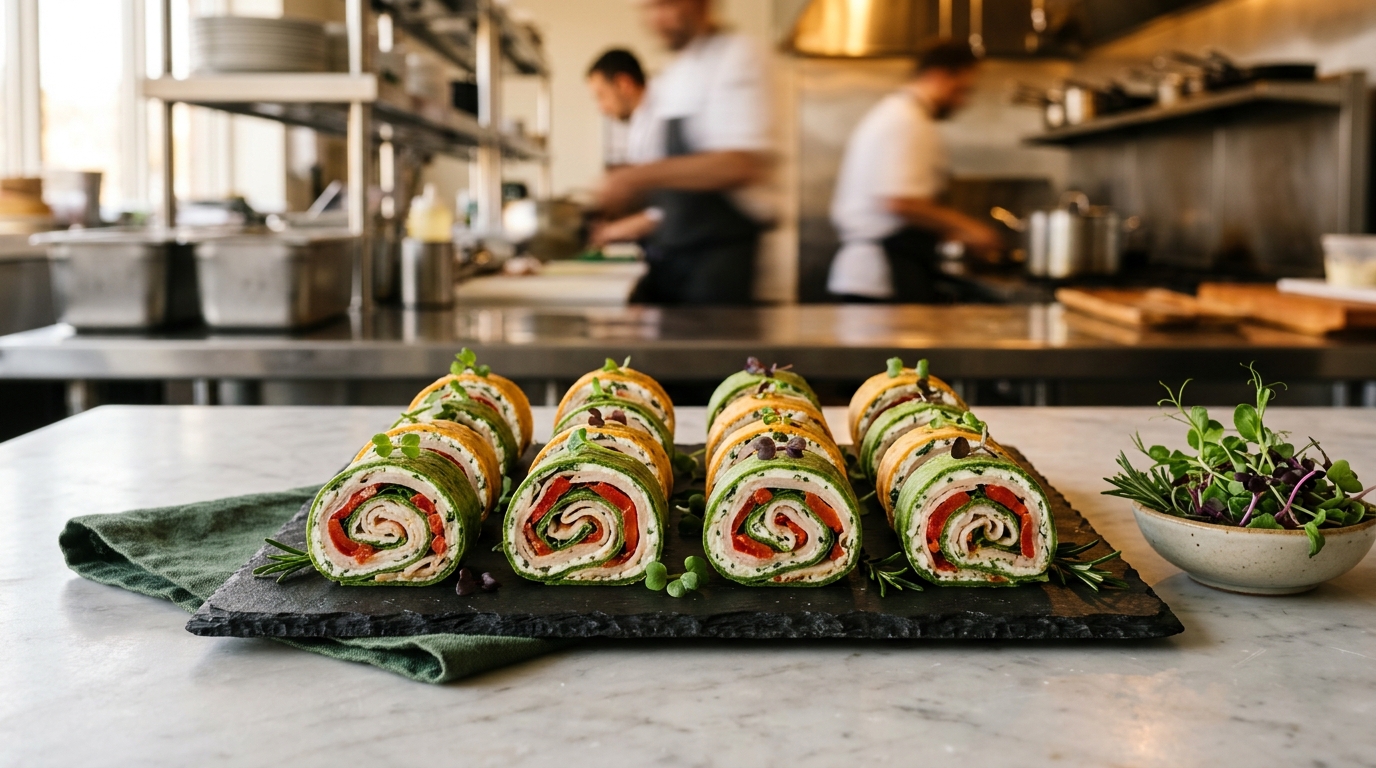
When building finished display platters, arrange the pinwheels in concentric circles or cascading rows to showcase the contrasting colors of spinach wraps, smoked meats, and herb cheese spirals. Elevate the presentation with fresh rosemary sprigs, scattered pomegranate seeds, and clusters of fresh grapes. For guidance on structuring complete party menus, explore our resources on catering menu planning and food board ideas.
Frequently asked questions
How do commercial caterers prevent pinwheels from becoming soggy during transit?
Commercial caterers apply a continuous fat based moisture barrier directly against the flatbread or tortilla. Whipped cream cheese, compound butter, or mayonnaise based binders seal the dough surface before wet ingredients are added. Kitchens also thoroughly pat dry any sliced vegetables, pickled peppers, or washed greens on paper towels before assembly.
How long should rolled pinwheel logs chill before slicing?
Rolled pinwheel logs should chill tightly wrapped in plastic film for at least two hours in a walk in cooler at thirty eight degrees Fahrenheit or lower. This rest allows the fat binder to firm up and the tortilla to hydrate evenly, ensuring tight spiral rounds that hold their shape without collapsing during slicing.
What knife and cutting technique yields the cleanest pinwheel slices?
Use a sharp ten inch offset serrated slicer or scalloped bread knife. Slice with gentle sawing strokes rather than downward crushing pressure. Wipe the blade with a clean sanitizing towel between every three cuts to prevent cheese drag and keep the spiral patterns crisp.
How many pinwheel pieces should caterers plan per guest for cocktail events?
For a standalone cocktail reception with several appetizer selections, plan three to four pinwheel pieces per guest. For drop off lunch platters where pinwheels accompany soups, salads, or fruit displays, plan five to six pieces per person.
Conclusion
Delivering consistent, high margin pinwheel platters comes down to disciplined kitchen systems. When your culinary team respects moisture barriers, enforces mandatory log chill times, and maintains clean slicing routines, finger food production transitions from a frustrating scramble into a predictable profit center. Standardizing these recipes and monitoring ingredient waste ensures your holiday catering remains calm and profitable.
Edesia helps catering kitchens and independent restaurants manage ingredient costs, automate supplier purchasing, track production prep lists, and handle catering inquiries across phone, email, and text. Discover how Edesia streamlines your commercial kitchen operations by visiting edesia.catering today.
Try it on your own menu
Use the restaurant food cost & variance calculator to run your numbers in your browser. No signup required, and your data stays on your device.