Thanksgiving Meals for Corporate Catering: Batch Production, Safe Holding Logistics, and Delivery Routing for Commercial Kitchens
Learn how commercial kitchens engineer profitable Thanksgiving meals for corporate catering, from batch carving workflows to hot holding and multi drop delivery routing.
Photo by Claudio Schwarz on Unsplash.
November brings a major revenue surge for commercial caterers and commissary kitchens as corporate offices host annual holiday appreciation lunches. Office managers want generous, festive spreads for teams of thirty to two hundred employees, yet they require service during tight sixty minute lunch windows. Delivering seventy hot turkey plates or setting up a corporate buffet across multiple office towers at noon requires military precision in the kitchen. Without standardized batch cooking and scheduled delivery routing, kitchens risk late arrivals, lukewarm sides, and crushed margins. By engineering modular menus, batch roasting boneless turkey roasts in advance, and standardizing hot holding transit containers, operators can capture profitable corporate Thanksgiving volume while keeping labor costs and kitchen stress completely under control.
Engineering Corporate Thanksgiving Menus Around Batch Roasting and Yields
The biggest operational bottleneck during holiday lunch catering is bone in whole bird roasting. A standard commercial combi or convection oven holds only four to six whole turkeys at once, and whole birds create significant carving station clutter, uneven yield, and high labor cost per plate. For corporate delivery orders, smart operators switch to boneless raw turkey breasts and whole muscle thigh roasts. Boneless turkey breasts yield nearly ninety percent carve ready meat after roasting, compared to roughly fifty to fifty five percent on whole bone in birds.
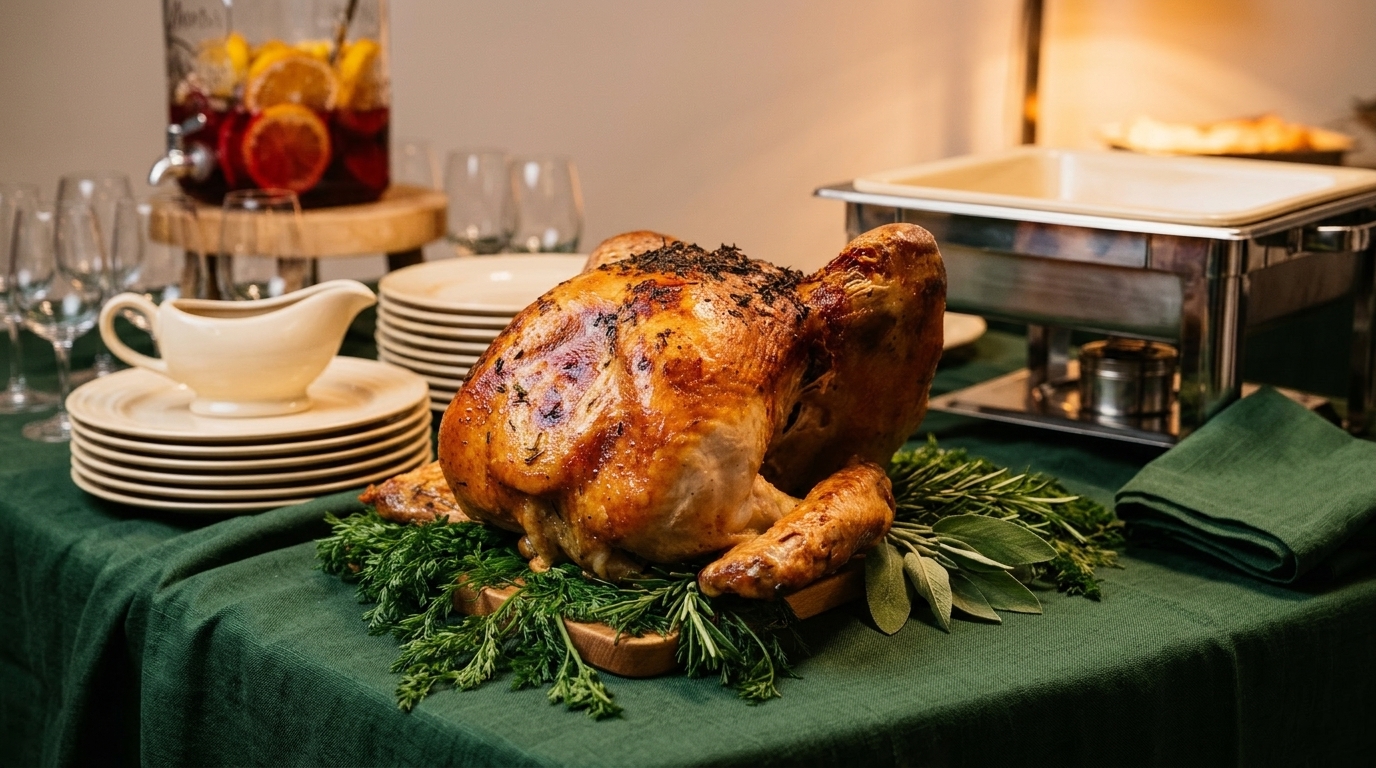
Batch roasting boneless breasts on perforated sheet pans over drip trays allows kitchens to roast thirty to forty portions per oven deck in forty five to fifty minutes at three hundred twenty five degrees Fahrenheit. For moisture retention, kitchen teams brine breasts in a six percent salt and brown sugar brine for twelve hours, then roast until internal temperatures reach one hundred sixty degrees Fahrenheit before resting. Slicing turkey across the grain in five ounce portions and immediately shingling slices into shallow two inch stainless steel hotel pans preserves meat juices. Adding a shallow pool of fortified turkey jus seasoned with fresh thyme keeps sliced turkey hot and succulent during extended holding without drying out. For teams calculating prep par levels, reviewing our operational guide on Thanksgiving food ideas and turkey yields offers detailed batch formulas.
Synchronizing Morning Prep for Starch, Vegetable, and Gravy Batches
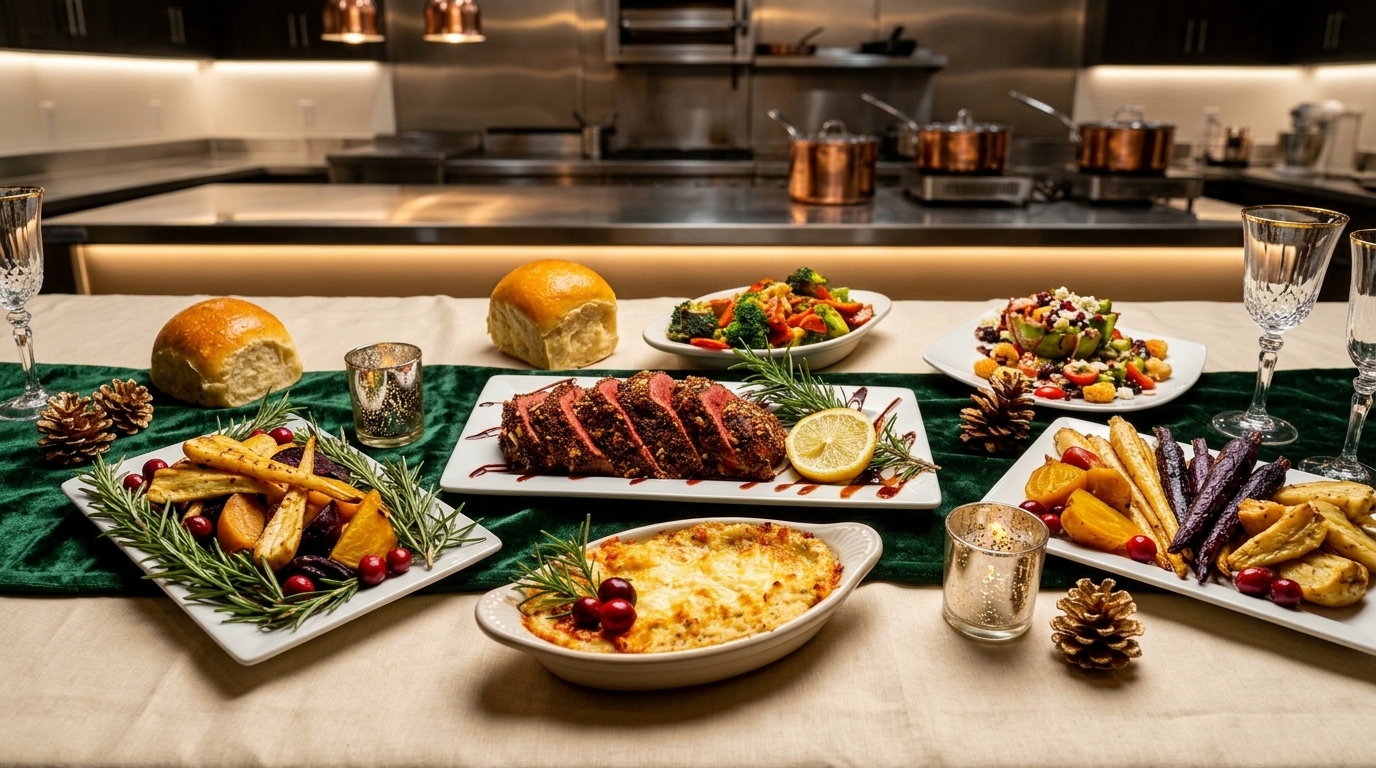
A complete corporate Thanksgiving plate relies on four core elements alongside turkey: roasted garlic mashed potatoes, traditional herb stuffing, seasoned autumn vegetables, and scratch gravy. Running all four items simultaneously on line stations during morning prep creates pan panic. Instead, successful caterers stagger batch production into distinct ninety minute windows.
Mashed potatoes and traditional stuffing should be prepared first because both hold heat exceptionally well in insulated transport carriers. Red potatoes or Yukon Gold varieties steamed in perforated hotel pans and mashed with heavy cream, butter, and kosher salt hold dense thermal mass for up to four hours without skinning when sealed with parchment and foil. Herb stuffing should be baked in two inch hotel pans with vegetable stock to an internal temperature of one hundred sixty five degrees Fahrenheit.
Green vegetables, such as green beans with toasted almonds or roasted Brussels sprouts, represent the highest quality risk because steam traps sulfur and turns greens olive drab. Blanch green beans in boiling salted water for three minutes, shock immediately in ice baths, and hold cold until thirty minutes before pack out. A rapid three minute toss in clarified butter on a hot flat top finishes the beans crisp tender and vibrant green. For scratch gravy, simmer stock with roasted mirepoix and thicken with blond roux, finishing with fresh sage. Gravy should be held at one hundred seventy degrees Fahrenheit and packed into insulated beverage dispensers or tightly sealed twist top cambro containers rather than foil pans to prevent transit spills. Operators refining their side dish packages can reference our guide on Thanksgiving catering sides for holding timelines.
Hot Holding Food Safety and Insulated Transit Logistics
Transporting holiday catering across urban traffic is where food quality and food safety face their greatest test. Local health codes require hot foods to remain at or above one hundred thirty five degrees Fahrenheit throughout transit and holding. Foil pans stacked loosely inside cardboard boxes lose up to twenty degrees Fahrenheit every fifteen minutes on cold November mornings. Professional caterers rely on insulated food pan carriers, such as front loading Cambro or Carlisle hot boxes preheated with hot water pans.
Preheating each carrier with a shallow pan of boiling water for twenty minutes before loading brings the carrier interior to one hundred fifty degrees Fahrenheit. When hot hotel pans enter the preheated carrier, ambient heat loss drops to less than two degrees per hour. Label each pan cover with the menu item, batch time, core temperature at departure, and destination office name using colored day of the week tape.
Pack hot pans in the order of unloading. If your delivery vehicle serves three offices along a downtown corridor, the first drop off must sit at the top of the carrier to prevent leaving doors open in cold air while searching for orders. Never transport gravy in open foil pans. Always use locking beverage dispensers with pour spouts, which keep sauces steaming hot and allow clean pouring into client buffet chafing dishes. For event buffets where guests serve themselves, pairing drop off setups with two sided station layouts eliminates bottlenecks, as outlined in our guide on autumn buffet catering workflow.
Multi Drop Delivery Routing and On Site Client Handoffs
Corporate catering volume peaks tightly between eleven fifteen in the morning and twelve thirty in the afternoon. A delivery van caught in downtown garage traffic can ruin three client luncheons simultaneously. Designing delivery routes requires grouping orders into geographic clusters with twenty minute delivery buffers.
Assign one dedicated driver and one catering assistant per vehicle for runs exceeding fifty total covers. While the driver navigates loading docks, freight elevators, and parking passes, the assistant unloads hot boxes, sets up wire chafing wire racks with two hour Sterno cans, and stages serving utensils. Provide corporate clients with clear setup instructions printed on branded cards: light Sterno cans fifteen minutes before service, keep water pans filled with one inch of hot tap water, and keep chafing dish lids closed until the official lunch start time.
For individual boxed holiday meals, pack turkey, potato, vegetable, and stuffing in three compartment vented sugarcane containers lined with parchment. Sauces and cranberry relish must always travel in separate two ounce portion cups with secure lids to keep rolls and crisp vegetables from becoming soggy during transit. Operators looking to expand corporate drop off revenue can explore our breakdown of corporate work meals and assembly batching.
Cost Controls, Preorder Deadlines, and Margin Management
Holiday catering can appear busy while generating disappointing net profit if food costs and delivery labor are not strictly controlled. Turkey prices frequently fluctuate in early November, and specialty ingredients like fresh cranberries, pecans, and dairy creep upward. To protect your bottom line, establish firm preorder deadlines at least five business days before the scheduled delivery date.
Require a fifty percent non refundable deposit upon contract signing, with final headcount confirmed seventy two hours prior to event dispatch. This policy freezes ingredient purchases to verified covers, preventing costly surplus prep that ends up discarded after the holiday rush. Calculate plate costs down to the ounce, accounting for packaging boxes, chafing kits, serving tongs, and napkins. A standard corporate holiday plate should target a food cost percentage between twenty two and twenty six percent. You can verify your exact recipe yields and plate economics using our free restaurant food cost calculator and reading our step by step walkthrough on how to calculate food cost percentage.
Frequently asked questions
Why should commercial caterers use boneless turkey roasts instead of whole turkeys for corporate catering?
Boneless turkey breasts and roasts yield ninety percent carve ready meat compared to fifty to fifty five percent on whole birds. They roast in under an hour, occupy minimal oven deck space, carve uniformly into consistent five ounce portions, and significantly reduce morning kitchen labor.
How can catering kitchens keep mashed potatoes from drying out during transit?
Steam Yukon Gold or red potatoes, whip them with butter and whole cream for dense moisture, and seal hotel pans tightly with parchment directly on the potato surface before crimping aluminum foil over the rim. Transport inside preheated insulated carriers to maintain safe holding temperatures without crusting.
What temperature must hot food maintain during catering transport?
Food safety regulations require hot foods to stay at or above one hundred thirty five degrees Fahrenheit throughout holding and transit. Using preheated front loading hot boxes keeps foods safely above one hundred fifty degrees Fahrenheit for up to four hours.
How should commercial kitchens handle delivery scheduling for multiple corporate Thanksgiving luncheons?
Cluster delivery stops within compact geographic corridors, allowing twenty minute arrival windows between eleven fifteen and eleven forty five in the morning. Assign a driver and setup runner to expedite freight elevator access, dock check ins, and chafing dish placement.
What preorder policies protect caterers from holiday ingredient waste?
Enforce a five business day ordering deadline, require a fifty percent non refundable deposit upon booking, and lock final headcount changes seventy two hours before delivery. This allows kitchen managers to purchase exact raw ingredients and schedule kitchen labor without waste.
Conclusion
Delivering memorable corporate Thanksgiving meals gives commercial caterers an outstanding opportunity to build profitable recurring client relationships that last throughout the winter holiday season. When you combine disciplined boneless turkey roasting, structured morning side dish batching, preheated insulated transport, and realistic delivery routing, your kitchen runs smoothly while corporate clients enjoy flawless holiday feasts. Edesia helps commercial kitchens and catering teams calculate accurate ingredient purchasing lists, monitor recipe food costs, organize delivery orders, and track prep par levels with ease. Explore how Edesia streamlines commercial catering operations by visiting https://edesia.catering today.
Try it on your own menu
Use Edesia's free tools to work through your own kitchen numbers. No signup required.