Potato Soup for Commercial Kitchens: How Caterers Engineer High Margin Menus, Master Starch Emulsions, and Prevent Hot Holding Breakage
Learn how commercial kitchens engineer profitable potato soup menus, control starch gelatinization, stabilize dairy emulsions, and manage safe holding logistics.
Photo by Thembi Johnson on Unsplash.
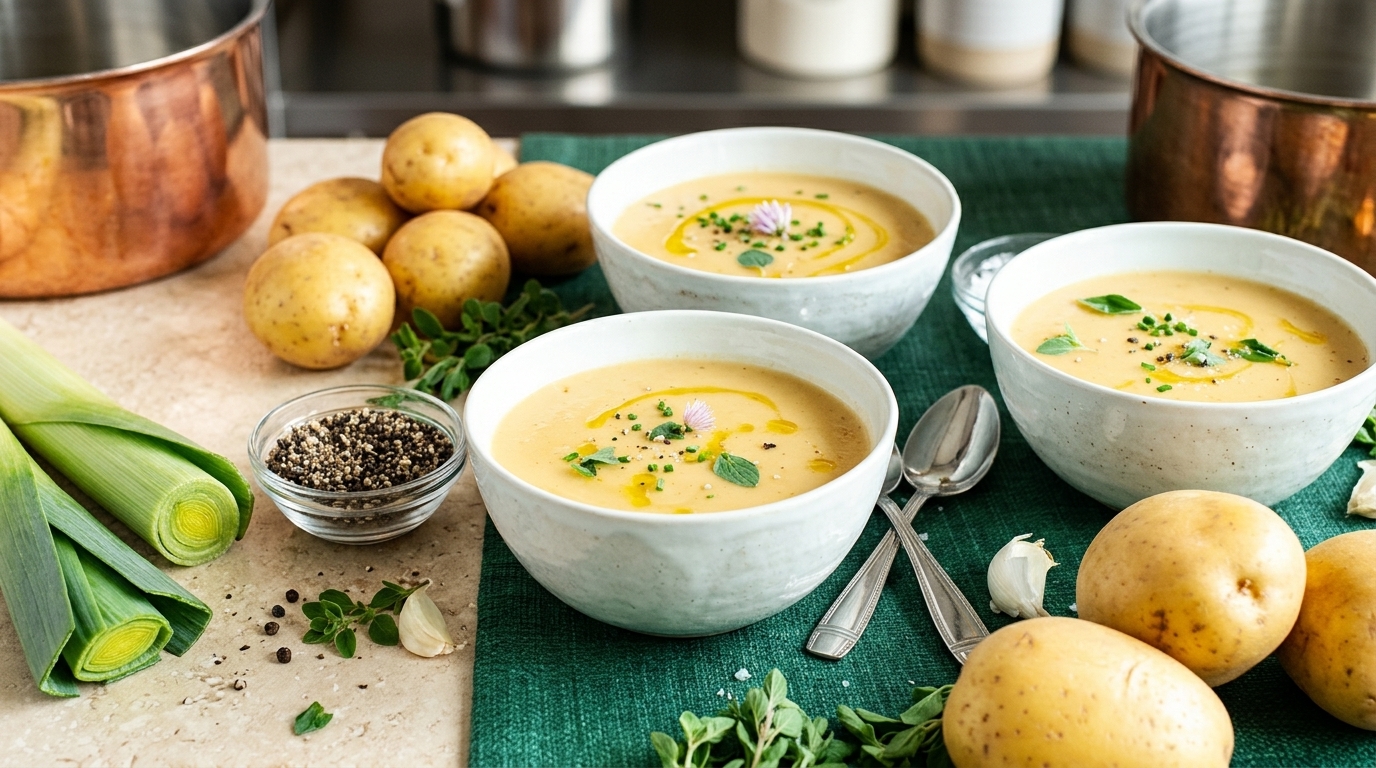
As cold weather sweeps across the country, consumer demand for hearty comfort food surges. Official Pinterest Trends data reveals that searches for potato soup recipe jumped 100 percent month over month and 90 percent year over year, reaching peak search volume this November. For independent restaurants and commercial caterers, this seasonal spike represents one of the most dependable margin drivers of the fourth quarter. Potatoes represent an inexpensive bulk staple, yet a velvety, loaded bowl of potato soup commands premium menu prices when executed with culinary precision.
Turning high consumer interest into consistent kitchen profit requires far more than boiling potatoes and pouring in heavy cream. Commercial volume brings operational hazards that home recipes never encounter. Over blended potato starches turn gummy and gluey within seconds. Dairy emulsions break into greasy films during extended steam table service. Thick, insulative vegetable purées trap ambient heat in cooling pans, posing serious bacterial growth risks if food safety protocols falter.
This guide breaks down the complete commercial workflow for engineering high margin potato soup. From ingredient yield math and biochemical starch management to batch cooling safety and interactive catering topping bars, here is how successful operators maximize profitability while serving exceptional winter comfort food.
Plate Economics: Raw Ingredient Yields and Catering Margins
The primary reason potato soup belongs on winter commercial menus is its unmatched profit margin. Russet Burbank potatoes, the workhorse of commercial kitchens, currently trade between forty and sixty cents per pound through broadline food distributors. Even premium Yukon Gold potatoes rarely exceed seventy five cents per pound in fifty pound sacks. When combined with scratch chicken or vegetable stock and aromatic mirepoix, the raw ingredient cost of potato soup remains remarkably low.
To calculate accurate food costs, kitchen managers must account for peeling and preparation trim loss. Whole unpeeled russets yield between 82 percent and 85 percent usable flesh after mechanical rumbler peeling or hand knife prep. A kitchen preparing a ten gallon batch requires roughly 35 pounds of raw potatoes, translating to less than twenty dollars in core starch expenditure. Adding aromatic yellow onions, celery, garlic, unsalted butter, and heavy cream brings the total ten gallon batch production cost to approximately 38 to 44 dollars, depending on local dairy prices.
A single ten gallon batch yields roughly 105 twelve ounce bowl servings. That places direct ingredient food cost between 36 cents and 42 cents per portion. When sold in a restaurant setting for 8.50 to 11.00 dollars per bowl, food cost percentage lands well under five percent. In catering operations, where potato soup is sold in five gallon insulated cambros or drop off disposable packaging at 55 to 65 dollars per gallon, the gross margin comfortably exceeds 85 percent. For deeper guidance on portion level cost calculations, explore our guide on how to work out the food cost percentage of a dish.
Starch Mechanics and Dairy Emulsion Stability
The greatest technical failure in commercial potato soup production is gumminess. Potatoes are packed with starch granules containing amylose and amylopectin. When potatoes are boiled, these starch granules absorb liquid and swell. If a line cook attacks cooked potatoes with a high velocity immersion blender, the mechanical shear ruptures the swollen cell walls, releasing free starch directly into the liquid. The result is a heavy, sticky paste with the mouthfeel of wallpaper glue rather than a silky soup.
To preserve velvet texture in high volume production, commercial kitchens should use a two step mechanical technique. First, cook peeled potatoes in salted water or seasoned stock until tender when pierced with a paring knife, but never mushy. Second, pass seventy percent of the cooked potatoes through a commercial food mill fitted with a medium disc, or a pneumatic potato ricer. This separates the cells without crushing their walls. Reserve the remaining thirty percent of potatoes as small rustic dice to fold back into the base, creating appealing texture and visual interest.
Dairy stabilization presents the second major culinary hurdle. Heavy cream and whole milk contain delicate butterfat emulsions that easily break when exposed to prolonged heat on a steam table or during catering transport. Adding cold dairy directly to a boiling soup kettle causes thermal shock, resulting in curdling and an oily slick on the surface. Always temper heavy cream by whisking two cups of simmering soup broth into the dairy container before pouring it into the main kettle. Furthermore, keep holding temperatures strictly between 145 and 155 degrees Fahrenheit. Boiling an assembled cream soup destabilizes proteins and guarantees emulsion breakdown.
Batch Cooling Safety and Insulative Thermal Curves
Because potato soup is dense, viscous, and high in starch, it functions as a thermal insulator. In high volume batches of ten to forty gallons, potato soup retains core heat far longer than clear broths or thin soups. This insulative property creates significant food safety risk if back of house teams fail to follow mandated cooling curves. Pathogenic bacteria such as Clostridium perfringens and Bacillus cereus multiply rapidly in dense warm starches between 135 and 70 degrees Fahrenheit.
The FDA Food Code mandates a strict two stage cooling process. Commercial kitchens must cool hot soup from 135 degrees Fahrenheit down to 70 degrees Fahrenheit within two hours, and then from 70 degrees Fahrenheit down to 41 degrees Fahrenheit or below within an additional four hours, for a total cooling window of six hours. Storing a deep five gallon plastic bucket of hot potato soup in a walk in cooler is a dangerous violation. The core of that bucket will remain in the danger zone for twelve hours or more, spoiling the product and endangering guests.
Professional operations employ three mandatory cooling protocols:
- Clean, sanitized ice cooling paddles stirred through the soup kettle immediately after cooking to rapidly pull heat from the core.
- Transferring soup into shallow two inch stainless steel hotel pans filled no deeper than one and a half inches, allowing maximum surface evaporation on ventilated walk in speed racks.
- Using an automated blast chiller when available to drop temperatures through the critical zone in under ninety minutes.
For detailed standard operating procedures on batch cooling and safety documentation, review our walkthrough on fall soup batch production and food cost controls.
The Loaded Soup Bar: Modular Catering Architecture
While basic potato soup delivers exceptional margins, transforming it into an interactive loaded potato soup bar turns a humble staple into a premium catering package. Corporate event planners and holiday party hosts love interactive food stations because they accommodate diverse dietary preferences while offering guests an engaging culinary experience.
The key to profitability lies in strict portion control of high cost toppings. Potatoes and base broth cost pennies, but aged white cheddar, applewood smoked bacon, and jumbo lump crab meat carry substantial wholesale costs. To protect kitchen margins, standard catering topping portions must be pre measured and staged:
- Applewood smoked bacon lardons: one half ounce cooked weight per guest, crisped and drained to eliminate excess grease.
- Sharp Vermont white cheddar: three quarters of an ounce finely shredded per guest to maximize melting surface area.
- Fresh scallions and chives: one tablespoon finely sliced per guest for vibrant color and onion aroma.
- Seasoned sour cream or creme fraiche: one fluid ounce portioned into squeeze bottles or piped rosettes.
- Crispy garlic shallots: one tablespoon per guest for crunch and savory depth.
By separating toppings from the soup kettle, caterers also solve major quality problems. Bacon remains crisp, herbs do not discolor or turn bitter, and cheese does not clump at the bottom of the chafing dish. Furthermore, an unadorned potato soup base remains naturally gluten free, allowing caterers to serve vegetarian, gluten sensitive, and carnivore attendees from a single kettle. To structure your catering tiers and protect kitchen labor, read our catering menu planning guide.
Transit Logistics, Drop Off Packaging, and On Site Holding
Transporting and serving hot cream soups at off site catered events requires specialized logistics. A soup that tastes perfect in the prep kitchen can easily arrive at an event separated, scorched, or cold if transport equipment and holding procedures fail.
For drop off catering, transport soup in preheated, insulated cambro beverage dispensers or food pan carriers. Preheating cambros with boiling water for twenty minutes before filling ensures hot soup stays above 160 degrees Fahrenheit during ninety minute transit windows. When delivering in disposable foil half pans for corporate office lunches, provide comprehensive reheating instructions that prevent scorched bottoms. Office hosts frequently place foil pans directly over high heat chafing fuel without water in the water pan, instantly burning the starch on the bottom of the pan and ruining the entire batch.
For full service catered events, set up double boiler warming stations. Place two inch perforated or solid hotel pans inside water pans filled with two inches of simmering water. The steam cushion distributes heat evenly across the stainless steel surface, eliminating hot spots that cause dairy scorch. Staff must stir the soup with a silicone spatula every fifteen minutes to redistribute starch granules and prevent skin formation on the surface. If extended holding causes moisture loss, whisk in small additions of hot vegetable stock rather than tap water to maintain rich flavor and consistent viscosity. For broader winter banquet logistics, consult our guide on winter meals for commercial kitchens.
Frequently asked questions
What is the best potato variety for commercial batch soup production?
A 70 to 30 blend of Russet Burbank and Yukon Gold potatoes delivers ideal commercial results. Russets provide high starch content that naturally thickens the soup without heavy flour additions, while Yukon Golds provide rich buttery flavor, golden color, and hold their shape if your kitchen serves a rustic, chunky style soup.
How do commercial kitchens prevent cream potato soup from separating on the steam table?
Emulsion separation happens when dairy proteins overheat or when acid destabilizes milk fat. Stabilize your soup by tempering dairy with hot stock before adding it to the kettle, keeping holding temperatures between 145 and 155 degrees Fahrenheit, and never allowing the steam table water bath to reach a rolling boil. Adding dairy during the final twenty minutes of prep rather than during initial boiling also shields milk proteins from heat stress.
Can commercial potato soup be frozen and reheated successfully for catering?
Pure potato soup bases frozen without dairy freeze reasonably well for up to sixty days. However, freezing fully assembled cream potato soup often causes dairy proteins to separate and starches to weep water upon thawing. For commercial volume, freeze the seasoned vegetable and potato base, then thaw and whisk in fresh cream and butter during service rethermalization.
How many ounces of potato soup should be budgeted per catering guest?
For a seated dinner first course, portion six to eight ounces per guest. For a buffet station or corporate lunch soup and salad bar where soup is the primary warm element, portion ten to twelve ounces per guest. When selling by the gallon for drop off catering, one standard gallon provides sixteen eight ounce servings or roughly ten to twelve hearty luncheon portions.
Conclusion
Commercial kitchens that treat potato soup as an engineered production item rather than a casual pot of boiled tubers unlock one of the most profitable menu items in hospitality. When you respect raw ingredient yields, handle potato starches gently to prevent gumminess, stabilize dairy emulsions, and follow strict two stage cooling curves, your kitchen delivers velvety comfort food that delights guests and protects your operating margins.
Take control of your kitchen purchasing and batch production today. Edesia helps commercial kitchens, caterers, and restaurants track recipe costs, monitor walk in inventory, streamline vendor purchasing, and manage catering inquiries without administrative chaos. Visit edesia.catering to explore how our kitchen management platform keeps food costs low and kitchen operations running smoothly.
Try it on your own menu
Use the menu item contribution calculator to run your numbers in your browser. No signup required, and your data stays on your device.